ISO Certifications for Rock, Limestone and Clay Mining Sector, Requirements and Benefits
Introduction
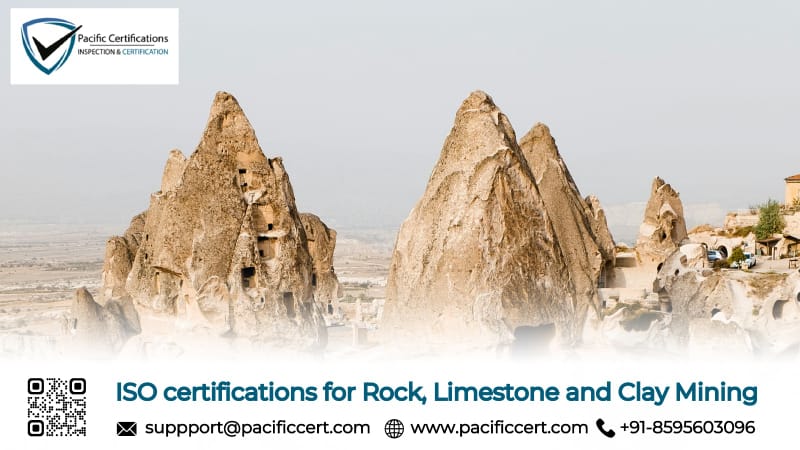
Rock, limestone, and clay mining operations involve complex extraction processes including drilling, blasting, crushing, and material handling across quarry sites that often span hundreds of acres. These businesses face significant challenges including workplace safety risks from heavy machinery and explosives, environmental concerns related to dust emissions and land rehabilitation, and stringent regulatory oversight from mining authorities. Mining operators must balance production efficiency with worker protection, environmental stewardship, and community relations while managing costly equipment fleets and unpredictable geological conditions.
ISO certifications provide mining companies with structured frameworks to address these operational complexities systematically. By implementing internationally recognized management systems, quarry operators can demonstrate compliance with safety regulations, reduce environmental impact, improve extraction efficiency, and strengthen their position in tender processes for major construction and infrastructure projects. ISO standards help mining businesses formalize risk assessment procedures, document operational controls, and establish measurable performance indicators across quality, safety, environmental, and energy management dimensions.
Safety and environmental responsibility are non-negotiable in mining operations
Quick Summary
ISO certifications provide rock, limestone, and clay mining businesses with internationally recognized frameworks to manage quality through ISO 9001, occupational health and safety through ISO 45001, environmental impact through ISO 14001, energy consumption through ISO 50001, asset performance through ISO 55001, risk exposure through ISO 31000, and business continuity through ISO 22301. These standards enable quarry operators to meet regulatory requirements while improving operational efficiency and workplace safety.
For more information on how we can assist your mining business with ISO certifications, contact us at support@pacificcert.com.
Applicable ISO Standards for Rock, Limestone and Clay Mining Businesses
Below are the most relevant ISO standards applicable to quarry operators, mining contractors, mineral processing facilities, and aggregate producers:
ISO 9001:2015 - Quality Management Systems
ISO 9001 enables mining operations to standardize extraction processes, material grading procedures, and customer delivery protocols, ensuring consistent aggregate quality that meets construction industry specifications. This standard helps quarry operators reduce production variability, minimize material rejection rates, and strengthen relationships with concrete manufacturers, asphalt producers, and infrastructure contractors through documented quality controls and traceability systems.
ISO 14001:2015 - Environmental Management Systems
ISO 14001 addresses the significant environmental footprint of quarrying operations by establishing controls for dust suppression, water management, noise reduction, biodiversity protection, and progressive land rehabilitation. Mining companies use this standard to manage environmental aspects including blast vibration monitoring, sediment control, fuel storage, and closure planning, helping secure environmental permits and maintain positive community relations through demonstrated environmental stewardship.
ISO 45001:2018 - Occupational Health and Safety Management Systems
ISO 45001 is critical for mining businesses due to inherent hazards including mobile equipment operations, blasting activities, rock fall risks, and respirable dust exposure. This standard requires systematic hazard identification, risk assessment, and implementation of preventive controls covering machinery safety, personal protective equipment, emergency response procedures, and worker competency verification, directly reducing workplace injuries and fatalities while ensuring compliance with mining safety regulations.
ISO 50001:2018 - Energy Management Systems
ISO 50001 helps energy-intensive mining operations reduce fuel consumption in haul trucks, optimize diesel usage in drilling rigs and excavators, and manage electricity costs for crushing and processing equipment. By establishing energy performance indicators and implementing energy-efficient operating practices, quarry operators achieve significant cost savings while reducing greenhouse gas emissions associated with mineral extraction and material processing activities.
ISO 31000:2018 - Risk Management
ISO 31000 enables mining operators to systematically identify and assess risks spanning geological uncertainty, equipment failure, safety incidents, environmental breaches, and market volatility. This framework supports informed decision-making for mine planning, investment allocation, and operational controls, helping management prioritize resources toward highest-risk areas while maintaining production continuity and regulatory compliance throughout the quarry lifecycle.
Click here to find out more applicable standards to your industry
What are the Requirements of ISO Certifications for Rock, Limestone and Clay Mining Businesses?
Mining operations seeking ISO certification must establish and maintain documented policies, procedures, and records aligned with the selected ISO standards. Key requirements include the following:
ISO 9001:2015 – Quality Management Systems Requirements
Define product specifications for different aggregate grades including particle size distribution, crushing strength, and contaminant levels
Control extraction and processing operations to ensure consistent material quality from blasting through crushing and screening
Manage customer requirements including delivery schedules, material certificates, and technical specifications for construction applications
Implement internal audits of quarry operations, quality testing procedures, and material handling processes
Establish documented procedures for non-conforming product handling including off-spec material segregation and customer complaint resolution
Monitor performance indicators such as material gradation compliance, customer satisfaction scores, and production efficiency metrics
ISO 45001:2018 – Occupational Health and Safety Management Systems Requirements
Conduct comprehensive hazard identification covering mobile equipment interaction, highwall stability, electrical systems, and explosive handling
Assess risks associated with drilling operations, blasting activities, crushing equipment, conveyor systems, and maintenance work
Implement safety controls including traffic management plans, machinery isolation procedures, dust suppression systems, and confined space protocols
Maintain competency records for equipment operators, shot firers, maintenance personnel, and safety supervisors including licenses and training
Establish emergency response procedures for equipment accidents, medical emergencies, fire incidents, and mine rescue situations
Document workplace inspections, safety observations, incident investigations, and corrective actions with evidence of implementation
ISO 14001:2015 – Environmental Management Systems Requirements
Identify environmental aspects including dust generation, blast vibration, noise emissions, water discharge, fuel storage, and habitat disturbance
Comply with environmental permits covering extraction limits, operating hours, blast monitoring, and rehabilitation obligations
Control operational impacts through water sprays, blast design optimization, noise barriers, sediment ponds, and progressive rehabilitation
Monitor environmental performance using dust gauges, vibration monitors, noise meters, water quality testing, and vegetation establishment rates
Maintain registers of environmental incidents, permit conditions, stakeholder complaints, and regulatory inspections with documented responses
ISO 50001:2018 – Energy Management Systems Requirements
Establish energy baselines for significant consumption areas including haul fleet operations, crushing circuits, and dewatering systems
Define energy performance indicators such as liters per tonne hauled, kilowatt-hours per tonne crushed, and fuel efficiency by equipment type
Implement energy efficiency measures including equipment idle-time reduction, haul road optimization, and crusher load management
Conduct regular energy audits of diesel consumption, electricity usage, and compressed air systems identifying improvement opportunities
ISO 55001:2014 – Asset Management Systems Requirements
Develop asset management plans for critical equipment including excavators, haul trucks, primary crushers, and mobile drilling rigs
Define maintenance strategies balancing preventive servicing, condition-based monitoring, and breakdown repair based on equipment criticality
Track asset performance using availability metrics, mean time between failures, maintenance costs per hour, and equipment utilization rates
Align capital investment decisions with production forecasts, equipment condition assessments, and technology advancement opportunities
Tip:Start your ISO journey by mapping your current quarry operations, safety procedures, and environmental controls against the relevant ISO standard requirements. Conduct a gap analysis workshop with your management team, operations supervisors, and safety officers to identify existing documentation, procedures that need formalization, and areas requiring additional controls or monitoring systems before engaging a certification body.
For more information on how we can assist your mining business with ISO certifications, contact us at support@pacificcert.com
What are the Benefits of ISO Certifications for Rock, Limestone and Clay Mining Businesses?
ISO certifications are suitable for quarry operators, aggregate producers, mineral extraction contractors, and limestone processing facilities. Below are the key benefits:
Improved workplace safety through systematic hazard identification, risk controls, and incident prevention reducing injuries, fatalities, and workers' compensation costs
Stronger environmental compliance with mining regulations covering air quality, water management, and land rehabilitation minimizing enforcement actions and community complaints
Better operational efficiency through standardized extraction processes, quality controls, and equipment maintenance reducing production variability and material waste
Higher customer confidence among construction companies, concrete producers, and infrastructure developers preferring certified aggregate suppliers with documented quality systems
Enhanced tender competitiveness for major infrastructure projects where ISO certifications are specified as mandatory or scoring criteria in supplier evaluation
Greater energy cost savings through optimized haul cycles, equipment utilization, and fuel consumption monitoring reducing operational expenses significantly
Reduced equipment downtime via structured asset management including preventive maintenance scheduling and condition-based monitoring improving production continuity
Streamlined regulatory approvals for permit renewals, expansion applications, and environmental compliance reporting through demonstrated management system rigor
Improved risk management across geological uncertainty, safety hazards, environmental impacts, and market fluctuations supporting informed decision-making
Better reputation with local communities, environmental groups, and regulatory authorities through transparent reporting and documented commitment to responsible mining practices.
The global quarrying and mineral extraction market is projected to exceed USD 4 trillion in the coming years, driven by urbanization, infrastructure development, and construction activity across emerging economies. Regulatory frameworks governing mining operations continue tightening with enhanced environmental impact assessment requirements, stricter dust and noise emission standards, and more comprehensive land rehabilitation obligations pushing operators toward certified management systems as compliance tools.
Mining companies implementing ISO standards report substantial performance improvements including reductions in lost-time injury rates, lower environmental incident frequencies, and improved energy efficiency metrics. ISO certification is increasingly becoming a baseline requirement for quarry operators seeking to maintain their social license to operate, secure long-term supply contracts with major construction firms, and differentiate themselves in competitive tender processes as industry stakeholders prioritize suppliers with demonstrated commitments to safety, environmental stewardship, and operational excellence.
How Pacific Certifications Can Help?
Pacific Certifications, accredited by ABIS, acts as an independent certification body for mining businesses by conducting impartial audits against applicable ISO standards. Our role is to objectively assess whether documented management systems and quarry operational practices conform to international ISO requirements, based strictly on verifiable evidence and operational records.
We support mining operators through:
Independent certification audits conducted in accordance with ISO/IEC 17021 for quality, safety, environmental, energy, and asset management standards
Practical assessment of real quarry operations, blasting procedures, equipment maintenance, dust controls, and safety management systems at extraction sites
Clear audit reporting reflecting conformity status and certification decisions based on documented evidence from site inspections and record reviews
Internationally recognized ISO certification upon successful compliance enabling participation in major infrastructure tenders and demonstrating regulatory commitment
Surveillance and recertification audits to maintain certification validity ensuring continuous improvement and sustained conformance with ISO requirements
Contact s
If you need support with ISO certification for your mining business, contact us at support@pacificcert.com or +91-8595603096.
Author: Jas
Read More at: Blogs by Pacific Certifications