ISO/IEC 27701 vs 27001: What’s the Real Difference?
Introduction
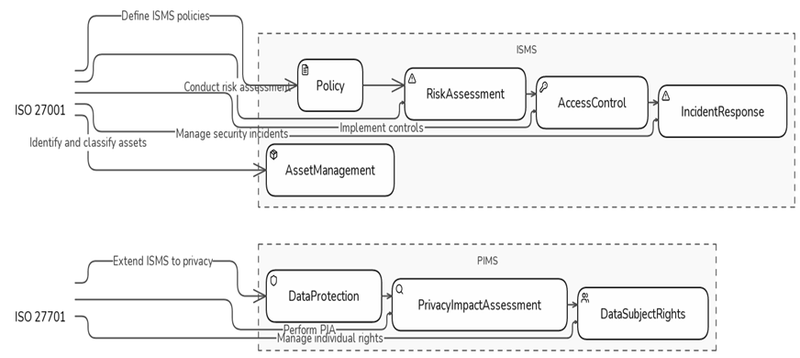
A lot of teams look up the difference between the ISO 27701 and the ISO 27001 because the customers have a high expectation that security and privacy are managed through not only policies but also documented controls, records and regular reviews. ISO/IEC 27001 is the minimum standard for an information security management system, while ISO/IEC 27701 is a privacy extension that applies to the same system and covers personal data handling and privacy governance.
The actual difference is quite easy to understand. ISO/IEC 27001 is mainly concerned with preventing unauthorized access, preventing data loss and maintaining system uptime as the main security attributes of information. On the whole, ISO/IEC 27701 is the one that adds privacy roles, privacy risk thinking and privacy controls to organizations that are involved as PII controllers and PII processors. Queries like ISO 27701 for GDPR compliance, ISO 27001 vs 27701 comparison and ISO 27701 privacy extension explained are thus getting more frequent.
This guide explains what each standard covers, ISO 27701 vs ISO 27001 requirements, how to choose between them and when it makes sense to implement ISO 27701 and ISO 27001 together. Get started with your certification process, contact us at [email protected] today! When privacy and security expectations keep rising, clarity on the right standard helps you plan faster and avoid rework.
Quick summary
ISO/IEC 27001 is the core standard for information security certification and sets the management system framework for security risk control. ISO/IEC 27701 is a privacy extension that adds privacy governance and PII handling controls on top of an existing ISO/IEC 27001 based system. If you handle personal data, ISO/IEC 27701 privacy management certification strengthens privacy proof while keeping security controls aligned. Many organizations choose both together to cover security and privacy with one set of governance routines.
Applicable ISO standards for security and privacy programs
Click here to find out more applicable standards to your industry: Pacific Certifications blogs
ISO/IEC 27001 for information security
ISO/IEC 27001 is the management system standard for controlling information security risk. It is designed for any organization that must protect data, systems and business information from loss, unauthorized access, or disruption. ISO/IEC 27001 focuses on security governance, risk assessment, control selection, internal audits and management review. In real operations it covers controls such as access management, supplier checks, logging, incident handling, asset inventory, secure configuration and evidence collection. This is why it is often the first step for teams that want a structured security baseline.
Read more: ISO/IEC 27001 certification
ISO/IEC 27701 as a privacy extension
A prepared single-site or single-operation organization can usually complete initial ISO certification in Micronesia within one audit cycle. It adds privacy roles and responsibilities, PII processing controls and privacy governance for organizations that act as PII controllers or PII processors. It is often selected when customer contracts, regulations, or sector rules demand clearer privacy proof such as lawful processing, data retention controls, third party processor oversight and support for data subject rights. This aligns with searches like ISO 27701 for GDPR compliance and ISO 27701 privacy extension explained.
Read more: ISO/IEC 27701 certification
ISO/IEC 27701 and ISO/IEC 27001 together
Many teams implement both together to avoid split governance. With an integrated approach, you can run one risk process, one internal audit program and one management review routine, while mapping privacy controls into the same control environment used for security. This approach is common for SaaS providers, fintech platforms, health platforms, HR systems and service providers managing customer personal data. It directly matches buyer questions such as ISO 27701 and ISO 27001 together and ISO 27001 and 27701 integration.
What are the requirements for ISO 27001 and ISO 27701?
Certification is not just about passing an external audit. It requires a working management system with documented rules, defined ownership and consistent records. For an ISO 27001 vs 27701 comparison, the core structure is similar, while ISO/IEC 27701 adds privacy specific requirements.
Defining scope: Define which locations, teams, systems, cloud services and PII processing activities are included.
Policies and commitments: Maintain security policies for ISO/IEC 27001 and add privacy commitments and PII governance for ISO/IEC 27701.
Risk assessment: Identify security risks such as access misuse, data leakage, vendor failures and outages, then add privacy risks such as incorrect lawful basis, excessive collection, retention gaps, weak processor control and weak data subject request handling.
Documented processes: Maintain procedures for access control, incident response, supplier review and change control, then add procedures for PII inventory, retention, privacy roles, privacy impact thinking and processor management where needed.
Training: Train staff on security handling and incident reporting and add privacy handling training for teams that process PII.
Record keeping: Maintain logs for access reviews, incidents, audits and corrective actions, plus privacy records such as PII processing records, privacy request handling records and processor oversight evidence.
Monitoring and internal audits: Run internal audits for both security and privacy controls, then complete management review with tracked actions and due dates.
Tip:If your priority is security risk and buyer security questionnaires, start with ISO/IEC 27001. If you process personal data and face privacy contract clauses, add ISO/IEC 27701 so privacy proof is built into the same system rather than managed separately.
What are the benefits of ISO 27701 and ISO 27001?
ISO certifications bring practical benefits when customers expect measurable controls and evidence. These include:
Stronger trust during onboarding by using a recognized security certification baseline
Clearer privacy proof when contracts require privacy roles and PII controls
Better alignment between security and privacy work by using one audit program and one management review routine
More consistent supplier and processor oversight through documented checks and tracked findings
Faster incident response and clearer accountability due to defined roles and tested response routines
Easier customer due diligence because evidence packs become repeatable across clients
Better control over PII handling, retention routines and request handling through privacy focused records
Stronger commercial positioning because you can match certification scope to buyer needs
ISO certification cost comparison for ISO 27001 and ISO 27701
ISO/IEC 27701 certification cost is usually not treated as a separate standalone program cost when it is added on top of ISO/IEC 27001. In most cases, ISO/IEC 27701 is implemented as an extension, so cost changes based on how much PII processing is in scope, how many systems and locations are included and how many processors and suppliers must be covered.
A practical approach is to start with ISO/IEC 27001 for the security baseline, then add ISO/IEC 27701 where personal data processing is a key part of contracts or services. This helps control audit scope and reduces duplicated work.
Timeline for ISO 27001 and ISO 27701 certification
The certification timeline depends on readiness, scope size and whether you implement both standards together. A focused scope can move faster when security and privacy records already exist and teams can show consistent operational evidence. Integrated programs typically follow one project plan with one internal audit cycle, then a two-stage external audit process where Stage 1 checks documented readiness and Stage 2 checks implementation through records and interviews. When adding ISO/IEC 27701, timeline impact is usually tied to building PII inventories, processor oversight routines, privacy request handling routines and privacy roles that can be proven with evidence.
How Pacific Certifications can help?
Pacific Certifications, accredited by ABIS, audits and certifies organizations seeking ISO/IEC 27001 and ISO/IEC 27701 certification. Whether you are a SaaS provider, IT services firm, finance platform, health platform, or a processor handling customer personal data, we provide independent third-party certification audits aligned to the standard requirements.
Here’s why organizations choose us for their ISO certification needs:
Our auditors focus on practical evidence aligned to the standard requirements and scope boundaries
We provide clear audit plans and transparent audit reports so teams can track findings and actions
We support integrated audits for ISO/IEC 27001 and ISO/IEC 27701 to reduce duplicated effort
We plan audits to reduce disruption and support remote evidence review where applicable
We support certification cycle needs including surveillance audits and recertification audits
We align evidence checks to real control areas such as access reviews, incident logs, supplier checks, PII handling records and internal audit outputs
Contact us
If you need more support with ISO/IEC 27701 vs ISO/IEC 27001 certification planning, contact us at [email protected].
Author: Alina Ansari
Read More At: Blogs by Pacific Certifications