# ISO Certification Trends in 2026: AI, Cybersecurity, Sustainability & Beyond
Author: Pacific Certifications
Author URL: https://blog.pacificcert.com/author/pacific-certifications/
Published: 2025-09-13
Meta Title: ISO Certification Trends 2026 | AI, Sustainability & Digital Trust
Meta Description: Master 2026 ISO trends: AI governance (42001), 2026 Quality & Environment revisions, Climate Action mandates, and continuous cybersecurity compliance.
Tags: iso for AI, ISO for Cybersecurity, ISO for Sustainability, ISO Certification trends, ISO 27001 in 2026
Tag URLs: iso for AI (https://blog.pacificcert.com/tag/iso-for-ai/), ISO for Cybersecurity (https://blog.pacificcert.com/tag/iso-for-cybersecurity/), ISO for Sustainability (https://blog.pacificcert.com/tag/iso-for-sustainability/), ISO Certification trends (https://blog.pacificcert.com/tag/iso-certification-trends/), ISO 27001 in 2026 (https://blog.pacificcert.com/tag/iso-27001-in-2026/)
URL: https://blog.pacificcert.com/iso-trends-in-2025-ai-and-sustainability/
## **Introduction**
In 2026, organizations in every sector are **facing** more pressure to prove accountability, resilience and trust than ever before. Clients, regulators and partners expect not only compliance but also verifiable evidence that services are secure, reliable, and sustainable. Because industries are being reshaped by global supply chains, digitalization, and climate leadership, ISO have become an invaluable asset to demonstrate credibility. Organizations are **leveraging** ISO standards to manage new risk domains of artificial intelligence, cybersecurity, sustainability and operational resilience.
The demand for ISO certifications is at an **all-time high**. Institutions are going beyond usual quality standards, choosing certifications that reflect modern risks and opportunities. AI raises ethical, bias and transparency concerns, as breaches in cyber security can halt economies. Expectations for sustainability are rising because of climate change. Global supply chains need assurance that disruption can be managed responsibly.
## **Quick summary**
This year, ISO certifications are influenced by four global priorities: AI governance, cybersecurity, sustainability, and continuity. Organizations are adopting [ISO/IEC 42001 for the management of artificial intelligence](https://pacificcert.com/iso-iec-42001-2023-artificial-intelligence-management-system/), [ISO/IEC 27001 for information security](https://pacificcert.com/iso-iec-27001-2022-information-security-management-systems/), [ISO 14001 for environmental accountability](https://pacificcert.com/iso-14001-2015-environmental-management-systems/) and [ISO 22301 for continuity planning](https://pacificcert.com/iso-22301-2019-business-continuity-management-systems/). These certifications provide a level of trust, while also establishing measurable outcomes through key performance indicators (KPIs) which measure things like incident resolution times, service level agreement (SLA) compliance, carbon footprint reduction and audit closure times.
[Review which emerging ISO standards are most relevant to your roadmap](https://pacificcert.com/contact-us/): Reflect on the role of frameworks like ISO/IEC 42001 for AI governance, ISO/IEC 27001 for information security, ISO 14001 for environment, and ISO 22301 for continuity in your context.
## **Why ISO certifications matter in 2026?**
ISO certifications are **important** because they help institutions mitigate the most pervasive risks of our time while building measurable resilience. Regulators expect compliance with international frameworks. Clients expect assurance in the form of service level agreements and partners expect assurance that risks have been managed and contained.
Without certification, institutions will be **denied access** to global supply chains, lose contracts to competitors that can provide internationally recognized assurance. Certification has become expected, not optional. Institutions that engage in ISO standards build credibility and transparency for local and global markets.
## **What are the requirements for ISO certification?**
Requirements will be different regardless of standard, but all ISO certifications have common expectations which will enhance governance, risk management and compliance. Some of the key requirements are:
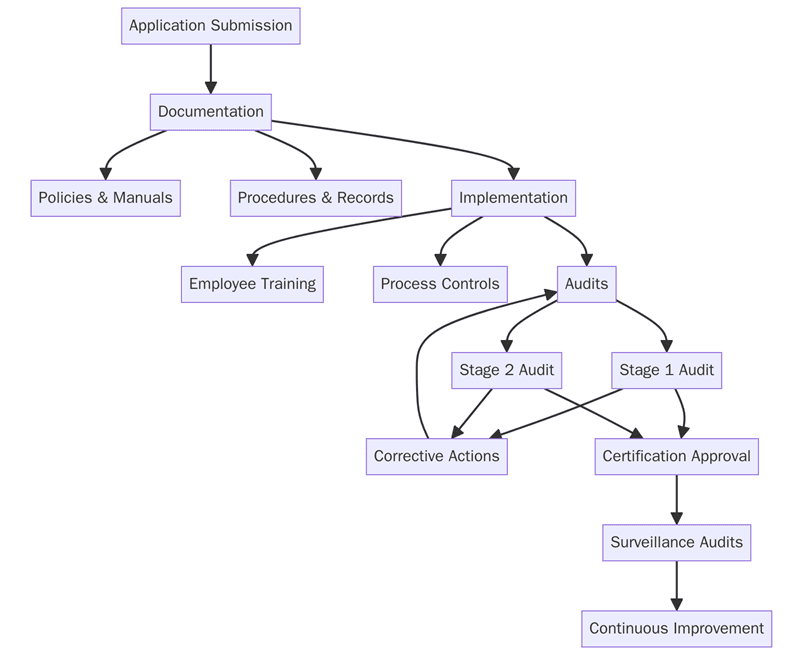
01. **Choose** and define the certification scope: quality, security, environmental or even AI systems.
02. **Define** policies for safety, governance or sustainability objectives.
03. **Complete** risk assessments to identify the weak points including data breaches or emissions or AI bias.
04. **Record** processes in the best interests of transparency and decision making.
05. **Provide** evidence records that include logs of audits, monitoring SLAs or an overview of compliance evidence.
06. **Train** the staff to understand the responsibilities under the standard they have chosen.
07. **Conduct** internal audits to show compliance or identify enhancements in processes.
08. **Leadership** reviews of objectives, risks and institutional performance.
09. **Handle** any nonconformity issues formally and record the corrective actions taken.
10. **Commit** to continual improvement and understanding that risks and industry expectations will change over time.
## **How to prepare for ISO certification?**
Preparation requires aligning internal systems with the chosen certification. Institutions can take these steps:
1. **Conduct** a gap analysis against the requirements of the relevant ISO standard.
2. **Develop** policies addressing sector-specific risks such as cybersecurity, sustainability or continuity.
3. **Train** staff and leadership to understand roles under the certification framework.
4. **Maintain** documentation of processes, performance and incident response.
5. **Implement** risk controls that address issues such as emissions, AI bias or system downtime.
6. **Run** trial audits to identify weaknesses before external certification.
7. **Engage** leadership to allocate resources and oversee certification readiness.
## **Certification audit**
The certification audit is conducted in two stages and is designed to confirm that governance systems are in place.
**Stage 1 audit:** It involves a review of documented policies, risk assessments, and monitoring frameworks.
**Stage 2 audit:** Evaluates whether systems are implemented effectively across services, operations, or products.
**Nonconformities:** They must be corrected with documented evidence before certification approval.
**Management review**: Confirms leadership commitment and oversight.
**Final certification**: It is awarded after compliance gaps are resolved.
**surveillance audits:** To ensure ongoing compliance surveillance audits are conducted annually.
R **ecertification audits:** It occur every three years to validate long-term commitment.
## **What are the benefits of ISO certification?**
ISO certifications provide organizations with specific advantages with regards to credibility, accountability and resiliency. Each of these benefits can be measured, at least in part, using key performance indicators (KPIs), but nonetheless they can be recognized through comparing downtime, service level agreement (SLA) compliance, response times and resolution times and environmental performance indicators. The major benefits of ISO certification are:
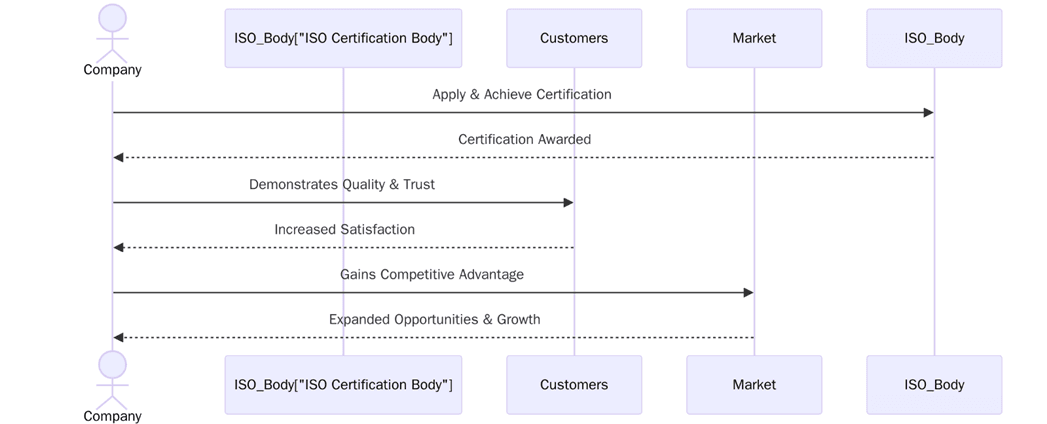
- **Increased** confidence for clients, regulators and partners
- **Access** to globally recognized assurance to enter foreign markets
- **Decreased** risk with regard to AI, cybersecurity and environmental footprint
- **Compliance** with laws and regulations and industry specific requirements
- **Tested** continuing operation organization resiliency for events of organizational interruptions of services or products
- **Enhanced** levels of staff accountability, supported by training and audits
- **Competitive** edge in bidding for foreign, international contracts
## **Recent trends in ISO certification in 2026**
In recent years, ISO certification is being **shaped** by four dominant priorities: artificial intelligence, cybersecurity, sustainability, and continuity. Institutions are increasingly adopting ISO/IEC 42001 to govern artificial intelligence responsibly, addressing risks such as bias, transparency and ethical accountability. At the same time, ISO/IEC 27001 remains the **cornerstone** of cybersecurity management, while related standards such as ISO/IEC 27032 are gaining traction to support resilience against cyber threats.
Another clear trend is the growing use of KPIs and SLAs to measure certification outcomes in practice. Institutions are tracking metrics such as audit closure times, carbon footprint reduction, data access review cycles, and uptime percentages. This **reflects** a shift where ISO certifications are no longer seen as symbolic compliance tools but as measurable frameworks for building long-term trust and resilience.
## **How can Pacific Certifications help?**
Pacific Certifications provides accredited ISO certification services across industries. Our audits help institutions manage risks, strengthen resilience and align with global standards.
Request your ISO audit plan and fee estimate, we will help you map Stage-1/Stage-2 timelines and evidence requirements for your institution.
### Contact Us
Contact us at [support@pacificcert.com](mailto:support@pacificcert.com) or visit [www.pacificcert.com](https://pacificcert.com/).
Read more: [Pacific Blogs](https://blog.pacificcert.com/)
**Author: Alina Ansari**
ISO Certification Trends in 2026
## FAQs
Q: What are the top ISO certifications in 2025?
A:
The most relevant are ISO/IEC 42001 for AI, ISO/IEC 27001 for cybersecurity, ISO 14001 for sustainability, and ISO 22301 for continuity.
Q: Why are AI certifications important now?
A:
They provide assurance that AI systems are governed ethically and transparently.
Q: How long does certification take?
A:
Most certifications take 6 to 12 months, depending on scope and readiness.
Q: Are ISO certifications mandatory?
A:
Not legally in all regions, but many contracts and regulations require them.
Q: What role do KPIs play in ISO certification?
A:
KPIs track performance such as incident resolution times, uptime rates, or emissions reduction.
Q: How do SLAs connect to ISO certifications?
A:
SLAs provide measurable commitments such as uptime guarantees, which align with certification evidence.
Q: Can smaller institutions get certified?
A:
Yes, ISO standards are scalable and apply to institutions of all sizes.
Q: What is the cost of certification?
A:
Costs depend on scope, size, and audits but are outweighed by long-term trust and market access.
Q: How often are audits required?
A:
Surveillance audits are annual, with recertification every three years.
Q: What are the long-term benefits of ISO certification?
A: They include stronger governance, reduced risks, greater resilience, and global credibility.
---
This blog is powered by Superblog. Visit https://superblog.ai to know more.
---