ISO Certifications for Waste Remediation and Materials Recovery Services, Requirements and Benefits
Introduction
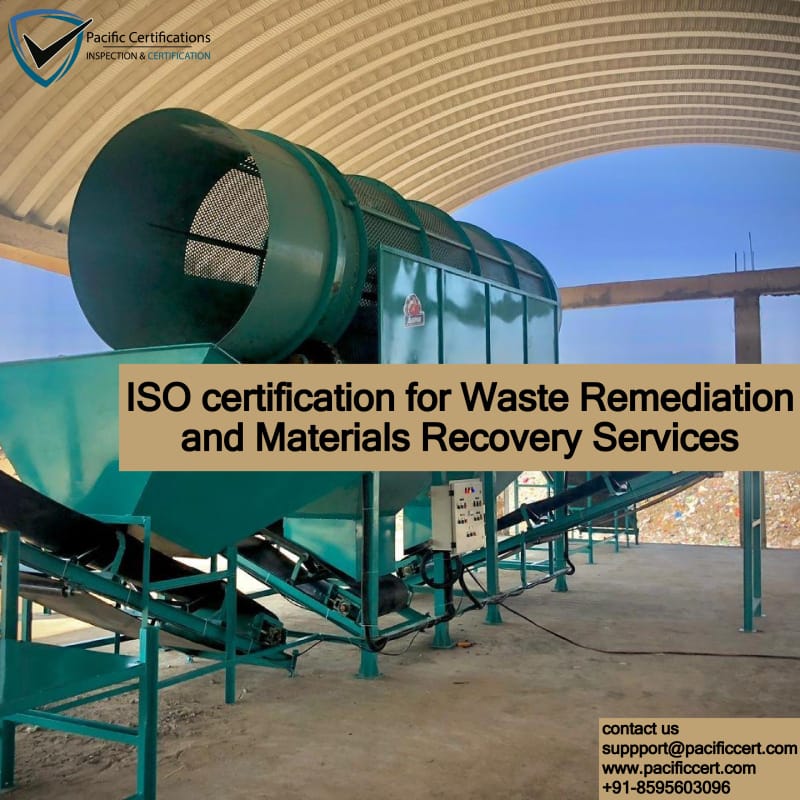
Waste remediation and materials recovery services sit at the intersection of operational urgency and environmental accountability, where work often starts with imperfect information and ends with auditable outcomes. Teams may perform site surveys and waste characterization, execute containment and removal activities, and run sorting or recovery operations that keep valuable materials moving back into productive use.
ISO certifications are essential because clients, insurers, and oversight stakeholders increasingly expect structured systems that prove control of risk, evidence-based decisions, and repeatable compliance. International regulatory standards and global compliance frameworks also raise the bar for traceability, environmentally sound management, and safe handling—especially when hazardous wastes or cross-border movements are involved.
In remediation and recovery, sustainability is proven by how responsibly damage is repaired and resources are returned to use.
Quick Summary
ISO certifications provide waste remediation and materials recovery services with internationally recognized frameworks to manage service quality through ISO 9001, occupational health and safety through ISO 45001, environmental performance through ISO 14001, and secure logistics through ISO 28000. For this industry, the real advantage is turning complex, high-risk jobs into controlled, traceable workflows that stand up to scrutiny.
For further information on how we can assist your remediation and recovery services with ISO certifications, contact us at [email protected].
Applicable ISO Standards for Waste Remediation and Materials Recovery Services
Below are the most relevant ISO standards applicable to remediation and materials recovery service providers:
ISO 9001: Quality Management Systems (QMS)
ISO 9001 improves repeatability in waste profiling, job planning, subcontractor control, and customer acceptance criteria so remediation outputs are consistent and defensible across varied sites and waste streams.
ISO 28000:2022 – Supply Chain Security Management Systems
ISO 28000 strengthens control over waste movements by formalizing security risk assessment and security plans across logistics, transfers, and custody points—helpful when preventing loss, tampering, or unauthorized access to regulated waste streams.
ISO 14001: Environmental Management Systems (EMS)
ISO 14001 helps remediation and recovery operators identify significant environmental aspects, define compliance obligations, and implement operational controls that reduce pollution and improve environmental performance across day-to-day activities.
ISO 45001: Occupational Health and Safety Management Systems
ISO 45001 supports systematic control of worker risks typical in hazardous waste handling, including training, PPE discipline, and emergency readiness to reduce exposure incidents during treatment, handling, and transport.
ISO 31000:2018 – Risk Management
ISO 31000 is particularly critical for contaminated site remediation and hazardous material recovery, supporting structured identification, assessment, and mitigation of environmental, operational, and regulatory risks.
ISO 59010:2023 – Circular Economy Guidance
ISO 59010 supports integration of circular economy principles into materials recovery operations, promoting reuse, recycling efficiency, secondary material quality, and reduced dependency on virgin resources.
ISO 14064-1 & ISO 14046 – Emissions and Water Impact Management
These standards help remediation providers measure greenhouse gas emissions and water impacts associated with treatment technologies, increasingly required for environmental reporting and sustainability disclosures.
ISO 55001:2024 – Asset Management Systems
Remediation and recovery operations rely on high-value assets such as treatment units, sorting lines, separation equipment, containment systems, and monitoring infrastructure. ISO 55001 enables lifecycle planning and reliability control.
Click here to find out more applicable standards to your industry
What are the Requirements of ISO Certifications for Waste Remediation and Materials Recovery Services?
Waste remediation and materials recovery services seeking ISO certification must establish and maintain documented policies, procedures, and records aligned with the selected ISO standards. Key requirements include the following:
ISO 14001:2015 – Environmental management systems
Define environmental aspects for containment, treatment, and recovery operations.
Control emissions, runoff, and leachate pathways using documented operational controls.
Establish compliance obligations and keep evidence of evaluated obligations.
Implement spill prevention and incident response procedures with drills.
Monitor and measure environmental performance using defined metrics.
ISO 45001:2018 – OH&S management systems
Identify hazards from chemicals, confined spaces, and heavy equipment tasks.
Implement PPE selection, fit, and maintenance controls for site tasks.
Conduct role-based training on handling and emergency response.
Establish controls for contractor safety and site access rules.
Maintain incident reporting, investigation, and corrective action records.
ISO 9001:2015 – Quality management systems
Define acceptance criteria for waste characterization and segregation outputs.
Control outsourced transport and treatment providers through documented evaluation.
Maintain traceable job records, including sampling results and transfer documentation.
Implement nonconformity handling for misclassification and process deviations.
Conduct internal audits and management reviews for continual improvement.
ISO 28000 – Supply chain security management
Assess security threats across custody points and transport legs.
Implement tracking, access control, and secure storage for regulated wastes.
Establish security plans to respond to theft, tampering, or diversion.
Monitor upstream and downstream security controls across partners.
Maintain evidence of compliance with security-related obligations.
ISO 55001 – Asset management systems
Establish an asset management policy and measurable asset objectives.
Implement lifecycle controls from acquisition through decommissioning.
Manage asset risks that could cause failures or compliance breaches.
Conduct periodic reviews and improve asset practices over time.
Maintain documented information for critical asset performance decisions.
Tip:Start by mapping your remediation and recovery lifecycle—from site assessment and material segregation to treatment, recovery, verification, and site closure—against ISO requirements to identify environmental and safety gaps early.
For further information on how we can assist your remediation and recovery services with ISO certifications, contact us at [email protected].
What are the Benefits of ISO Certifications for Waste Remediation and Materials Recovery Services?
ISO certifications give waste remediation and materials recovery services stronger operational and commercial advantages, including: listed below are the key benefits for the ISO standards applicable to hazardous waste remediation contractors, MRF operators, industrial waste transporters, and environmental services providers.:
Improved client confidence through consistent, auditable service delivery controls.
Reduced worker exposure incidents by strengthening safety protocols and training discipline.
Enhanced environmental protection through better control of impacts and compliance obligations.
Streamlined handling of nonconformities such as misclassification or process deviations.
Stronger traceability for hazardous waste movements aligned with global compliance expectations.
Better readiness for disruptions via structured continuity planning for critical operations.
Reduced security risks across transport and custody points using security management controls.
Higher equipment uptime and predictable maintenance through structured asset management practices.
Waste remediation and materials recovery services are expanding rapidly as governments and industries address legacy contamination and resource scarcity. Global environmental assessments estimate that over 20 million contaminated sites worldwide require remediation, while material recovery demand continues to grow as circular economy policies accelerate. At the same time, recovery targets in many regions now require 50–65% diversion of waste from landfills, increasing reliance on advanced recovery and recycling operations.
Operational benchmarking shows that remediation and recovery organizations implementing formal environmental, safety, and risk management systems achieve 20–30% reductions in environmental incidents, rework, and compliance findings compared to operators relying on informal controls. Looking forward, ISO-aligned governance is expected to become a baseline requirement for medium-to-large remediation and recovery providers, as certified organizations demonstrate improved environmental outcomes, better audit performance, and stronger alignment with sustainability and circular economy mandates.
How Pacific Certifications Can Help?
Pacific Certifications, accredited by ABIS, acts as an independent certification body for waste remediation and materials recovery service providers by conducting impartial audits against applicable ISO standards. Our role is to objectively assess whether documented management systems and operational practices conform to international ISO requirements, based strictly on verifiable evidence and records.
We support remediation and recovery organizations through:
Independent certification audits conducted in accordance with ISO/IEC 17021
Practical assessment of real remediation operations, environmental controls, and recovery processes
Clear audit reporting reflecting conformity status and certification decisions
Internationally recognized ISO certification upon successful compliance
Surveillance and recertification audits to maintain certification validity
Contact us
If you need support with ISO certification for your waste remediation or materials recovery services, contact us at [email protected]or +91-8595603096.
Author: Ashish
Read more: Pacific Blogs