ISO Certifications for Technical and Vocational Education Institutes, Requirements and Benefits
Introduction
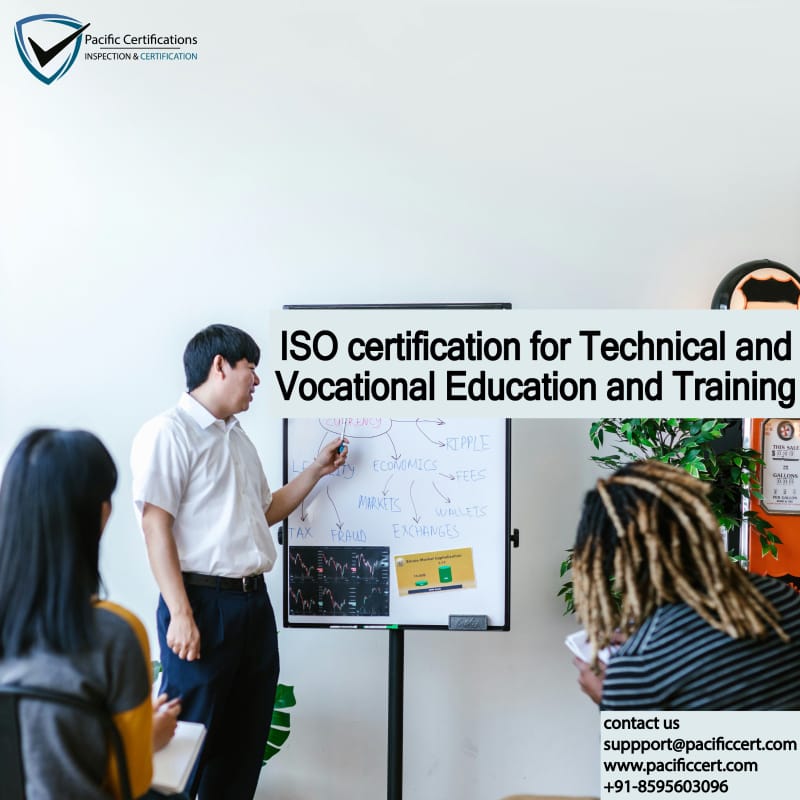
Technical and vocational education institutes (TVET) equip learners with practical skills through hands-on workshops, simulator training, industry apprenticeships, competency assessments, certification exams, and career placement services across trades like welding, automotive repair, IT networking, hospitality management, and electrical installations. These facilities grapple with equipment breakdowns in high-use labs, instructor competency gaps, workshop safety hazards involving heavy machinery and chemicals, industry alignment challenges for curriculum relevance, and high dropout rates amid economic pressures demanding rapid employability.
Global workforce development frameworks prioritize skills-based training, quality assurance, and industry relevance, establishing ISO certifications as critical for TVET institutes. These standards facilitate systematic governance of training delivery, learner progression, facility management, and stakeholder partnerships while addressing regulatory demands for verifiable outcomes, safety compliance, and data integrity in skill-building environments.
Quality vocational education is built when systems support skills, not when skills survive weak systems.
Quick Summary
ISO certifications provide technical and vocational education institutes with internationally recognized frameworks to manage training quality through ISO 9001, learning service delivery through ISO 21001, information security through ISO/IEC 27001, privacy protection through ISO/IEC 27701, occupational health and safety through ISO 45001, environmental responsibility through ISO 14001, IT service reliability through ISO/IEC 20000-1, and institutional resilience through ISO 22301. These certifications help institutes improve academic governance, training consistency, regulatory compliance, and stakeholder confidence.
For more information on how we can assist your technical or vocational education institute with ISO certifications, please contact us at [email protected].
Applicable ISO Standards for Technical and Vocational Education Institutes
Below are the most relevant ISO standards applicable to technical and vocational education providers:
ISO 9001: Quality Management Systems (QMS)
ISO 9001 supports structured control of admissions, curriculum delivery, practical training, examinations, certification issuance, and continuous improvement, ensuring consistent training quality across programs and campuses.
ISO 21001: Educational Organizations Management Systems (EOMS)
ISO 21001 is a sector-specific standard designed for educational organizations. It focuses on learner satisfaction, inclusive education, curriculum planning, assessment integrity, trainer competence, feedback mechanisms, and continuous improvement in learning outcomes—making it especially relevant for vocational and skills-based institutes.
ISO/IEC 27001: Information Security Management Systems (ISMS)
ISO/IEC 27001 helps organizations manage the security of assets such as financial information, intellectual property, employee details, and information entrusted by third parties.
ISO 45001: Occupational Health and Safety Management Systems
Vocational institutes operate workshops, laboratories, machinery, and tools that pose physical risks. ISO 45001 provides a systematic framework to manage safety hazards, prevent injuries, and comply with workplace safety regulations.
ISO/IEC 20000-1:2018 – IT Service Management
With increasing reliance on learning management systems, online assessments, and digital student services, ISO/IEC 20000-1 ensures reliability, availability, and controlled management of IT-based education services.
ISO 22301:2019 – Business Continuity Management Systems
ISO 22301:2019 equips TVET institutes to withstand disruptions like equipment failures halting workshops, instructor shortages from illnesses, cyber incidents locking digital resources, or natural disasters damaging facilities through predefined impact analyses identifying mission-critical functions such as certification exams and apprenticeship placements. Recovery strategies include redundant lab setups, instructor cross-training pools, cloud-based course continuity, and communication protocols with industry partners to reschedule placements
Click here to find out more applicable standards to your industry
What are the Requirements of ISO Certifications for Technical and Vocational Education Institutes?
Technical and vocational education institutes seeking ISO certification must establish and maintain documented policies, procedures, and records aligned with the selected ISO standards. Key requirements include the following:
ISO 21001:2025 – Educational Organizations Management Systems
Establish competency-based learning objectives mapped to industry standards and labor market demands explicitly.
Document practical curricula, simulation protocols, apprenticeship coordination, and skills validation assessments thoroughly.
Implement trainee feedback surveys, employer validation mechanisms, and progression monitoring systems actively.
Mandate instructor certification verification, pedagogical training, and performance evaluation processes annually.
ISO 9001:2015 – Quality Management Systems
Define standardized workflows for enrollment verification, workshop rostering, equipment issuance, and certification issuance.
Monitor KPIs including completion rates, employer satisfaction, pass ratios, and resource utilization metrics regularly.
Execute root-cause analysis for training delivery failures, complaints, or quality deviations with corrective plans.
Hold periodic management reviews integrating audit results, stakeholder inputs, and enhancement strategies comprehensively.
ISO 45001:2018 – Occupational Health & Safety
Perform hazard assessments covering machinery operations, chemical storage, welding fumes, and height work risks.
Enforce PPE compliance, lockout/tagout procedures, ventilation standards, and emergency eyewash installations rigorously.
Deliver safety induction training, conduct daily pre-use inspections, and simulate accident responses frequently.
Record incidents, investigations, safety audits, and trend analyses to inform preventive control enhancements.
ISO/IEC 27001:2022 – Information Security Management
Inventory digital assets like trainee databases, e-learning platforms, CCTV feeds, and certification ledgers completely.
Apply encryption, role-based access, firewall configurations, and multi-factor authentication across systems.
Train personnel on secure data handling, incident response playbooks, and threat recognition protocols routinely.
Schedule independent security audits, vulnerability scans, and compliance validations periodically.
ISO 22301:2019 – Business Continuity Management
Analyze impacts on core services like lab sessions, assessments, and placements under various disruption scenarios.
Formulate recovery time objectives with backup equipment, remote training alternatives, and partner contingencies.
Test plans through drills covering IT failures, facility damage, and staff absences systematically.
Update frameworks post-exercise incorporating gaps identified and lessons documented formally.
Tip:Start by mapping your student lifecycle—from admissions and training delivery to assessments, certification, and alumni engagement—against ISO requirements to identify governance, safety, and data-handling gaps early.
For further information on how we can assist your technical and vocational education institute with ISO certifications, contact us at [email protected].
What are the Benefits of ISO Certifications for Technical and Vocational Education Institutes?
ISO certifications deliver technical and vocational education institutes with strategic skill-building and operational superiority, including: listed below are the key benefits for the ISO standards applicable:
Industry-aligned curricula boost graduate employability and certification recognition rates dramatically.
Hazardous workshop controls slash accident frequencies while elevating safety competence credentials.
Standardized processes streamline enrollment-to-placement pipelines enhancing throughput efficiency.
Robust instructor validation elevates training quality and reduces skill delivery inconsistencies.
Fortified cybersecurity shields trainee records fostering trust with employers and regulators.
Resilient IT services sustain blended training amid technical glitches or cyber threats.
Sustainable lab practices cut waste costs and promote green skills training appeal.
Verified quality metrics secure funding, partnerships, and international trainee flows.
Risk-managed operations minimize disruptions preserving revenue from cohort cycles.
Technical and vocational education markets exceeded USD 812 billion in 2024, forecasting USD 1.43 trillion by 2030 at 10% CAGR, driven by digital upskilling demands, automation workforce transitions, and government reskilling initiatives across Asia-Pacific manufacturing hubs and European green job programs. Blended TVET models incorporating VR simulations now dominate 35% of delivery as institutes adapt to lifelong learning paradigms.
Certified TVETs achieve 20-40% learner satisfaction gains and stronger industry ties per benchmarks, with ISO 21001 emerging as quality hallmark. By mid-century, ISO 45001 safety alongside 27001 digital protections become prerequisites for funding eligibility amid rising workshop tech complexities and data regulations, empowering institutes in global talent pipelines.
How Pacific Certifications Can Help?
Pacific Certifications, accredited by ABIS, acts as an independent certification body for technical and vocational education institutes by conducting impartial audits against applicable ISO standards. Our role is to objectively assess whether documented management systems and educational practices conform to international ISO requirements, based strictly on verifiable evidence and institutional records.
We support education institutes through:
Independent certification audits conducted in accordance with ISO/IEC 17021
Practical assessment of real training, assessment, and governance processes
Clear audit reporting reflecting conformity status and certification decisions
Internationally recognized ISO certification upon successful compliance
Surveillance and recertification audits to maintain certification validity
Contact us
If you need support with ISO certification for your technical or vocational education institute, contact us at [email protected]or +91-8595603096.
Author: Ashish
Read more: Pacific Blogs