ISO Certifications in El Salvador, Popular Standards, Requirements and Benefits
Introduction
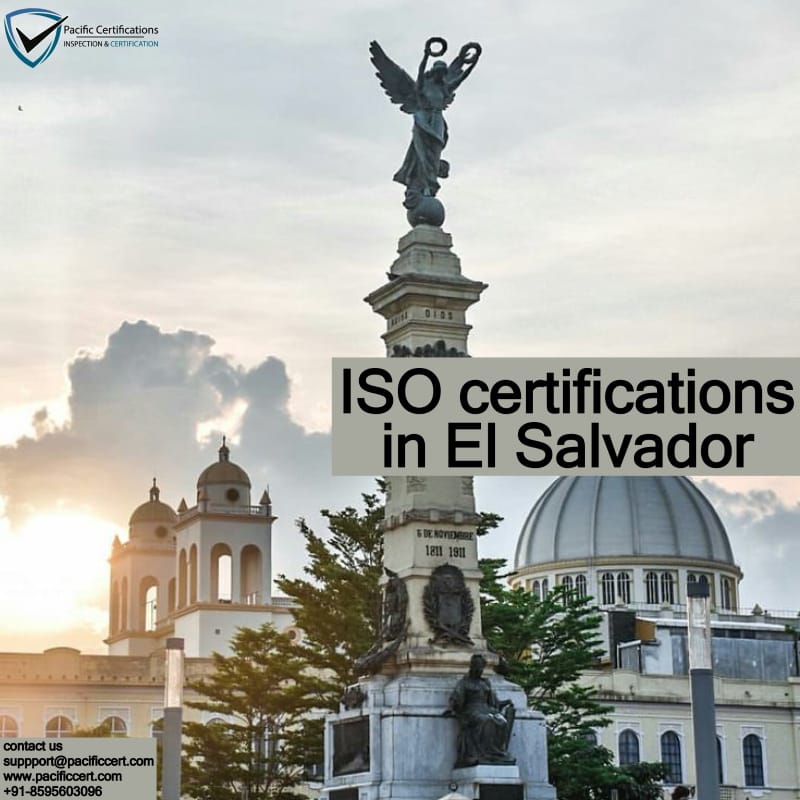
El Salvador is Central America's most densely populated nation, with an economy shaped by manufacturing, agri-food exports, textiles and apparel, financial services, construction, logistics, and a growing technology sector, with San Salvador serving as the principal commercial and industrial hub. As a CAFTA-DR member with preferential access to the US market and active engagement with SICA regional trade frameworks, Salvadoran businesses operate in an internationally integrated commercial environment where ISO certification is increasingly a practical governance investment for qualifying with US buyers, multinational supply chains, and institutional partners. The Organismo Salvadoreño de Normalización (OSN), operating under the National Quality Council alongside OSARTEC, serves as El Salvador's ISO member body, actively adopting international standards and supporting quality culture development across Salvadoran industry and public administration.
For organizations seeking to qualify for international supply chains, access CAFTA-DR preferential market channels, attract foreign investment, or satisfy the governance requirements of institutional buyers and development partners, certification provides the documented management system evidence that external stakeholders require during supplier qualification and compliance assessments.
Quick Summary
The most widely pursued ISO standards in El Salvador include ISO 9001 for quality management, ISO 14001 for environmental management, ISO 45001 for occupational health and safety, ISO 22000 for food safety management, ISO 27001 for information security, and ISO 22301 for business continuity. Certified Salvadoran organizations gain stronger positioning in CAFTA-DR and US buyer qualification, textile and apparel supply chain approvals, food and agricultural export market access, development-funded tender eligibility, and institutional partner credibility. Key challenges include building internal audit capability in SMEs, sustaining documentation discipline between surveillance cycles, and embedding quality culture in high-volume manufacturing environments.
For more information on ISO certification services in El Salvador, contact us at support@pacificcert.com.
Economic Context and Industry Overview
El Salvador's economy is anchored by manufacturing, including the maquila textile and apparel sector that serves US brands under CAFTA-DR, alongside coffee, sugar, and food processing that contribute significant agricultural export revenues. The country's free trade zones and industrial parks in San Salvador, Santa Ana, San Miguel, and Sonsonate host manufacturing operations in textiles, garments, medical devices, plastics, chemicals, and electronics serving both US and regional export markets. Remittances from the Salvadoran diaspora in the United States are the largest single income source, sustaining domestic consumption across food, retail, and services sectors.
Financial services, logistics, construction, and professional services form the backbone of El Salvador's services economy, with San Salvador operating as a regional commercial hub. The ICT sector is growing, supported by government digitalization programs and a young, English-capable workforce attracting business process outsourcing and technology services investment. Construction and infrastructure development, funded by the Inter-American Development Bank, World Bank, USAID, and domestic investment, generates consistent demand for quality and safety management certification among engineering and contracting organizations.
Why ISO Certifications Matter in El Salvador
For Salvadoran textile and apparel manufacturers, food processors, and industrial producers, ISO 9001, ISO 14001, and ISO 45001 are practical tools for demonstrating quality, environmental, and safety governance that US brands and multinational buyers apply as baseline requirements during vendor qualification under CAFTA-DR supply chain assessments. El Salvador's OSN actively promotes ISO standards adoption as a national competitiveness strategy, recognizing that certification enables Salvadoran businesses to meet the governance expectations of international buyers and access markets that compliance barriers previously restricted.
For construction contractors, engineering firms, and professional services organizations participating in development-funded programs, multilateral bodies including the Inter-American Development Bank, World Bank, and USAID apply governance documentation requirements that ISO-certified organizations satisfy more effectively during prequalification. El Salvador's growing ICT sector and financial services industry face data security governance requirements aligned with the country's new Personal Data Protection Law, making ISO 27001 increasingly relevant as both a legal compliance support tool and a commercial credential for international enterprise clients. Certification reduces the administrative burden of repeated client audits by maintaining continuously updated evidence files that accelerate contract approvals and institutional onboarding across all sectors.
Important Standards Often Requested in El Salvador
Popular ISO Standards in El Salvador
ISO 9001:2015 - Quality Management Systems in El Salvador
ISO 9001:2015 gives Salvadoran organizations a structured framework for governing product and service quality through documented process controls, competence management, and systematic performance monitoring that US buyers and institutional partners can independently verify. For textile and apparel manufacturers, food and beverage processors, construction contractors, logistics operators, and professional services firms, the standard creates the organized quality evidence that multinational brands, CAFTA-DR buyers, and development-funded procurement bodies review during supplier qualification. OSN's active adoption of ISO standards as the primary reference for El Salvador's national quality system reflects the standard's central importance for Salvadoran export competitiveness.
Read more about ISO 9001
ISO 14001:2015 - Environmental Management Systems in El Salvador
ISO 14001:2015 enables Salvadoran textile producers, coffee and sugar processors, manufacturers, and construction contractors to govern their environmental footprint through legal compliance monitoring, impact assessment, and structured improvement programs. The standard is directly relevant to El Salvador's export manufacturing sectors where water use, chemical management, wastewater discharge, and waste handling carry environmental significance that US brands and multinational buyers evaluate during supply chain sustainability assessments. Certification supports alignment with El Salvador's Environmental Law and the sustainability governance requirements of international buyers applying corporate sustainability criteria during Salvadoran supplier qualification reviews.
Read more about ISO 14001
ISO 45001:2018 - Occupational Health and Safety in El Salvador
ISO 45001:2018 provides a systematic framework for identifying workplace hazards, implementing safety controls, and building occupational health and safety governance across all organizational types and sizes. In El Salvador, the standard is particularly relevant to maquila textile and apparel factories, manufacturing plants in free trade zones, construction sites, coffee and sugar harvesting operations, and logistics facilities where worker safety governance carries regulatory significance under El Salvador's Labour Code and commercial importance for organizations engaging with US brands who apply social compliance auditing during supplier qualification.
Read more about ISO 45001
ISO 22000:2018 - Food Safety Management in El Salvador
ISO 22000:2018 integrates HACCP controls with a comprehensive management system covering hazard analysis, prerequisite programs, corrective actions, and supply chain traceability from production through export distribution. El Salvador's coffee, sugar, sesame, processed food, and beverage export sectors targeting US, EU, and specialty international markets depend on documented food safety management to satisfy the traceability and compliance requirements of major importers, US FDA food safety regulations, and international retail buyers. The standard supports compliance with El Salvador's food safety legislation and the CODEX Alimentarius standards that the OSN references, reducing product rejection risks at US and international inspection points and strengthening the commercial positioning of Salvadoran food exporters.
Read more about ISO 22000
ISO 27001:2022 - Information Security Management in El Salvador
El Salvador enacted a Personal Data Protection Law establishing formal data governance obligations that make structured information security management a legal compliance priority for organizations handling personal data across financial services, healthcare, IT, and government sectors. ISO 27001:2022 gives Salvadoran technology firms, banks, BPO operators, and professional services organizations the internationally recognized framework for demonstrating that information security risks are identified, treated, monitored, and reviewed through a disciplined management cycle that directly supports compliance with the country's new data protection framework. For firms serving US enterprise clients, multinational brands, or international financial partners, certification is increasingly treated as a strategic governance credential that satisfies both domestic regulatory requirements and international client security governance expectations.
Read more about ISO 27001
ISO 22301:2019 - Business Continuity Management in El Salvador
ISO 22301:2019 provides the internationally recognized framework for establishing, implementing, and maintaining business continuity management systems that enable organizations to sustain critical operations during and after disruptive events. El Salvador's geographic exposure to seismic activity, volcanic eruptions, tropical storms, and flooding creates compelling practical drivers for structured business continuity planning across financial services, logistics, manufacturing, and critical infrastructure organizations.
Read more about ISO 22301
ISO 13485:2016 - Medical Devices Quality Management in El Salvador
ISO 13485:2016 specifies quality management requirements for organizations involved in the manufacture and supply of medical devices and healthcare products. El Salvador's free trade zones host medical device and healthcare product manufacturers targeting US and international markets where ISO 13485 certification, alongside US FDA registration, forms part of the market entry compliance framework.
Read more about ISO 13485
ISO 50001:2018 - Energy Management Systems in El Salvador
ISO 50001:2018 helps Salvadoran manufacturers, free trade zone operators, hotels, and large commercial facilities systematically reduce energy consumption and demonstrate governance to investors and international buyers applying sustainability criteria. El Salvador's manufacturing sector, including energy-intensive textile, garment, food processing, and chemicals production operations, faces meaningful energy cost pressures that make structured energy management a commercially important investment for improving operational margins.
Read more about ISO 50001
Certification Process in El Salvador
Gap assessment: Review current operations and identify gaps against the chosen ISO standard.
Documentation setup: Develop or update policies, procedures, and records aligned with actual operations.
System implementation: Apply the management system across departments and integrate it into daily workflows.
Employee training: Train staff to ensure they understand and can effectively follow the system.
Internal review: Conduct internal checks to identify and address non-conformities.
Management review: Evaluate performance, risks, and improvement priorities at the leadership level.
Stage 1 review: Certification body assesses documentation and organizational readiness.
Stage 2 assessment: Full evaluation of implementation across operations and sites.
Certification approval: Certificate is issued after successful completion and closure of findings.
Ongoing maintenance: Annual surveillance and recertification every three years to maintain validity.
What are the Requirements of ISO Certifications in El Salvador?
Organizations in El Salvador must address the following to achieve and sustain ISO certification:
Top management must actively lead the management system, establish policies, allocate resources, and regularly review organizational performance.
Organizations must maintain accurate policies, procedures, records, and evidence files that reflect actual operations and comply with ISO and Salvadoran regulatory requirements.
Businesses must identify operational risks linked to CAFTA-DR compliance, US buyer expectations, seismic and climate-related disruptions, food safety obligations, and cybersecurity threats.
Core operations should operate under documented process controls covering textile manufacturing, food processing, construction safety, maquila operations, and digital data management.
Documentation must comply with the Labour Code, Environmental Law, Food Safety Law, Personal Data Protection Law, and international export-related requirements.
Organizations must maintain required standard-specific records such as HACCP logs, risk treatment files, environmental registers, energy records, and business continuity documentation.
Measurable KPIs should be established and monitored regularly to support decision-making and continual improvement.
Periodic internal audits must be conducted to evaluate compliance and identify improvement opportunities before certification assessments.
All non-conformities should be addressed through root cause analysis and properly implemented corrective actions.
Organizations must demonstrate continual improvement through active implementation of the PDCA cycle and ongoing system enhancement.
For expert guidance on ISO certification requirements for your Salvadoran organization, contact us at support@pacificcert.com.
Benefits of ISO Certifications in El Salvador
ISO certification helps Salvadoran businesses meet US buyer and CAFTA-DR supplier requirements for textiles, food, manufacturing, and service exports.
ISO 9001, ISO 14001, and ISO 45001 support supplier qualification for maquila and free trade zone manufacturing operations.
ISO 22000 supports compliance with US FDA food safety and traceability requirements for coffee, sugar, food, and beverage exports.
ISO 27001 strengthens compliance with personal data protection requirements and improves information security governance.
ISO-certified organizations improve eligibility for projects funded by World Bank, Inter-American Development Bank, and United States Agency for International Development.
ISO 14001 demonstrates environmental responsibility and supports sustainability expectations from multinational brands and global buyers.
ISO 45001 improves workplace safety across manufacturing, construction, agriculture, and maquila operations.
ISO 22301 demonstrates strong business continuity planning for earthquakes, tropical storms, and operational disruptions.
ISO 13485 supports medical device manufacturers seeking access to international healthcare and regulatory markets.
ISO 50001 helps manufacturers and industrial facilities reduce energy waste and improve operational efficiency.
Documented process controls reduce waste, improve consistency, and strengthen operational performance.
Ongoing continual improvement practices help organizations remain competitive and adaptable to changing export and regulatory requirements.
Market Trends and Industry Outlook
ISO certification demand in El Salvador is growing steadily as CAFTA-DR trade integration deepens, US brand governance expectations rise, El Salvador's Personal Data Protection Law creates new compliance drivers for information security, and development partner investment intensifies. Globally, ISO 9001 remains the world's most widely adopted management standard with over 1.47 million certificates in the 2024 ISO Survey, and El Salvador's export orientation and CAFTA-DR integration are driving accelerating adoption across manufacturing, agri-food, and services sectors. The ICT and financial services sector is the fastest-growing ISO 27001 adoption market in El Salvador, reflecting the sector's growing international commercial exposure and the compliance urgency created by the country's new Personal Data Protection Law.
The textile and apparel sector continues to be the primary driver of ISO 9001, ISO 14001, and ISO 45001 certification demand as US brand buyers raise governance documentation requirements for CAFTA-DR maquila suppliers. Food processing and agri-food certification under ISO 22000 is gaining momentum as US FDA food safety import regulations tighten and international specialty buyers raise traceability documentation requirements for Salvadoran coffee and food origin suppliers. ISO 13485 adoption is growing among El Salvador's free trade zone medical device manufacturers as US FDA registration requirements and multilateral health procurement programs create direct certification incentives.
Emerging standards including ISO 42001 for AI management systems are attracting early interest from San Salvador's technology sector as AI-enabled digital services develop for international clients. ISO 22301 is gaining relevance across financial services, logistics, and critical infrastructure as El Salvador's seismic and climate risk profile creates compelling operational justifications for structured business continuity governance.
ISO Certifications Across El Salvador's Key Sectors
El Salvador's diverse industrial base means that certification relevance varies meaningfully across the country's main commercial and industrial sectors.
Challenges Faced in El Salvador
Organizations in El Salvador often face challenges when implementing ISO certifications due to limited resources and staffing. Many SMEs in construction, food processing, and services operate without dedicated quality management personnel, placing implementation responsibility on operational managers already handling commercial and production activities. Maintaining effective internal audit programs can also be difficult because of limited staffing and auditor independence requirements.
High-volume maquila and manufacturing environments with frequent workforce rotation create additional challenges in delivering training, maintaining competency records, and ensuring consistent awareness of management system requirements across production teams. Maintaining documentation discipline during peak production periods can also be difficult as operational priorities compete with compliance activities. Building a sustainable culture of continual improvement requires strong leadership commitment beyond the initial certification stage, especially for organizations pursuing certification mainly to satisfy buyer requirements.
Cost of ISO Certifications in El Salvador
The cost of ISO certification in El Salvador depends on factors such as organizational size, number of employees, operational scope, and the specific ISO standard selected. Costs also vary based on process complexity, number of operational sites, and the level of consultancy and documentation support required. Organizations implementing integrated systems such as ISO 9001, ISO 14001, and ISO 45001 together can reduce overall costs through combined certification activities and shared processes. For a customized quotation based on your organization’s profile, contact support@pacificcert.com.
Timeline for ISO Certificationin El Salvador
The certification timeline depends on the size and complexity of the organization. Smaller businesses with straightforward operations can typically complete certification within four to eight weeks. Mid-sized textile manufacturers, food processors, construction firms, and IT service providers generally require two to four months for documentation, training, and internal reviews. Large multi-site manufacturers or free trade zone organizations implementing multiple standards may require three to six months for full implementation. Organizations targeting US buyer approvals, development-funded projects, or data protection compliance milestones should begin the process early to ensure timely certification.
How Pacific Certifications Can Help
Pacific Certifications is an ABIS-accredited certification body providing independent certification services for sectors including textiles, apparel, food processing, manufacturing, construction, healthcare, logistics, financial services, IT services, and medical devices. The organization delivers internationally recognized ISO certificates accepted by US buyers, international regulators, development institutions, and global stakeholders.
Pacific Certifications provides:
Certification audits for ISO 9001, ISO 14001, ISO 45001, ISO 22000, ISO 27001, ISO 22301, ISO 13485, and ISO 50001.
Multi-site certification support for manufacturers, free trade zone operators, and food processing organizations across El Salvador.
Surveillance and recertification activities to maintain ongoing certificate validity.
Internationally recognized certificates accepted by US buyers, CAFTA-DR procurement bodies, development finance institutions, and international partners.
Contact us
If you need support with your ISO Certification process in Hawaii, contact us at support@pacificcert.com or +91-8595603096.
Author: Alina
Ready to get ISO certified?
Contact Pacific Certifications to begin your certification journey today!
Suggested Certifications –
Read more: Pacific Blogs