ISO Certifications for Hydro-Electricity Generation Businesses, Requirements and Benefits
Introduction
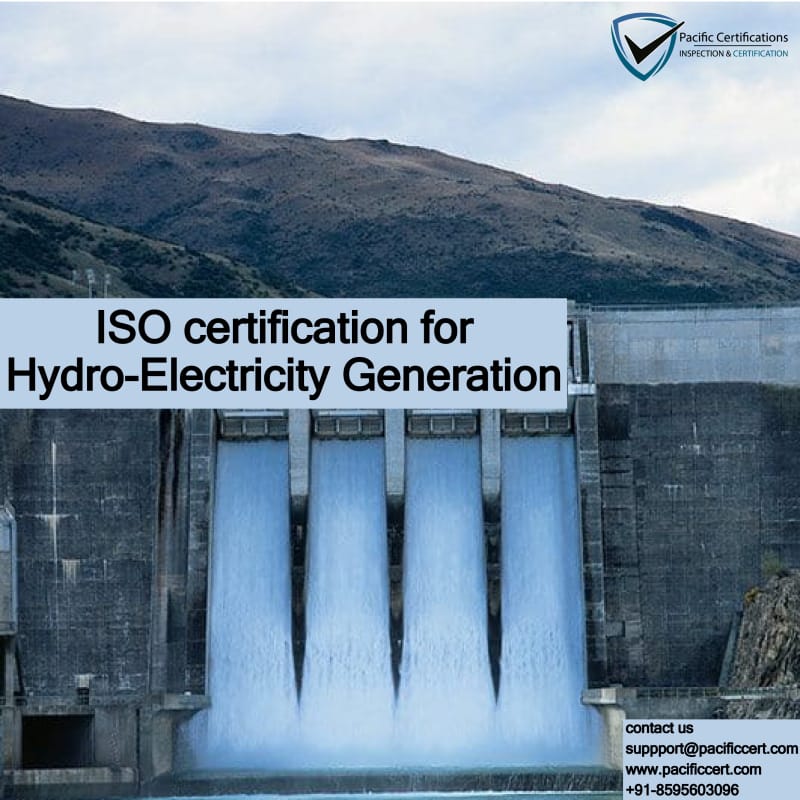
Hydro-electricity generation businesses manage complex, high-stakes environments where water surges through penstocks, turbines spin under immense hydraulic pressure, and dams hold back reservoirs prone to seismic or flood events. Operators handle routine tasks like turbine inspections, gate maintenance, switchyard patrols, and load-response maneuvers that demand split-second decisions. These facilities also oversee spillway releases, fish passage systems, and erosion control during high flows, all while balancing grid demands with environmental safeguards.
ISO certifications are vital amid escalating international regulatory standards for renewable energy infrastructure, where grid codes, emission controls, and safety benchmarks now require proven management systems. Global compliance frameworks stress risk-based oversight for aging assets, emergency preparedness, and sustainable operations, making certification a non-negotiable for securing contracts and financing.
In hydropower, sustainability depends on disciplined control of water, assets, and risk.
Quick Summary
ISO certifications provide hydro-electricity generation businesses with internationally recognized frameworks to manage operational quality through ISO 9001, energy performance through ISO 50001, environmental protection through ISO 14001 and ISO 14046, occupational health and safety through ISO 45001, asset and infrastructure reliability through ISO 55001, risk governance through ISO 31000, information security through ISO/IEC 27001, and operational resilience through ISO 22301. These certifications help hydropower operators ensure safe generation, regulatory compliance, efficient asset use, and long-term sustainability.
For more information on how we can assist your hydro-electricity generation business with ISO certifications, please contact us at [email protected].
Applicable ISO Standards for Hydro-Electricity Generation Businesses
Below are the most relevant ISO standards applicable to hydropower producers and dam-based electricity generation operators:
ISO 55001:2024 – Asset Management Systems
ISO 55001 is critical for hydro-electricity businesses managing long-life, high-risk assets such as dams, penstocks, turbines, generators, spillways, and control structures. It supports lifecycle planning, preventive maintenance, structural integrity monitoring, and risk-based investment decisions.
ISO 50001:2018 – Energy Management Systems
ISO 50001 enables hydropower operators to systematically monitor turbine efficiency, generation losses, auxiliary energy consumption, and grid interface performance, supporting optimized output and reduced operational losses.
ISO 9001: Quality Management Systems (QMS)
ISO 9001 ensures repeatable processes for maintenance scheduling, load-response testing, and reporting to grid operators, minimizing unplanned outages
ISO 14001:2015 and ISO 14046:2014 – Environmental and Water Impact Management
Hydropower operations directly affect river flows, aquatic ecosystems, sediment transport, and downstream communities. ISO 14001 and ISO 14046 provide structured frameworks for managing environmental impacts, water use efficiency, and compliance with environmental permits.
ISO 31000:2018 – Risk Management
ISO 31000 supports structured identification and mitigation of risks related to dam safety, flooding, mechanical failure, seismic events, and regulatory non-compliance, which are central to hydro-electric operations.
ISO 27001: Information Security Management Systems (ISMS)
Modern hydro plants rely heavily on digital control systems, SCADA platforms, and remote monitoring. ISO/IEC 27001 provides safeguards for operational technology, system availability, and cyber-resilience.
Click here to find out more applicable standards to your industry
What are the Requirements of ISO Certifications for Hydro-Electricity Generation Businesses?
Hydro-electricity generation businesses seeking ISO certification must establish and maintain documented policies, procedures, and records aligned with the selected ISO standards. Key requirements include the following:
ISO 50001:2018 – Energy Management Systems
Establish energy policy covering turbine efficiency and baseline performance metrics.
Monitor key indicators like head recovery, flow rates, and parasitic consumption daily.
Implement EnPIs for generator losses and optimize during low-head conditions.
Conduct energy reviews tied to penstock cleaning and blade refurbishments.
Train operators on load optimization and surge-minimizing ramp rates.
ISO 55001:2014 – Asset Management
Define asset management objectives for penstocks, turbines, and spillway gates.
Assess risks from transients, corrosion, and seismic events annually.
Plan maintenance using condition monitoring and surge test data.
Document lifecycle costs for runner replacements and liner inspections.
Review SAMP effectiveness through post-incident asset performance analysis.
ISO 45001:2018 – Occupational Health & Safety
Identify hazards in switchyards, turbine pits, and reservoir access routes.
Control electrocution risks with LOTO for generators and transformers.
Manage falls from ladders and platforms near intake screens.
Establish rescue procedures for submerged or flood-trapped workers.
Monitor noise, vibration, and confined-space air quality routinely.
ISO 14001:2015 – Environmental Management Systems
Map significant aspects like erosion, fish entrainment, and methane from reservoirs.
Implement spillway and fish passage operational controls during floods.
Monitor downstream water quality and sediment loads post-drawdown.
Maintain compliance registers for grid codes and biodiversity rules.
Conduct drills for oil spills from transformers or hydraulic systems.
ISO 22301:2019 – Business Continuity
Identify critical functions: grid synchronization and emergency shutdowns.
Develop BCMS with RTOs for turbine restarts after blackouts.
Test continuity plans for flood scenarios and cyber disruptions.
Document dependencies on external spillway operators and suppliers.
Review post-exercise to refine surge chamber and intake protocols.
Tip:Start by mapping your hydropower lifecycle—from water intake and turbine operation to maintenance, flood management, and grid dispatch—against ISO requirements to identify asset, safety, and environmental control gaps early.
For further information on how we can assist your hydro-electricity generation business with ISO certifications, contact us at [email protected].
What are the Benefits of ISO Certifications for Hydro-Electricity Generation Businesses?
ISO certifications deliver hydro-electricity generation businesses tangible operational and commercial advantages, including: listed below are the key benefits for the ISO standards applicable to run-of-river operators, pumped storage plants, large dam owners, and independent power producers:
Enhanced turbine efficiency through baseline tracking and loss reduction strategies.
Reduced penstock fatigue from controlled ramp rates and surge mitigation.
Stronger safety outcomes in high-risk zones like switchyards and intake ladders.
Better regulatory alignment for aging dams and environmental baselines.
Streamlined maintenance planning that extends asset life and cuts downtime.
Higher grid reliability with proven black-start and load-response capabilities.
Improved stakeholder confidence for financing and long-term contracts.
Lower energy waste via optimized generator and auxiliary system performance.
Hydro-electricity remains the world’s largest source of renewable power, accounting for approximately 16% of global electricity generation and over 50% of renewable electricity output. As hydropower assets age, many facilities now exceed 40–50 years of operation, increasing focus on dam safety, asset rehabilitation, and performance optimization. Regulatory authorities are tightening oversight, particularly around structural integrity, environmental flows, and emergency preparedness.
Operational benchmarking shows that hydropower operators implementing structured asset, safety, and environmental management systems achieve 15–25% reductions in unplanned outages and maintenance incidents. Looking toward 2030, climate variability, flood risk, and energy transition pressures are expected to accelerate adoption of ISO 55001, ISO 14001, and ISO 31000 across the hydropower sector. Certified operators consistently demonstrate stronger audit performance, improved public confidence, and better access to long-term infrastructure financing.
How Pacific Certifications Can Help?
Pacific Certifications, accredited by ABIS, acts as an independent certification body for hydro-electricity generation businesses by conducting impartial audits against applicable ISO standards. Our role is to objectively assess whether documented management systems and operational practices conform to international ISO requirements, based strictly on verifiable evidence and site-level records.
We support hydropower organizations through:
Independent certification audits conducted in accordance with ISO/IEC 17021
Practical assessment of real hydropower operations, asset controls, and safety systems
Clear audit reporting reflecting conformity status and certification decisions
Internationally recognized ISO certification upon successful compliance
Surveillance and recertification audits to maintain certification validity
Contact us
If you need support with ISO certification for your hydro-electricity generation business, contact us at [email protected]or +91-8595603096.
Author: Ashish
Read more: Pacific Blogs