# ISO Certifications for Water Supply Industry, Requirements and Benefits
Author: Pacific Certifications
Author URL: https://blog.pacificcert.com/author/pacific-certifications/
Published: 2023-09-13
Category: System Certification
Category URL: https://blog.pacificcert.com/category/system-certification/
Meta Title: ISO Certifications for Water Supply & Utilities 2026
Meta Description: Ensure water safety and sustainability with ISO 9001, 14001, 45001 & 46001. Expert guide to utility requirements, climate resilience, and operational efficiency.
Tags: ISO for Water Supply, Water Industry ISO, ISO Standards for Water, ISO 9001 for Water Industry, ISO 14001 for Water Industry
Tag URLs: ISO for Water Supply (https://blog.pacificcert.com/tag/iso-for-water-supply/), Water Industry ISO (https://blog.pacificcert.com/tag/water-industry-iso/), ISO Standards for Water (https://blog.pacificcert.com/tag/iso-standards-for-water/), ISO 9001 for Water Industry (https://blog.pacificcert.com/tag/iso-9001-for-water-industry/), ISO 14001 for Water Industry (https://blog.pacificcert.com/tag/iso-14001-for-water-industry/)
URL: https://blog.pacificcert.com/iso-certifications-for-water-supply-industry-requirements-and-benefits/
## Introduction
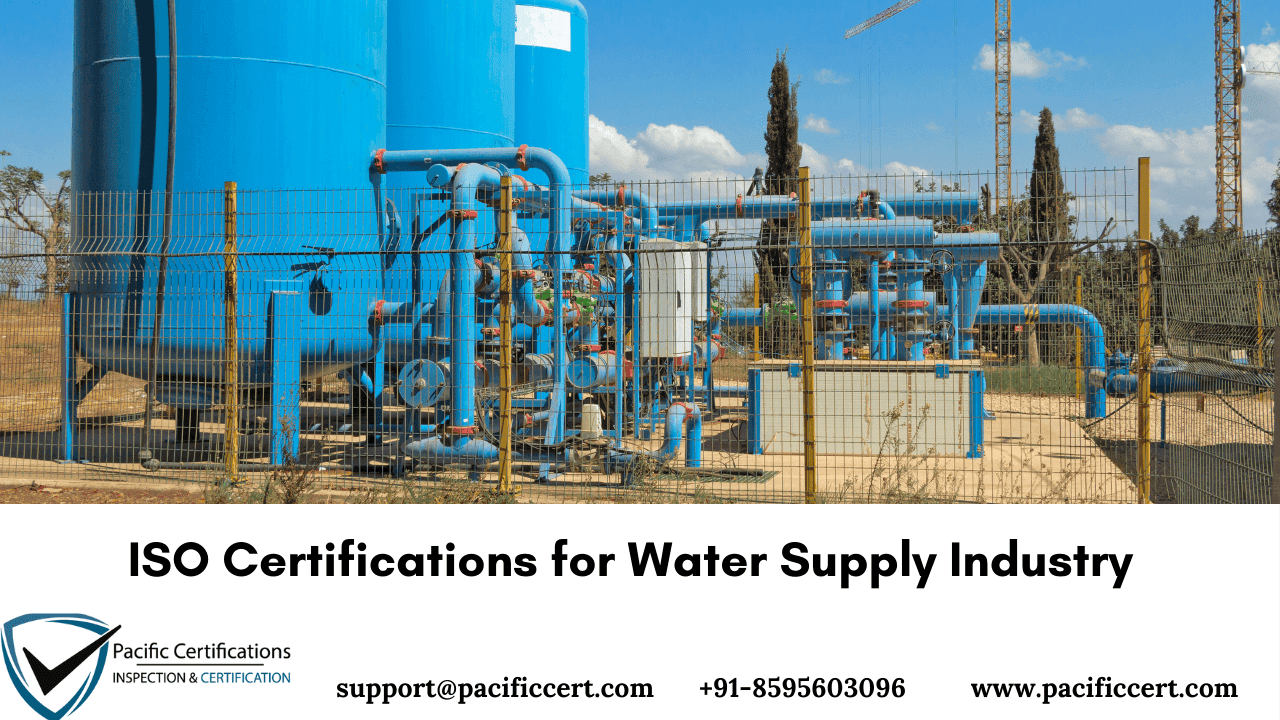
The water supply industry operates in a public-health-critical, infrastructure-intensive, and highly regulated environment where water quality, supply reliability, treatment effectiveness, and regulatory compliance directly impact community health, economic activity, and environmental sustainability. This sector includes public and private water utilities, municipal water boards, bulk water suppliers, desalination plants, groundwater extraction operators, water treatment facilities, transmission and distribution network operators, and industrial water supply providers serving residential, commercial, industrial, and agricultural users.
With increasing urbanization, climate variability, aging infrastructure, stricter drinking-water regulations, and rising public expectations for uninterrupted and safe water access, water supply organizations face sustained operational and governance pressure. Contamination incidents, service interruptions, leakage losses, weak monitoring, or poor emergency preparedness can lead to serious public health risks, regulatory penalties, and loss of public trust. ISO certifications provide internationally recognized management system frameworks that help water supply organizations standardize operations, manage risks, ensure water safety, and demonstrate accountability to regulators, governments, consumers, and funding agencies.
> Water is the foundation of life, and ensuring its safe, reliable, and sustainable supply is one of the greatest responsibilities for modern infrastructure providers.
## Applicable ISO Standards for the Water Supply Industry
Below are the key applicable ISO standards for water industry:
Standard
Focus Area
Relevance
**ISO 9001:2015**
Quality Management
Ensures consistent quality in water supply operations and customer service.
**ISO 14001:2015**
Environmental Management
Minimizes environmental impact, pollution, and promotes sustainable water resource use.
**ISO 45001:2018**
Occupational Health & Safety
Protects workers managing water treatment plants, pipelines, and hazardous operations.
**ISO 46001:2019**
Water Efficiency Management
Provides a framework for measuring, managing, and reducing water consumption.
**ISO 24512:2007**
Guidelines for Water Utilities
Focuses on the management and assessment of drinking water supply services.
**ISO 24518:2015**
Crisis Management in Water Utilities
Ensures continuity of water supply during emergencies and natural disasters.
**ISO 22301:2019**
Business Continuity
Maintains reliable water distribution even during disruptions.
**ISO/IEC 27001:2022**
Information Security
Protects digital water management systems, SCADA, and critical infrastructure data.
### [**ISO 9001: Quality Management Systems (QMS)**](https://pacificcert.com/iso-9001-2015-quality-management-system-certification/)
ISO 9001 is a general quality management standard. It outlines the requirements for establishing a quality management system to enhance customer satisfaction, improve processes, and continually monitor and improve performance.
### [**ISO 14001: Environmental Management Systems (EMS)**](https://pacificcert.com/iso-14001-2015-environmental-management-systems/)
ISO 14001 is an environmental management standard that helps organizations, including water supply companies, develop and implement an effective environmental management system to reduce their environmental impact.
### [**ISO 45001: Occupational Health and Safety Management Systems (OHSMS)**](https://pacificcert.com/iso-45001-2018-health-safety/)
ISO 45001 provides a framework for establishing an occupational health and safety management system to identify and mitigate workplace hazards and improve worker safety.
### **ISO 24518: Activities relating to drinking water and wastewater services:**
This standard specifically focuses on the drinking water and wastewater services sector. It provides guidelines for the management of drinking water quality, service continuity, and customer satisfaction.
### [**ISO 14046: Water Footprint Assessment**](https://pacificcert.com/iso-14046-2014-environmental-management/) **:**
This standard is useful for organizations that want to assess and manage their water use and environmental impact related to water consumption.
### **ISO 5667: Water Quality**
ISO 5667 provides a series of standards related to water sampling, analysis, and quality assessment. It covers various aspects of water quality, including sampling techniques, laboratory testing, and data interpretation.
[Click here to find more applicable standards to your industry](https://pacificcert.com/system-certifications/)
## What are the requirements of ISO Certifications for Water Supply Industry?
Organizations must develop systems that ensure quality, safety, and sustainability in water sourcing, treatment, and distribution, backed by documented processes and regular evaluations. Below are some general steps and requirements for obtaining ISO certification:
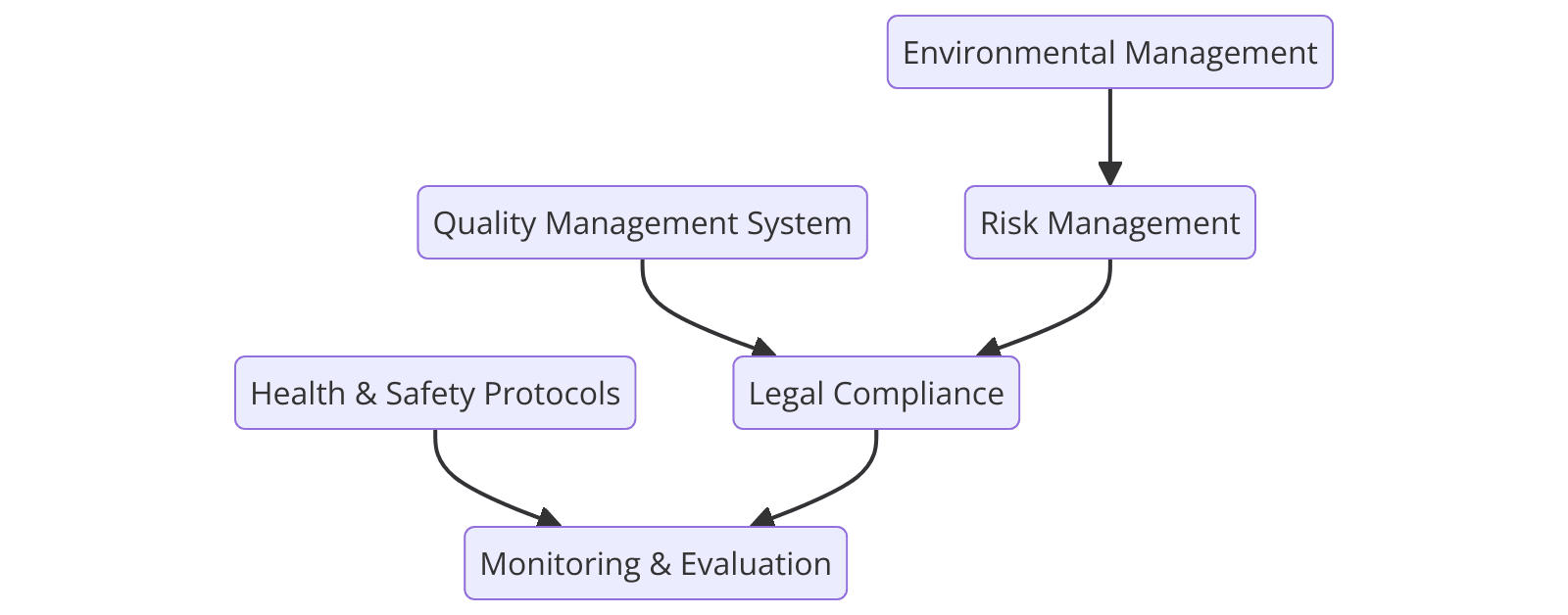
- **Define** scope of operations, regulatory obligations, and customer requirements for safe and sustainable water supply.
- **Establish** policies for water quality, safety, environmental protection, and efficiency with leadership commitment and governance.
- **Conduct** risk assessments covering contamination, infrastructure breakdowns, cybersecurity, and climate-related disruptions.
- **Develop** documented processes for water sourcing, treatment, distribution, emergency response, and waste management.
- **Train** staff on quality standards, safety protocols, environmental awareness, and crisis management practices.
- **Maintain** records of water testing, compliance monitoring, and regulatory reporting to assure quality and transparency.
- **Implement** controls to manage energy and water efficiency, leakage reduction, and resource optimization.
- **Carry out** internal audits, reviews, and corrective actions to continually improve operational performance and resilience.
**_Tip:_** _Start with ISO 9001 and ISO 24512 for quality and service delivery, then integrate ISO 14001, ISO 46001, and ISO 24518 to strengthen sustainability and crisis readiness._
If you are looking for ISO Certification for your company, contact us today at [support@pacificcert.com](mailto:support@pacificcert.com)
## **What are the benefits of ISO certifications for the water supply industry?**
Certification provides water utilities and suppliers with credibility, efficiency, and compliance advantages, ensuring reliable and sustainable services for communities. Here are some of the key benefits of ISO certification for the water supply industry:
- **Stronger** environmental performance by reducing waste, emissions, and promoting efficient resource use.
- **Improved** water quality and service delivery through standardized processes and monitoring systems.
- **Safer** workplaces with reduced risks for employees working in hazardous treatment and distribution environments.
- **Enhanced** resilience and continuity of water supply during emergencies, disasters, or infrastructure failures.
- **Increased** trust from regulators, customers, and communities by demonstrating compliance with international standards.
- **Greater** efficiency and cost savings through leak detection, water efficiency measures, and energy optimization.
- **Better** access to government funding, contracts, and international partnerships where ISO certification is a prerequisite.
- **Continuous** improvement and innovation in water management practices supported by regular audits and reviews.
## **Market Trends**
Global demand for reliable and safe water supply is increasing due to population growth, urban expansion, climate change, and industrial development. Investment in water infrastructure is expected to exceed **USD 1 trillion globally by 2030**, driven by aging systems, non-revenue water reduction, desalination projects, and smart water technologies.
Technology adoption is also accelerating— **92 %** of respondents recognize smart water management and desalination as key growth opportunities, while over **60 %** view AI as transformative for the sector.
At the same time, regulators and funding agencies are tightening requirements on water safety, service continuity, energy efficiency, and governance transparency. Water utilities and suppliers demonstrating ISO-aligned management systems are better positioned to secure public funding, maintain operating licenses, and deliver resilient water services. By 2030, ISO certifications such as ISO 9001, ISO 22000, ISO 45001, and ISO 22301 are expected to be standard expectations for professionally managed water supply organizations.
## How Pacific Certifications Can Help?
Pacific Certifications, accredited by [**ABIS**](https://abisonline.org/), acts as an independent certification body for water supply organizations by conducting impartial audits against applicable ISO standards. Our role is to objectively assess whether documented management systems and water supply operations conform to international ISO requirements, based strictly on verifiable evidence and records.
We support water supply organizations through:
- Independent certification audits conducted in accordance with ISO/IEC 17021
- Objective assessment of quality, safety, environmental, energy, and data-security controls
- Clear audit reporting reflecting conformity status and certification decisions
- Internationally recognized ISO certification upon successful compliance
- Surveillance and recertification audits to maintain certification validity
### Contact Us
For ISO certification for water supply industry organizations, contact [**support@pacificcert.com**](mailto:support@pacificcert.com) or call **+91-8595603096**.
**Author: Sony**
**Read More at:** [**Blogs by Pacific Certifications**](https://blog.pacificcert.com/)
ISO Certifications for Water Supply Industry
## FAQs
Q: Which ISO standards matter most to water supply organisations?
A: The sector usually starts with ISO 9001 for quality management then adds ISO 14001 for environmental care and ISO 45001 for worker safety. Utilities that want service-specific guidance also look at ISO 24510 which sets out drinking-water and wastewater service elements that customers value
Q: Why is ISO 14001 seen as a key standard for treatment and distribution plants?
A: ISO 14001 gives water companies a method to spot environmental impacts, cut waste and show regulators they handle resources responsibly. Case studies report lower energy use and clearer legal compliance after adoption
Q: How does a water utility become ISO certified?
A: Begin by mapping processes against the chosen standard, build the required management system, run internal audits, and then invite an accredited certification body for a two-stage external audit. ISO itself does not issue certificates; independent bodies do
Q: Is ISO certification compulsory for water supply companies?
A: No. Certification is voluntary unless a contract or regulation demands it. ISO develops the standards but leaves certification to external auditors, so each utility decides whether to pursue it
Q: How long does an ISO certificate stay valid?
A: Most ISO certificates, including ISO 9001 and ISO 14001, remain valid for three years with a surveillance visit every year to confirm the system still works as intended
Q: Which ISO standard helps measure customer satisfaction with water services?
A: ISO 24510 offers a common language for utilities and users, defining service features to monitor and giving guidance on assessing whether customer expectations are met
Q: What practical benefits do water utilities gain after certification?
A: Certified utilities report steadier water quality, fewer compliance breaches and stronger public trust. Environmental certificates often bring energy savings while quality certificates improve process control and documentation
Q: How can ISO 50001 help a water treatment plant cut energy use?
A: By setting up an energy-management system under ISO 50001, plants log where power is consumed, set reduction targets and review progress in routine meetings. Studies at facilities such as the Zai Water Treatment Plant show measurable drops in electricity demand and lower operating costs after adopting the standard
Q: Does ISO 22000 apply to water utilities?
A: Yes. Some drinking-water suppliers have adopted ISO 22000 to show that their safety plans cover every step from intake through distribution—Unitywater in Australia is one example of a utility that keeps this food-safety certificate to reassure customers and regulators about water quality
---
This blog is powered by Superblog. Visit https://superblog.ai to know more.
---