Introduction
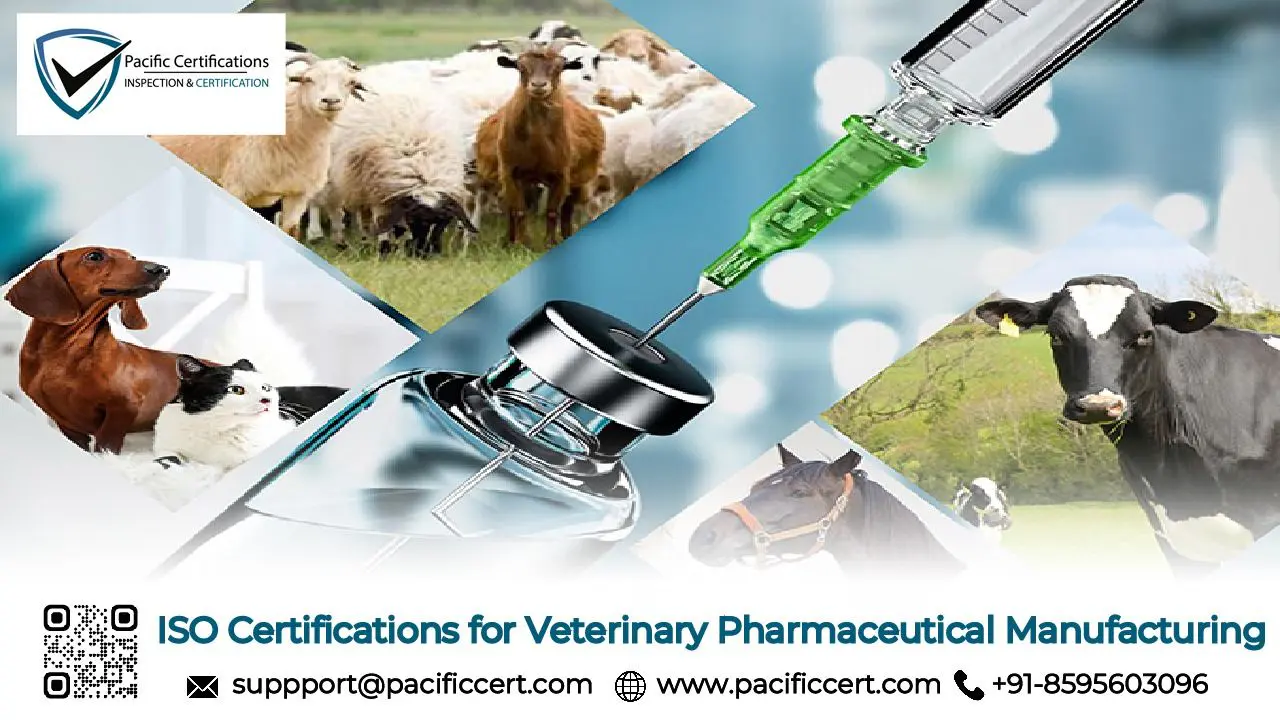
Veterinary pharmaceutical manufacturing operates within one of the most highly regulated sectors of global industry. Companies in this field produce vaccines, antibiotics, antiparasitic medicines, hormonal products, and nutritional formulations used for companion animals, livestock, and aquaculture. Production involves controlled formulation of active ingredients, sterile and aseptic processing, laboratory testing of raw materials and finished batches, and strict validation before product release. Because these products directly affect animal health and food supply safety, even small quality failures can lead to serious consequences, making process control, traceability, and testing accuracy essential at every stage of manufacturing.
For businesses in this sector, ISO certifications for veterinary pharmaceutical manufacturing support regulatory compliance by providing structured management systems alongside Good Manufacturing Practice requirements. International buyers, veterinary distributors, and contract manufacturing clients increasingly require certified quality, safety, and environmental systems before approving suppliers. ISO standards help manufacturers maintain consistent production quality, protect laboratory and batch data integrity, manage chemical and biological hazards, control environmental impact, and demonstrate the level of operational discipline expected by regulators and global animal health supply chains.
In veterinary pharmaceutical manufacturing, the animal cannot speak for the quality of the product. Your management system must speak for it instead.
Quick Summary
ISO certifications provide veterinary pharmaceutical manufacturing with internationally recognized frameworks to manage production quality through ISO 9001, laboratory testing competence through ISO/IEC 17025, workplace safety through ISO 45001, environmental performance through ISO 14001, information security through ISO/IEC 27001, and business continuity through ISO 22301. Veterinary pharmaceutical manufacturers should pay particular attention to batch traceability controls, laboratory data integrity across testing and calibration systems, and the environmental management of chemical and biological waste generated in pharmaceutical production.
For more information on how we can assist your veterinary pharmaceutical manufacturing business with ISO certifications, contact us at support@pacificcert.com.
Applicable ISO Standards for Veterinary Pharmaceutical Manufacturing Businesses
Below are the most relevant ISO standards applicable to veterinary active pharmaceutical ingredient manufacturers:
ISO 9001: Quality Management Systems
ISO 9001 requires manufacturers to document every critical production process, establish in-process and final batch inspection checkpoints, and maintain a corrective action system that investigates deviations at the root cause level. Manufacturers certified to ISO 9001 demonstrate to contract clients and institutional buyers that their quality management infrastructure is documented, auditable, and built for continuous improvement rather than reactive firefighting.
ISO 14001: Environmental Management Systems
ISO 14001 gives manufacturers a documented system to identify their significant environmental impacts, set measurable reduction targets, and maintain verified compliance evidence for the sustainability audits that large institutional buyers and contract clients conduct on their manufacturing partners. As the veterinary pharmaceutical industry faces growing scrutiny around antimicrobial resistance and environmental contamination from pharmaceutical residues, ISO 14001 certification signals a commitment to responsible environmental practice that resonates with regulators and buyers alike.
ISO 45001: Occupational Health and Safety Management Systems
ISO 45001 requires manufacturers to document each of these hazards, assign practical controls, deliver targeted training, and verify safety performance through regular internal audit cycles. Businesses that certify to ISO 45001 build a measurably safer workplace and satisfy the health and safety requirements embedded in most contract manufacturing client codes of conduct.
ISO 17025: Testing and Calibration Laboratories
ISO/IEC 17025 sets the competence requirements for the laboratories performing this work, covering personnel qualification, equipment calibration, validated test method use, and the integrity of laboratory data management systems. Manufacturers with ISO/IEC 17025 accredited laboratories give regulators, contract clients, and institutional buyers confidence that test results are technically sound, reproducible, and free from procedural bias.
ISO 13485: Quality Management for Medical Devices
Though primarily designed for medical devices, ISO 13485 can be adapted for veterinary pharmaceutical manufacturing where precision and sterility are critical, such as injectable medications or implantable veterinary products.
ISO 26000: Social Responsibility
This standard emphasizes ethical operations and community engagement. For veterinary pharmaceutical manufacturers, ISO 26000 encourages practices that align with animal welfare, corporate social responsibility, and ethical sourcing.
Click here to find out more applicable standards to your industry
What are the Requirements of ISO Certifications for Veterinary Pharmaceutical Manufacturing Businesses?
Veterinary pharmaceutical manufacturing businesses seeking ISO certification must establish and maintain documented policies, procedures, and records aligned with the selected ISO standards. Key requirements include the following:
ISO 9001:2015 – Quality Management Systems Requirements
Define a quality policy with measurable targets for batch release success, deviations, complaints, and delivery performance across all veterinary products.
Control raw materials through certificate review, identity testing, parameter checks, and approved supplier verification before use in production.
Manage manufacturing using master batch records, in-process checks, environmental monitoring, and final specification verification before release.
Maintain deviation and corrective action procedures for out-of-spec results, batch failures, and complaints with root cause analysis.
Control contract manufacturing through quality agreements and periodic reviews to ensure compliance with specifications and delivery terms.
ISO/IEC 17025:2017 – Laboratory Competence Requirements
Validate all test methods used for raw materials, in-process samples, and finished veterinary product testing.
Maintain calibration schedules and records for analytical instruments used in quality control and release testing.
Keep competence records for analysts including qualifications, training, and proficiency results.
Ensure full traceability of laboratory data from sample receipt to final approval in the lab management system.
Investigate out-of-spec results using documented procedures before any batch release decision.
ISO 45001:2018 – Occupational Health and Safety Requirements
Assess risks in weighing, formulation, sterile filling, fermentation, solvent handling, cleaning, and waste processing areas.
Define safe work procedures for potent compounds, biological materials, solvent storage, vessel entry, and autoclave use.
Record and investigate injuries, exposure events, and near-miss incidents with corrective actions tracked to closure.
Maintain safety training records covering chemical hazards, biological safety, PPE, and emergency response.
Apply contractor safety controls through site induction and compliance checks for service providers and inspectors.
ISO 14001:2015 – Environmental Management Systems Requirements
Identify environmental risks from chemical effluent, solvent emissions, biological waste, process water, and packaging waste.
Control regulated waste through segregation, storage, and licensed disposal of pharmaceutical, chemical, and biological waste.
Set targets to reduce emissions, effluent levels, waste volumes, and energy use per production batch.
Perform internal environmental audits and maintain records proving compliance with environmental controls.
Tip:Start ISO implementation with production, QA, laboratory, safety, environmental, and IT leaders. Review each stage from API intake, formulation, filling, testing, batch review, to release, and identify existing controls, missing procedures, and documentation gaps to create a clear implementation roadmap before certification audit.
For more information on how we can assist your veterinary pharmaceutical manufacturing business with ISO certifications, contact us at support@pacificcert.com.
What are the Benefits of ISO Certifications for Veterinary Pharmaceutical Manufacturing Businesses?
ISO certifications provide veterinary pharmaceutical manufacturing with strong operational and commercial advantages. Listed below are the key benefits for the ISO standards applicable:
Stronger laboratory credibility with ISO/IEC 17025 certification proving test results are valid, traceable, and acceptable to regulators and contract clients.
Improved batch consistency through ISO 9001 controls that standardize procedures, reduce deviations, and correct recurring quality failures at the root cause.
Better worker safety using ISO 45001 systems that reduce chemical and biological exposure risks in pharmaceutical production areas.
Lower environmental risk through ISO 14001 controls for effluent, solvent emissions, and biological waste to meet regulatory and client requirements.
Stronger data protection with ISO/IEC 27001 controls over batch records, formulations, lab systems, and electronic quality platforms.
Higher operational stability with ISO 22301 continuity planning to protect production from cleanroom incidents, API shortages, or equipment failure.
Greater eligibility for contract manufacturing projects where ISO certification is required by veterinary and pharmaceutical companies.
Easier regulatory and client audits since ISO certification provides verified proof of controlled manufacturing and quality systems.
Reduced corruption and sourcing risk through ISO 37001 controls over API procurement, regulatory dealings, and distribution partners.
The global veterinary pharmaceuticals market is currently valued at approximately USD 38.07 billion and is projected to reach USD 56.12 billion within the next several years, growing at a compound annual growth rate of 5.7%. The companion animal segment leads the market with approximately 60.3% of total share, driven by rising pet ownership globally and increasing consumer willingness to invest in preventive and therapeutic animal healthcare. The veterinary active pharmaceutical ingredient manufacturing market is also growing strongly, projected to reach approximately USD 17.36 billion within the next decade at a CAGR of 7.24%, driven by outsourcing trends and rising demand for livestock health products in fast-developing agricultural economies. The veterinary drugs contract manufacturing market adds further scale, currently valued at approximately USD 3.29 billion and expected to grow to USD 4.65 billion within a few years at a CAGR of 6.1%, with North America currently dominating and Asia Pacific showing the highest growth potential. In the coming years, digital transformation in quality management, stricter international regulatory convergence, and growing demand for biologic and vaccine products will reshape how manufacturers manage compliance.
Looking ahead, veterinary pharmaceutical manufacturers are facing increasing pressure from antimicrobial resistance regulations, cybersecurity risks in digital quality systems, stronger sustainability expectations, and higher client demands for supply chain transparency. Companies with ISO-certified management systems consistently achieve better results in contract qualification audits, receive fewer regulatory observations, and maintain stronger relationships with institutional buyers that review supplier management systems every year.
How Pacific Certifications Can Help?
Pacific Certifications, accredited by ABIS, acts as an independent certification body for veterinary pharmaceutical manufacturing businesses by conducting impartial audits against applicable ISO standards. Our role is to objectively assess whether documented management systems and veterinary manufacturing-specific practices, including batch quality controls, laboratory testing procedures, occupational safety programs, environmental waste management records, and information security systems, conform to international ISO requirements based strictly on verifiable evidence and operational records.
We support veterinary pharmaceutical manufacturing providers through:
Independent certification audits conducted in accordance with ISO/IEC 17021 to ensure audit integrity and global recognition of all issued certificates
Practical assessment of real manufacturing operations covering API intake, formulation, batch testing, sterile filling, environmental monitoring, safety controls, and quality release systems
Clear audit reporting that reflects conformity status, nonconformity findings, and certification decisions based entirely on documented evidence and observed manufacturing practices
Internationally recognized ISO certification upon successful demonstration of compliance with all applicable standard requirements
Surveillance and recertification audits to maintain ongoing certification validity and verify continual improvement across all certified management systems
Contact Us
If you need support with ISO certification for your veterinary pharmaceutical manufacturing business, contact us at support@pacificcert.com or +91-8595603096.
Author: Alina
Read more: Pacific Blogs