ISO Certifications for Universities & Colleges, Requirements and Benefits
Introduction
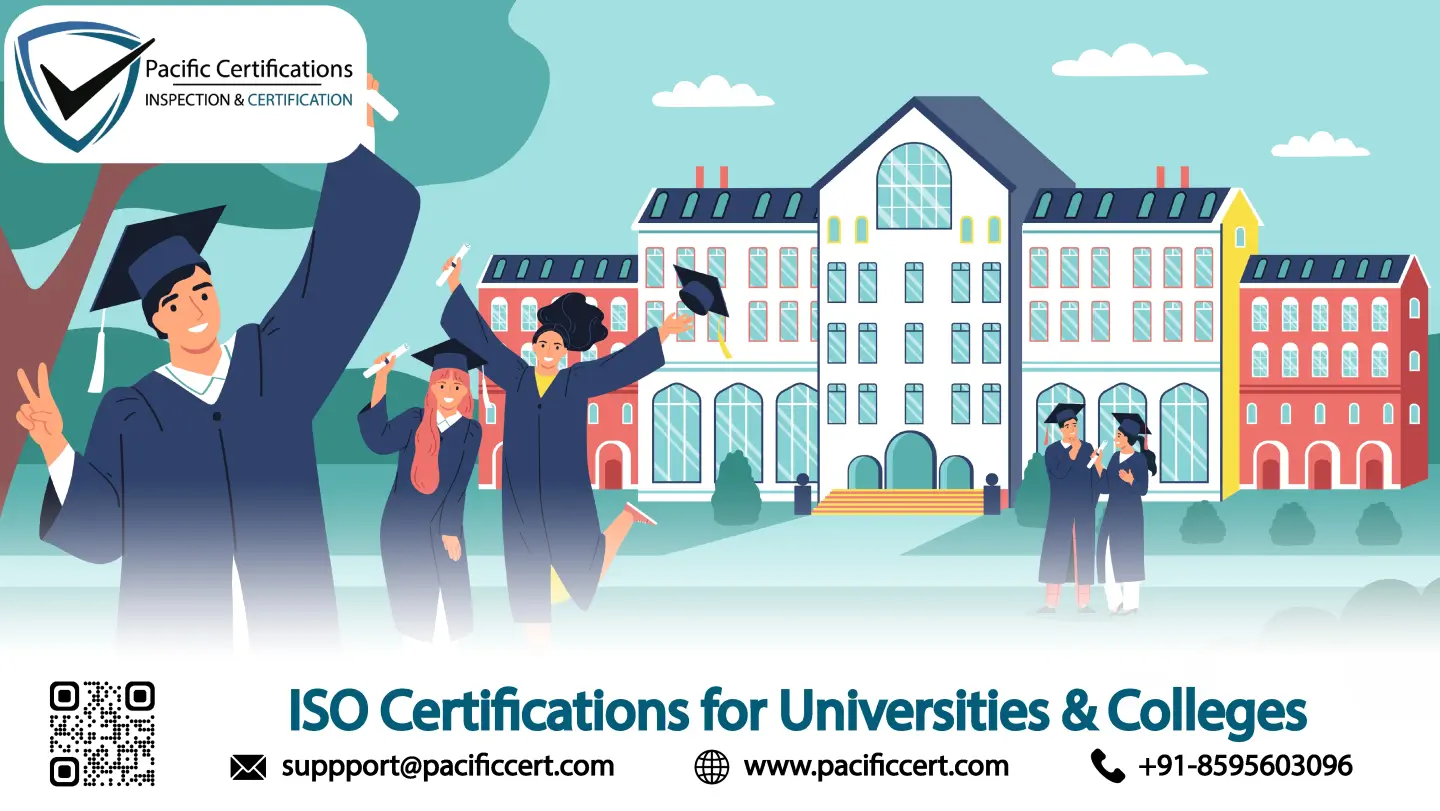
Universities and colleges provide higher education through lectures, lab work, seminars, exams, student support services, libraries, and career guidance for undergraduate, postgraduate, and PhD programs. They face challenges like changing student needs, research funding pressures, campus safety concerns, data protection issues, facility maintenance, and keeping up with global standards.
ISO certifications provide universities and colleges with internationally recognized management frameworks that promote operational excellence, regulatory compliance, enhanced student outcomes, and stronger stakeholder relationships. These standards create systematic approaches to academic delivery, helping institutions demonstrate commitment to quality while addressing complex compliance expectations from governments, accreditation bodies, and international partners.
When education systems are managed with the same precision as industries, learning outcomes and institutional integrity both rise, ISO standards make that structure possible
Quick Summary
ISO certifications provide universities and colleges with internationally recognized frameworks to manage educational quality through ISO 21001, operational excellence through ISO 9001, occupational health through ISO 45001, environmental stewardship through ISO 14001, information security through ISO/IEC 27001, and research integrity through ISO 9001 integration. They optimize academic delivery, enhance global rankings, ensure compliance, and amplify stakeholder confidence comprehensively.
For more information on how we can assist your universities and colleges business with ISO certifications, contact us at [email protected].
Applicable ISO Standards for Universities & Colleges
Several ISO standards are directly applicable to universities and educational institutions. These standards offer guidelines ensuring that institutions can operate effectively. Below are some of the most important ISO certifications for academic institutions:
ISO 9001: Quality Management System (QMS)
ISO 9001 is the most widely recognized standard for quality management systems. This certification ensures that universities and educational institutions consistently provide education that meets stakeholder expectations and regulatory requirements.
ISO 21001: Educational Organizations Management System (EOMS)
Specifically designed for educational institutions, ISO 21001 focuses on improving the management system in educational organizations. It provides a framework that aligns educational products and services with learner requirements and enhances satisfaction levels.
ISO 14001: Environmental Management System (EMS)
Educational institutions play a critical role in shaping the future, ISO 14001 offers a framework for developing and maintaining an effective environmental management system.
ISO 45001: Occupational Health and Safety Management System (OHSMS)
For universities with large campuses and extensive staff, ensuring the health and safety of students and employees is a critical concern. ISO 45001 focuses on creating a safe and healthy working environment by reducing workplace hazards and risks.
ISO 50001: Energy Management System (EnMS)
ISO 50001 provides a framework for institutions to manage their energy use more efficiently, leading to cost savings and reduced environmental impact.
ISO 27001: Information Security Management Systems (ISMS)
ISO/IEC 27001 offers a structured approach to managing and protecting data. This certification is important for universities handling large volumes of confidential information, including research data, student records and financial information.
Click here to find out more applicable standards to your industry
What are the requirements of ISO Certifications for Universities & Colleges?
Universities and colleges seeking ISO certification must establish and maintain documented policies, procedures, and records aligned with the selected ISO standards. Key requirements include the following:
ISO 21001:2025 – Educational Organizations Management Systems Requirements
Set clear learning goals that match the university's mission and student needs.
Document courses, teaching methods, exams, and support for different learners.
Gather regular feedback from students, teachers, alumni, and employers.
Train faculty on modern teaching and provide growth opportunities each year.
ISO 9001:2015 – Quality Management Systems Requirements
Map out processes for admissions, scheduling, grading, and student services.
Track results like graduation rates and satisfaction through reports.
Fix problems in teaching or services with clear action plans.
Review progress with leaders every few months using data and feedback.
ISO 45001:2018 – Occupational Health & Safety Requirements
List all risks in labs, sports areas, buildings, and events.
Set safety rules, training, equipment checks, and emergency plans.
Run safety drills and teach staff and students what to do.
Record accidents and improvements to make the campus safer.
ISO 14001:2015 – Environmental Management Systems Requirements
Identify impacts like energy use, waste, and water from campus activities.
Set goals for reductions and track progress with reports.
Work with students and suppliers on green projects.
Check and improve environmental efforts regularly.
ISO/IEC 27001:2022 – Information Security Management Requirements
List all data like student files, research, and health records.
Use security tools like passwords and backups.
Train everyone on keeping data safe and spotting threats.
Test systems regularly for weaknesses.
Tip: Start with ISO 9001 or ISO 21001, as they form the foundation for other management systems. Once established, expand into specialized standards like ISO/IEC 27001 for data security or ISO 14001 for environmental sustainability.
For more information on how we can assist your universities and colleges business with ISO certifications, contact us at [email protected].
What are the benefits of ISO Certifications for Universities & Colleges?
ISO certifications deliver universities and colleges with transcendent academic and institutional ascendancies, including: listed below are the key benefits for the ISO standards applicable to Ivy analogs, community colleges, and global campuses.
Enhanced student learning outcomes through ISO 21001 create better-prepared graduates with higher completion rates, improved academic performance
Safer campus environments via ISO 45001 significantly reduce laboratory accidents, sports injuries, construction incidents, and mental health crises by implementing proactive risk controls
Streamlined administrative operations from ISO 9001 eliminate processing delays in admissions, course registration, financial aid disbursement, and credential issuance
Stronger faculty retention and development through structured competency frameworks, professional growth opportunities, and performance recognition systems
Comprehensive data protection with ISO/IEC 27001 safeguards sensitive student records, research intellectual property, health information, and financial data against cyber threats
Uninterrupted academic continuity during crises via ISO 22301 ensures classes, examinations, and research projects continue through backup systems
Sustainable campus operations through ISO 14001 lower energy costs, reduce waste generation, improve water efficiency, and secure green funding opportunities
Elevated global reputation and rankings from integrated ISO systems provide competitive advantages in attracting international students
Simplified regulatory compliance across multiple standards creates unified documentation systems that satisfy government oversight, accreditation agency requirements, insurance providers, and international partnership agreements
According to UNESCO and the International Association of Universities, by 2025 over 60% of higher education institutions in OECD countries will have adopted at least one international management standard. In Asia and the Middle East, ISO 21001 and ISO 9001 are gaining traction as regulatory bodies emphasize measurable educational outcomes.
Colleges, universities, professional schools aggregated USD 1.37 trillion in 2025 trajectories, aspiring USD 1.78 trillion by 2029 at 6.7% CAGR, galvanized by transnational campuses, enrollment surges, online edifice investments transcending silos. Hybrid modalities permeate 40% deliveries fusing AI tutors, VR dissections with seminar crucibles.
Data from the British Standards Institution (BSI) and EFQM indicate that certified universities report 22–28% higher stakeholder satisfaction and improved ranking performance due to structured internal governance. Additionally, post-COVID digital acceleration has driven demand for ISO/IEC 27001, with over 1,000 higher education certifications issued globally in 2024 alone.
Sustainability mandates are also reshaping campus infrastructure—universities implementing ISO 14001 or ISO 50001 report an average 15–20% reduction in operational energy costs within the first year of certification.
How Pacific Certifications Can Help?
Pacific Certifications, accredited by ABIS, provides impartial and globally accepted certification services for universities and colleges seeking compliance with ISO standards.
Our team of experienced auditors specializes in educational institution management systems, ensuring that the certification process is thorough, transparent, and aligned with international accreditation requirements.
We also offer accredited training programs to support internal audit competence, risk-based thinking, and continual improvement practices for faculty and administrative leaders.
Contact Us
If you need support with ISO certification for your Educational Institution, contact us at [email protected] or +91-8595603096.
Author: Pooja
Read more: Pacific Blogs