Introduction
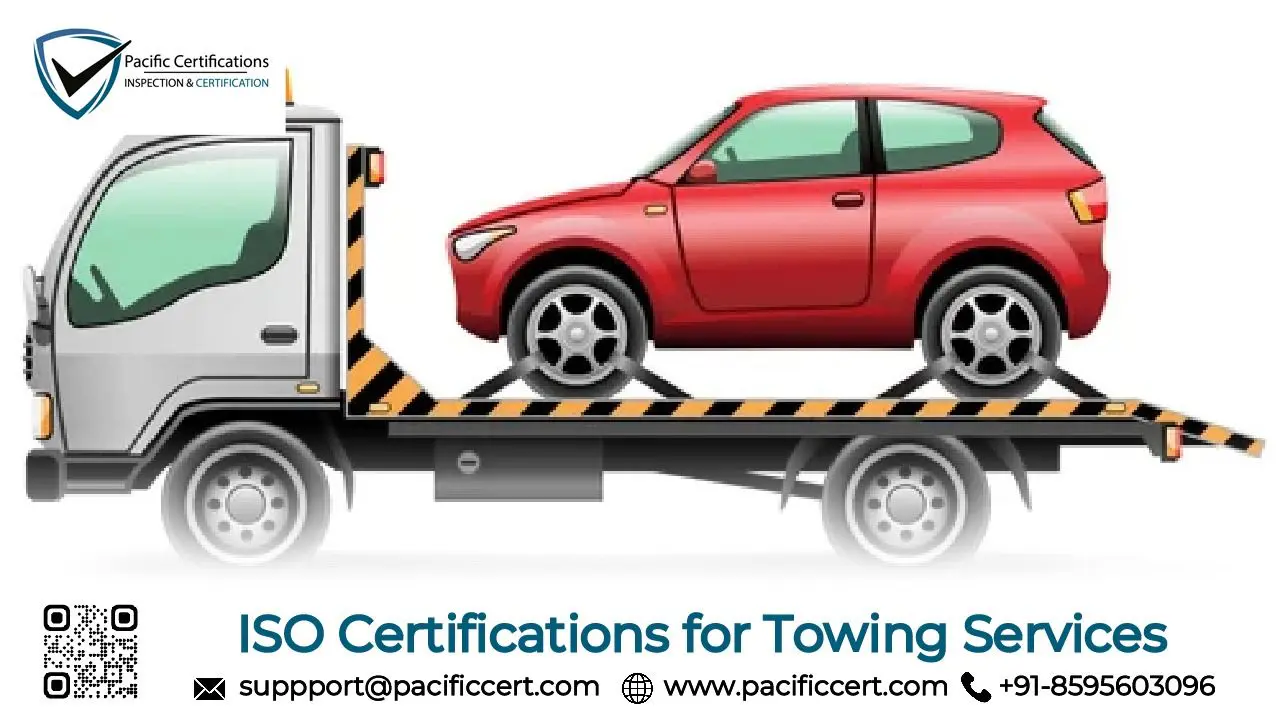
The towing industry operates in a high‑risk environment where vehicles are moved under varying road conditions, often under tight time constraints. Core activities include incident response, vehicle recovery, flatbed transport, heavy‑duty hauling, roadside assistance, and storage of impounded or salvaged assets. These services rely on skilled operators, well‑maintained fleets, reliable communication systems, and strict adherence to safety protocols. Typical challenges involve managing roadside hazards, preventing damage to customer vehicles, ensuring operator safety, meeting licensing requirements, and maintaining public trust when handling valuable or hazardous loads.
ISO certifications provide a globally recognized framework to address these challenges by embedding systematic controls into every operational step. International regulatory expectations and market pressures compel towing firms to demonstrate consistent safety, environmental responsibility, and service quality. Aligning with ISO standards helps companies improve vehicle inspection routines, protect customer data, reduce fuel consumption, and build confidence among insurers, municipalities, and fleet managers.
In towing, every hook‑up reflects a commitment — robust systems turn roadside chaos into reliable service
Quick Summary
ISO certifications provide towing businesses with internationally recognized frameworks to manage operational quality, occupational health and safety, environmental impact, information security, and business continuity. The most relevant standards include ISO 9001 for quality management, ISO 45001 for occupational health & safety, ISO 14001 for environmental management, ISO/IEC 27001 for information security, and ISO 22301 for business continuity. Towers should pay special attention to securing tow‑truck maintenance records, protecting dispatch communications, and ensuring rapid recovery after incidents or natural disasters.
Explore which ISO standards fit your towing operations: Consider whether quality, driver safety, environmental impact, or business continuity is the most pressing priority for your fleet and dispatch activities.
Applicable ISO Standards for Towing Businesses
Below are the most relevant ISO standards applicable to light‑duty tow operators, heavy‑duty recovery specialists, roadside assistance providers, and vehicle storage facilities:
ISO 9001:2015 (Quality Management System)
Quality management is vital for ensuring that each tow meets customer expectations for timeliness, care, and documentation. The standard governs document control, internal audits, corrective actions, and management review for processes such as call‑out logging, vehicle assessment, securing loads, and post‑service follow‑up. Benefits include fewer service complaints, higher repeat‑business rates, and a demonstrable commitment to consistent performance that can satisfy corporate clients and municipalities.
ISO 14001:2026 (Environmental Management System)
Tow operations consume diesel fuel, generate waste oils, and may inadvertently release contaminants during vehicle servicing. ISO 14001 helps organizations identify environmental aspects, set measurable objectives (e.g., fuel‑efficiency targets, spill‑prevention procedures), and monitor compliance with legal requirements. Adoption can lower operating costs, satisfy eco‑conscious partners, and reduce the ecological footprint of fleets.
ISO 45001:2018 (Occupational Health and Safety Management System)
Towing professionals face risks from moving traffic, heavy lifting, and adverse weather. ISO 45001 requires hazard identification, risk assessment, implementation of controls (such as personal protective equipment, safe work procedures, and training), and monitoring of safety performance. Implementing this standard leads to reduced injury rates, lower insurance premiums, and improved morale among crews who see that their safety is a priority.
ISO 27001:2022 (Information Security Management System)
Modern towing businesses rely on GPS dispatch, digital invoicing, and customer‑relationship platforms that store sensitive data. This standard mandates risk assessments, access controls, encryption, incident‑response planning, and continual improvement of the information security management system. Certification reduces the likelihood of data breaches, supports compliance with privacy regulations, and reassures clients that their personal and payment information is safeguarded.
ISO 22301:2019 – Business Continuity Management Systems
Severe storms, major highway accidents, or ransomware attacks can halt towing operations. ISO 22301 requires a business‑impact analysis, recovery strategies, crisis‑communication plans, and regular testing for scenarios such as loss of dispatch center power or flooding of storage yards. Benefits include faster restoration of service, minimized revenue loss during disruptions, and stronger confidence from emergency‑management agencies.
Click here to find out more applicable standards to your industry
What are the Requirements of ISO Certifications for Towing Businesses?
Towing businesses seeking ISO certification must establish and maintain documented policies, procedures, and records aligned with the selected ISO standards. Key requirements include the following:
ISO 9001:2015 – Quality Management Systems Requirements
Define a quality policy that reflects commitment to reliable, safe, and timely towing services.
Control documents and records to ensure current versions are accessible at dispatch centers and on trucks.
Plan and control service delivery processes, including call intake, vehicle assessment, load securement, and release.
Monitor customer satisfaction through feedback forms, complaint logs, and repeat‑service tracking.
Conduct internal audits at planned intervals and promptly address any nonconformities identified.
Continually improve the QMS using audit results, service data, and corrective‑action outcomes.
ISO 45001:2018 – Occupational Health & Safety Management Systems Requirements
Establish an occupational health & safety policy that outlines legal compliance and risk‑reduction goals.
Identify hazards such as moving traffic, pinch points, and ergonomic strains associated with winch operation.
Assess risks and determine appropriate controls, including signage, barriers, and safe‑lifting techniques.
Provide training and competence‑building activities for operators on PPE use and emergency procedures.
Implement operational controls to manage change, procurement, and contractor safety on‑site.
Monitor safety performance through incident investigations, leading‑indicator metrics, and management review.
ISO 14001:2026 – Environmental Management Systems Requirements
Identify environmental aspects such as fuel emissions, wastewater from vehicle cleaning, and waste oil.
Set environmental objectives and targets that are measurable, for example, reducing idle fuel consumption by 10% within a year.
Implement operational controls like regular engine tuning, spill‑containment kits, and recycling programs for batteries and tires.
Train staff on environmental responsibilities and procedures for handling hazardous materials.
Evaluate compliance with applicable environmental legislation and industry guidelines on a regular basis.
Review the EMS at top‑management meetings to drive continual improvement and update objectives as needed.
ISO/IEC 27001:2022 – Information Security Management Systems Requirements
Conduct a risk assessment to identify threats to dispatch software, customer databases, and financial systems.
Produce a statement of applicability selecting controls from Annex A (e.g., access control, cryptography, physical security).
Implement access‑control measures, including unique user IDs, strong passwords, and role‑based permissions.
Encrypt sensitive data at rest and in transit, especially for payment processing and GPS logs.
Establish incident‑management procedures to detect, report, contain, and recover from security events.
Perform internal audits and management reviews to ensure the ISMS remains effective and improves over time.
ISO 22301:2019 – Business Continuity Management Systems Requirements
Perform a business‑impact analysis to prioritize critical activities such as emergency tow dispatch and vehicle storage security.
Define recovery time objectives (RTO) and recovery point objectives (RPO) for each critical process.
Develop and document incident‑response plans, including communication trees, alternate site arrangements, and resource lists.
Train response teams and conduct exercises such as tabletop simulations and functional drills for scenarios like severe weather or cyber‑attack.
Monitor and review the BCMS through audits, test results, and post‑incident evaluations to identify lessons learned.
Continually improve continuity arrangements based on exercise outcomes, changing threats, and organizational changes.
Tip: Begin by mapping your current standard operating procedures for call intake, vehicle inspection, and customer release against the clauses of ISO 9001; involve dispatch, maintenance, and safety leads in a cross‑functional workshop to pinpoint gaps and create an actionable implementation plan.
For more information on how we can assist your towing business with ISO certifications, contact us at support@pacificcert.com.
What are the Benefits of ISO Certifications for Towing Businesses?
ISO certifications provide towing businesses with strong operational and commercial advantages, including: listed below are the key benefits for the ISO standards applicable to light‑duty tow operators, heavy‑duty recovery specialists, roadside assistance providers, and vehicle storage facilities.
Improved service consistency through standardized call‑out logging, vehicle inspection, and release procedures.
Stronger safety culture by integrating hazard analysis, risk controls, and ongoing training for roadside work.
Better environmental performance via reduced fuel consumption, proper waste‑oil handling, and spill‑prevention measures.
Higher customer confidence demonstrated through certified quality and safety marks on invoices and websites.
Greater eligibility for contracts with municipalities, insurers, and fleet managers that require ISO‑certified vendors.
Reduced incident rates from proactive risk identification, leading to fewer injuries, vehicle damages, and downtime.
Streamlined audit preparation thanks to well‑maintained documents, records, and traceability of service jobs.
Enhanced information security protecting dispatch systems, customer payment data, and GPS tracking logs.
Increased resilience to disruptions through tested continuity plans, clear recovery objectives, and backup communication methods.
Improved regulatory readiness by aligning with occupational safety, environmental, and data‑protection expectations.
The global towing and roadside‑assistance market is projected to grow at a compound annual rate of approximately 4‑5% over the next decade, driven by increasing vehicle parcels, rising urban congestion, and growing demand for rapid incident response. Digitalization is reshaping the sector, with GPS‑enabled dispatch platforms, mobile‑app service requests, and telematics‑based fleet monitoring becoming standard tools for efficient operations. At the same time, environmental expectations are prompting operators to explore alternative fuels, idle‑reduction technologies, and proper fluid‑recycling practices to lower their carbon footprint.
Looking ahead, technologies like automated vehicle‑location systems and blockchain‑based proof‑of‑service will amplify the value of certified management systems. Cybersecurity threats and evolving data‑privacy regulations will make ISO/IEC 27001 increasingly critical, while climate‑related risks will reinforce the need for robust environmental and continuity frameworks. Consequently, towing businesses that maintain ISO certification are better positioned to secure premium contracts, meet stringent client requirements, and earn trust from both public agencies and private clients in competitive markets.
How Pacific Certifications Can Help?
Pacific Certifications, accredited by ABIS, acts as an independent certification body for towing businesses by conducting impartial audits against applicable ISO standards. Our role is to objectively assess whether documented management systems and towing‑specific practices conform to international ISO requirements, based strictly on verifiable evidence and operational records.
We support towing providers through:
Independent certification audits conducted in accordance with ISO/IEC 17021
Practical assessment of real towing operations, safety, and environmental controls
Clear audit reporting reflecting conformity status and certification decisions
Internationally recognized ISO certification upon successful compliance
Surveillance and recertification audits to maintain certification validity
Contact Us
If you need support with ISO certification for your towing business, contact us at support@pacificcert.com or +91-8595603096.
Author: Akram
Read More: Pacific Blogs