ISO Certifications for Toll Road Operators, Requirements and Benefits
Introduction
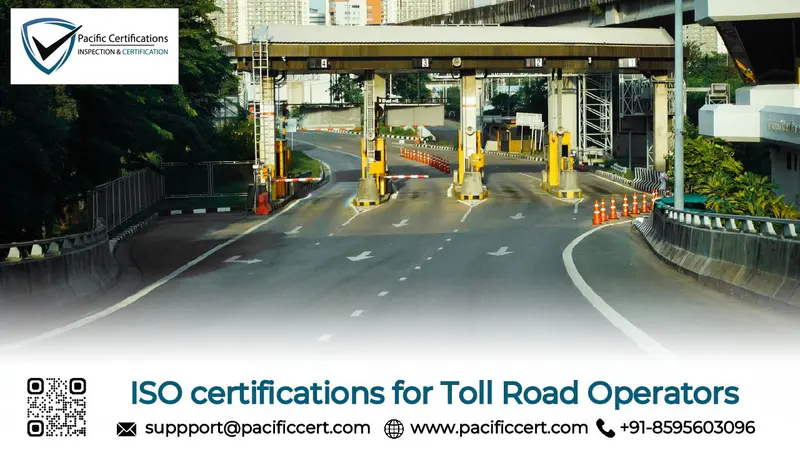
Toll road operations function within a complex ecosystem where physical infrastructure, digital transaction systems, and public safety intersect daily. Core activities include managing electronic toll collection (ETC) lanes, maintaining road surfaces and structural assets like bridges or tunnels, processing high-volume financial transactions from diverse payment methods, and coordinating emergency response services. Operators face persistent challenges: ensuring user safety amid high-speed traffic, protecting revenue integrity against fraud or technical failures, maintaining public trust through transparent operations, and adapting to evolving technologies like vehicle-to-infrastructure communication, all while under constant regulatory scrutiny for operational compliance.
ISO certifications provide essential frameworks to address these pressures by establishing internationally recognized benchmarks for management systems. Rather than relying on fragmented national regulations, these standards offer a unified approach to quality, safety, environmental stewardship, and information security, critical for building stakeholder confidence. They transform abstract compliance requirements into actionable processes that directly support operational transparency, robust risk management, and demonstrable commitment to service integrity, which are non-negotiable in infrastructure sectors where public welfare is paramount.
In toll road operations, every vehicle passage depends on flawless systems—where ISO certification builds the trust that keeps traffic moving
Quick Summary
ISO certifications provide toll road operators with internationally recognized frameworks to manage operational quality through ISO 9001, information security through ISO/IEC 27001, business continuity through ISO 22301, road traffic safety through ISO 39001, environmental aspects through ISO 14001, and occupational health and safety through ISO 45001. Organizations should prioritize aligning safety-critical processes like incident response and payment security with these standards to ensure resilience and public confidence.
For more information on how we can assist your toll road business with ISO certifications, contact us at support@pacificcert.com.
Applicable ISO Standards for Toll Road Operators Businesses
Below are the most relevant ISO standards applicable to toll road operators, highway concessionaires, electronic toll collection providers, and road maintenance contractors:
ISO 39001:2012 – Road Traffic Safety (RTS) Management Systems
ISO 39001 is critical for toll road operators as it provides a systematic framework to reduce road traffic deaths and serious injuries—a core public expectation and regulatory imperative. It covers processes like speed management in toll zones, work zone safety protocols, incident detection and response procedures, and user communication strategies for hazards. Implementing ISO 39001 leads to fewer accidents near toll plazas, improved emergency clearance times, demonstrable compliance with global road safety targets, and enhanced reputation among users and authorities prioritizing Vision Zero initiatives.
ISO 9001:2015 – Quality Management System
ISO 9001 ensures toll operators consistently meet user requirements for safe, efficient, and reliable passage—directly impacting satisfaction and regulatory compliance. It applies to processes ranging from toll transaction accuracy and lane availability monitoring to maintenance scheduling for pavement, signage, and lighting, plus vendor management for technology suppliers. Benefits include fewer customer complaints about incorrect charges or lane closures, streamlined internal audits for concession agreements, clearer documentation for performance metrics, and a culture focused on continuous improvement in service delivery.
ISO 14001:2015 – Environmental Management System
Toll road infrastructure significantly influences local ecosystems through construction, vehicle emissions, and resource consumption; this standard helps operators manage these impacts systematically. It covers aspects like stormwater runoff control from plazas, noise reduction strategies for nearby communities, waste management from maintenance activities, and biodiversity protection during expansion projects. Practical advantages include reduced environmental liability risks, easier acquisition of permits for new projects, demonstrable progress toward sustainability goals for ESG reporting, and potential operational savings from efficient resource use.
ISO 45001:2018 – Occupational Health and Safety Management System
The safety of personnel working near live traffic, whether collecting tolls, performing maintenance, or responding to incidents, is a daily concern for operators; this standard provides a proactive approach to preventing work-related injuries and illnesses. It addresses hazard identification for toll booth operators, safe procedures for lane maintenance crews, traffic control plans for work zones, and health surveillance for staff exposed to noise or fumes. Results include lower incident rates among road workers, reduced downtime from accidents, compliance with international labor standards, and improved employee morale in high-risk roles.
ISO 55001:2014 – Asset Management System
ISO 55001 focuses on asset management, providing toll road operators with a framework for efficiently managing road infrastructure, machinery, and other assets.
Click here to find out more applicable standards to your industry
What are the Requirements of ISO Certifications for Toll Road Businesses?
Toll road operators seeking ISO certification must establish and maintain documented policies, procedures, and records aligned with the selected ISO standards. Key requirements include the following:
ISO 39001:2012 – Road Traffic Safety Management Systems Requirements
Define a road safety policy committing to reducing fatalities and serious injuries linked to toll road use.
Establish hazard identification processes for toll plazas, merge/diverge areas, and work zones near active traffic.
Implement operational controls like speed management systems, barrier effectiveness checks, and incident response timelines.
Monitor safety performance using metrics such as crash rates per million vehicles and near-miss reports.
Conduct internal audits of work zone safety setups and emergency preparedness drills quarterly.
Maintain records of safety training for field staff and maintenance contracts with third-party vendors.
ISO/IEC 27001:2022– Information Security Management Systems Requirements
Conduct risk assessments targeting ETC systems, user databases, and payment gateways for vulnerabilities.
Apply access controls limiting system privileges to authorized personnel based on job roles.
Encrypt sensitive data at rest and in transit, especially for credit card information and user profiles.
Monitor network traffic for anomalies indicating breaches or unauthorized access attempts.
Test incident response plans through simulated cyberattacks on tolling infrastructure quarterly.
Document vendor security requirements for all technology providers handling transactional data.
ISO 22301:2019 – Business Continuity Management Systems Requirements
Perform business impact analyses to identify maximum tolerable downtime for toll collection and traffic monitoring.
Develop continuity strategies like redundant communication lanes or manual tolling fallbacks for system failures.
Establish clear incident reporting procedures triggering activation of continuity plans during disruptions.
Train crisis management teams on roles during scenarios like natural disasters or major pileups.
Maintain and test backup power systems for toll plazas and control centers under simulated outage conditions.
Review continuity plans annually incorporating lessons from actual incidents or exercises.
ISO 9001:2015 – QualityManagement Systems Requirements
Document standard operating procedures for toll transaction processing, audit trails, and discrepancy resolution.
Control calibration of tolling equipment like RFID readers and license plate recognition cameras.
Conduct customer satisfaction surveys focusing on ease of payment and lane availability perception.
Monitor key performance indicators such as lane uptime percentage and transaction accuracy rates.
Hold management reviews quarterly assessing quality objectives, audit results, and resource needs.
Maintain records of corrective actions taken for recurring issues like lane misclassifications.
Tip: Start by mapping your current toll operation workflows, from vehicle entry to payment settlement and incident reporting—against ISO clause requirements; engage operations, IT, finance, and maintenance leads in workshops to identify gaps where existing practices align or diverge from standard expectations, using process flowcharts to visualize integration points before drafting new procedures.
For more information, contact us at support@pacificcert.com.
What are the Benefits of ISO Certifications for Toll Road Businesses?
ISO certifications provide toll road operators with strong operational and commercial advantages, including: listed below are the key benefits for the ISO standards applicable to highway concessionaires, electronic toll collection providers, road maintenance contractors, and tunnel operators:
Improved reduction in traffic incidents near toll plazas through systematic hazard controls and response planning.
Stronger protection of revenue streams via secured transaction systems minimizing fraud and data breaches.
Better emergency response times during disruptions due to predefined continuity protocols and resource readiness.
Higher customer satisfaction from reliable lane availability, accurate charging, and transparent issue resolution.
Enhanced regulatory compliance demonstrating alignment with international safety and operational benchmarks.
Greater access to global financing markets as investors favor ISO-certified infrastructure assets for lower risk profiles.
Reduced operational waste through optimized maintenance scheduling and energy-efficient plaza operations.
Streamlined vendor management with clear security and quality expectations for technology suppliers.
Increased resilience against cyberattacks targeting critical tolling infrastructure and payment systems.
Better environmental stewardship quantifying and mitigating impacts from construction and vehicle emissions.
The global toll road market continues expanding steadily, driven by urbanization, increasing vehicle ownership, and government reliance on user-pay models for infrastructure funding; projections indicate compound annual growth of 4-6% over the next decade as emerging economies invest heavily in expressway networks and mature markets adopt congestion pricing. Digital transformation accelerates, with widespread adoption of open-road tolling, mobile payment integration, and real-time traffic management systems, while consumer expectations shift toward seamless, contactless journeys and transparent pricing, factors intensifying pressure on operators to deliver frictionless yet secure experiences amid rising cyber threats to payment systems.
ISO-certified organizations consistently demonstrate improved outcomes, including 20-35% fewer safety incidents in work zones, 25-40% faster recovery from operational disruptions, and significantly fewer non-conformities found during external audits of concession agreements. Future growth will be fueled by technologies like vehicle-to-infrastructure communication for dynamic tolling, heightened focus on climate resilience for coastal infrastructure, and stricter anti-fraud regulations for digital payments, trends where certified systems provide adaptable frameworks. In both developed economies seeking to optimize existing assets and emerging economies building new networks, ISO certification signals operational maturity that attracts public-private partnerships, eases cross-border project approvals, and assures toll payers of consistently managed, safe, and reliable roadways.
How Pacific Certifications Can Help?
Pacific Certifications, accredited by ABIS, acts as an independent certification body for toll road businesses by conducting impartial audits against applicable ISO standards. Our role is to objectively assess whether documented management systems and toll road-specific practices conform to international ISO requirements, based strictly on verifiable evidence and operational records.
We support toll road providers through:
Independent certification audits conducted in accordance with ISO/IEC 17021
Practical assessment of real toll road operations, safety controls, and transaction security
Clear audit reporting reflecting conformity status and certification decisions
Internationally recognized ISO certification upon successful compliance
Surveillance and recertification audits to maintain certification validity
Contact Us
If you need support with ISO certification for your toll road business, contact us at support@pacificcert.com or +91-8595603096.
Author: Alina
Read More at: Blogs by Pacific Certifications

