Introduction
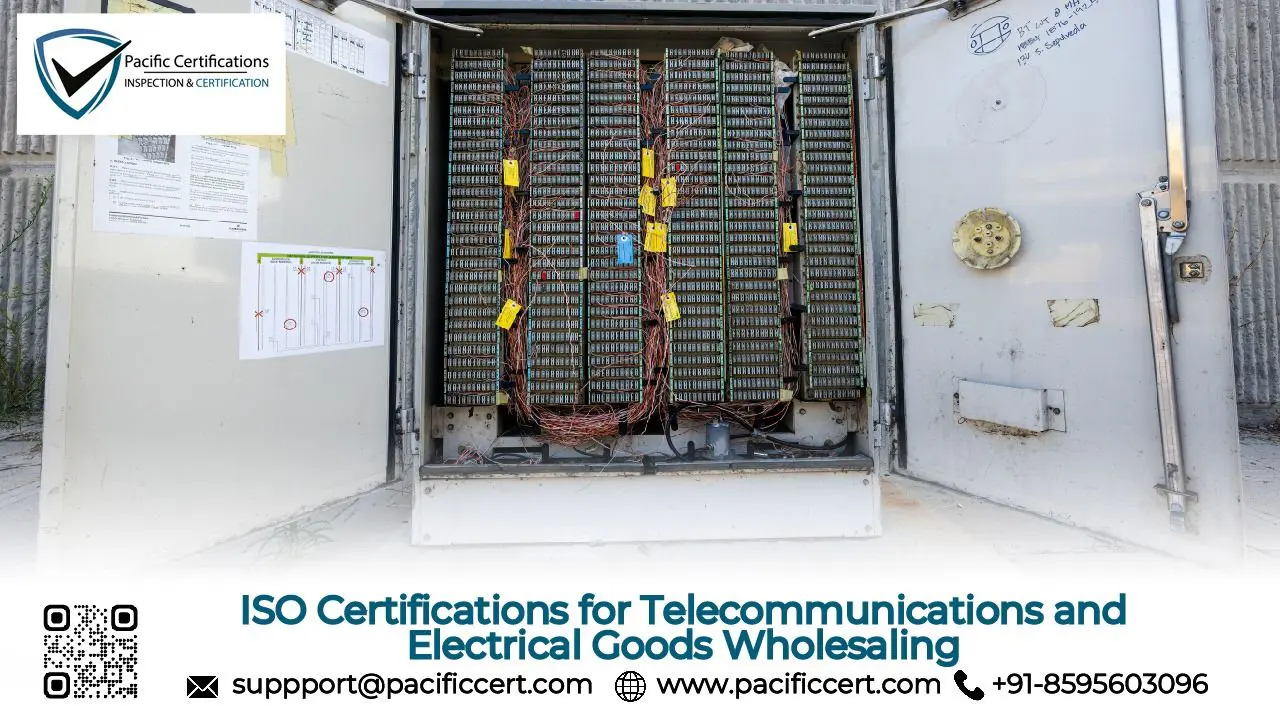
The telecommunications and electrical goods wholesaling sector operates within complex global supply chains, managing procurement, storage, and distribution of critical infrastructure components. Core activities include sourcing telecom equipment like fiber optics and network hardware, handling electrical components such as wiring systems and switchgear, coordinating multi-modal logistics, and providing technical support to downstream clients. These operations face persistent challenges including counterfeit product risks, supply chain volatility, stringent safety regulations for electrical goods, and intense pressure to maintain data integrity across B2B transactions. Public trust hinges on verifiable product authenticity and reliable delivery, making systemic vulnerability a direct threat to business continuity and market reputation.
ISO certifications provide essential frameworks to navigate these pressures by embedding internationally recognized best practices into core operations. They address implicit demands from global compliance structures like IEC standards and ITU regulations without naming specific authorities, focusing instead on universal principles of traceability, security, and resilience. Certification demonstrates commitment to transparent processes that build confidence among manufacturers, logistics partners, and end-users while systematically managing risks ranging from cyber threats to physical hazards in warehouses.
In telecommunications and electrical goods wholesaling, trust is built on reliable supply chains and verified product integrity.
Quick summary
ISO certifications provide telecommunications and electrical goods wholesaling with internationally recognized frameworks to manage operational quality, information security, business continuity, and environmental responsibility. Key standards include ISO 9001 for consistent quality in procurement and distribution processes, ISO/IEC 27001 for protecting sensitive customer and supply chain data, ISO 22301 for maintaining resilience against disruptions like natural disasters or supplier failures, and ISO 14001 for minimizing environmental impact across logistics networks.
For more information on how we can assist your telecommunications and electrical goods wholesaling business with ISO certifications, contact us at support@pacificcert.com.
Applicable ISO Standards for Telecommunications and Electrical Goods Wholesaling Businesses
Below are the most relevant ISO standards applicable to telecom equipment wholesalers, electrical goods distributors, integrated technology solution providers, and cold chain logistics specialists:
ISO 9001:2015 – Quality Management Systems (QMS)
Quality management directly impacts the bottom line through reduced returns of non-conforming goods and minimized delays from incorrect shipments in high-volume distribution. Core processes covered include supplier qualification based on audit reports, incoming inspection protocols for counterfeit detection using tools like XRF analyzers, and traceability systems linking batches to original test certificates. Benefits encompass fewer customer complaints about faulty components, lower costs associated with rework or scrap, and enhanced credibility when bidding for large-scale utility or telecom operator contracts.
ISO 14001:2015 – Environmental Management Systems (EMS)
Environmental stewardship grows increasingly important as regulations tighten around hazardous substances in electrical goods (RoHS, REACH) and carbon reporting requirements expand for logistics operations. The standard drives optimization of warehouse energy use through LED lighting and solar adoption, establishes procedures for recycling copper wiring or recovering rare earth metals from discarded telecom boards, and sets targets for reducing packaging waste. Advantages include avoidance of non-compliance fines, appeal to environmentally conscious corporate clients, and potential cost savings from reduced energy consumption and waste disposal fees.
ISO 45001:2018 – Occupational Health and Safety Management Systems
Warehouse safety remains a top concern given the physical demands of handling bulky electrical transformers or spools of fiber optic cable, alongside risks from battery storage areas in modern electrical goods. It requires ergonomic assessments for picking stations, confined space procedures for accessing high-rack storage, and specific controls for managing lithium-ion battery fire hazards in returned goods. Outcomes include lower incident rates reducing downtime and workers' compensation costs, improved employee retention in physically demanding roles, and demonstrable compliance with multinational retailers' safety audit requirements.
ISO 27001:2022 – Information Security Management Systems (ISMS)
Information security is paramount as wholesalers handle sensitive data including customer network configurations, proprietary electrical schematics, and EDI transaction details vulnerable to interception or ransomware attacks. The standard requires encryption of data at rest and in transit, role-based access controls for warehouse management systems, and regular penetration testing of B2B portals. Benefits include preventing costly data breaches that erode partner trust, meeting contractual security clauses from telecom carriers, and enabling secure integration with clients' ERP systems.
ISO 37001:2016 – Anti-Bribery Management Systems
This standard is critical due to the industry's reliance on third-party agents and high-value cross-border transactions where facilitation payments or improper gifts pose significant legal and reputational risks. It covers gift hospitality controls, vendor due diligence procedures, and transparent accounting for commissions paid to logistics partners or customs brokers. Practical benefits include reduced exposure to fines under foreign anti-corruption laws, stronger ethical standing with global manufacturers, and improved eligibility for government contracts requiring clean supply chains.
Click here to find out more applicable standards to your industry
What are the Requirements of ISO Certifications for Telecommunications and Electrical Goods Wholesaling Businesses?
Telecommunications and electrical goods wholesaling businesses seeking ISO certification must establish and maintain documented policies, procedures, and records aligned with the selected ISO standards. Key requirements include the following:
ISO 9001:2015 – Quality Management Systems Requirements
Define quality objectives tied to specific metrics like order accuracy rate and supplier defect ratio
Control document versions for work instructions covering receiving, put-away, and pick-pack-ship processes
Manage supplier performance through scorecards evaluating on-time delivery and conformity evidence
Implement incoming inspection using calibrated tools for voltage testing or signal loss measurement
Monitor key process indicators such as dock-to-stock cycle time and inventory accuracy
Establish corrective action procedures for deviations like mispicks or damaged goods receipt
ISO/IEC 27001:2022 – Information Security Management Systems Requirements
Establish an information security policy covering classification of customer data and technical specifications
Conduct risk assessments focused on threats to EDI transmissions and warehouse management system access
Apply access controls limiting system permissions based on job function and location
Implement encryption for data exchanges with suppliers using AS2 or SFTP protocols
Maintain logs of all access attempts to critical databases containing pricing or inventory data
Conduct quarterly security awareness training addressing phishing risks in procurement communications
ISO 22301:2019 – Business Continuity Management Systems Requirements
Conduct business impact analysis identifying critical functions like cold chain maintenance for temperature-sensitive electrical components
Develop recovery strategies including alternate sourcing routes and safety stock levels for high-risk SKUs
Create incident response plans detailing communication protocols during supplier factory shutdowns
Establish clear roles for emergency coordination covering logistics, procurement, and customer service teams
Test continuity plans semi-annually through simulations of port closure or cyberattack scenarios
Maintain registers of vital records including supplier contracts and product specification sheets
ISO 31000:2018 – Risk Management Requirements
Establish risk management framework defining appetite for risks like currency fluctuation or regulatory change
Identify risks through workshops covering supply chain geopolitics and technological obsolescence
Analyze risks using qualitative scales and quantitative models where data exists (e.g., lead time variability)
Treat risks via options like dual-sourcing, hedging contracts, or investing in supplier capability building
Monitor risk treatment effectiveness through key risk indicators such as supplier lead time variance
Communicate risk status regularly to leadership using dashboards highlighting top-tier exposures
Tip: Begin mapping current processes to ISO requirements by assembling a cross-functional team from procurement, warehouse operations, IT security, and finance to walk through a single end-to-end order cycle, from supplier quote generation to customer delivery confirmation, and document each step against relevant standard clauses to identify gaps and overlaps efficiently.
For more information on how we can assist your telecommunications and electrical goods wholesaling business with ISO certifications, contact us at support@pacificcert.com.
What are the Benefits of ISO Certifications for Telecommunications and Electrical Goods Wholesaling Businesses?
ISO certifications provide telecommunications and electrical goods wholesaling with strong operational and commercial advantages, including: listed below are the key benefits for the ISO standards applicable to telecom equipment wholesalers, electrical goods distributors, and integrated technology solution providers.
Improved order accuracy through standardized picking procedures and barcode validation reducing mis-shipments by 15-25%
Stronger supplier relationships via transparent performance metrics encouraging collaborative improvement initiatives
Better inventory control through cycle counting protocols integrated into daily warehouse activities
Higher customer satisfaction from verified product authenticity lowering return rates and warranty claims
Enhanced data security protecting sensitive B2B information from breaches that could trigger contractual penalties
Greater supply chain resilience maintaining service levels during disruptions through predefined continuity tactics
Reduced operational incidents lowering costs associated with workplace injuries or environmental spills
Streamlined customs clearance using compliant documentation reducing border delays for international shipments
Improved market access meeting mandatory certification requirements for utility-scale or government projects
Enhanced brand reputation demonstrating commitment to quality, safety, and ethical practices to stakeholders
The global telecommunications equipment market is projected to exceed USD 800 billion by 2030, driven by 5G rollout expansion, fiber-to-the-home deployments, and rising demand for network security appliances. Concurrently, the electrical goods distribution sector anticipates steady growth fueled by renewable energy infrastructure investments, smart grid modernization, and increasing adoption of energy-efficient lighting and motor systems. Digital transformation accelerates as wholesalers implement AI-driven demand forecasting, blockchain-based provenance tracking for conflict minerals, and IoT-enabled warehouse monitoring for real-time inventory visibility. Regulatory scrutiny intensifies regarding electronic waste management and cybersecurity resilience for critical supply chains, pushing businesses toward proactive compliance rather than reactive adjustments.
Organizations with certified management systems typically experience 20-30% fewer operational disruptions and demonstrate 35% faster recovery times during incidents compared to non-certified peers, based on cross-industry benchmarks. Future success hinges on managing emerging risks like deepfake-enabled fraud in supplier communications and adapting to stricter extended producer responsibility regulations for electrical goods. ISO-certified entities hold advantages in developed markets where public tenders mandate proof of robust systems, while in emerging economies they gain faster traction with multinational clients seeking reliable local partners who meet global compliance benchmarks without requiring extensive supplier audits.
How Pacific Certifications Can Help?
Pacific Certifications, accredited by ABIS, acts as an independent certification body for telecommunications and electrical goods wholesaling businesses by conducting impartial audits against applicable ISO standards. Our role is to objectively assess whether documented management systems and industry-specific practices conform to international ISO requirements, based strictly on verifiable evidence and operational records.
We support telecommunications and electrical goods wholesaling providers through:
Independent certification audits conducted in accordance with ISO/IEC 17021
Practical assessment of real warehouse operations, data security controls, and supply chain resilience processes
Clear audit reporting reflecting conformity status and certification decisions
Internationally recognized ISO certification upon successful compliance
Surveillance and recertification audits to maintain certification validity
Contact Us
If you need support with ISO certification for your telecommunications and electrical goods wholesaling business, contact us at support@pacificcert.com or +91-8595603096.
Author: Ashish
Read more: Pacific Blogs