Introduction
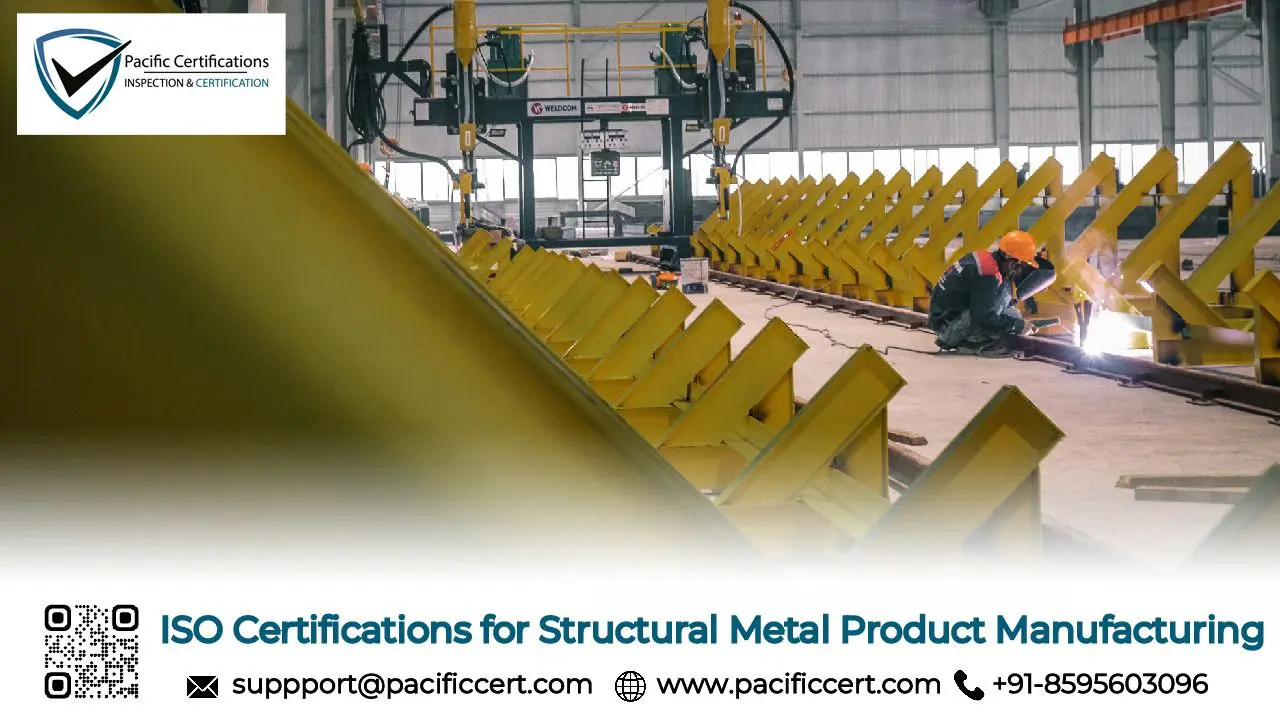
Structural metal product manufacturing forms the backbone of modern construction and infrastructure projects. Companies in this sector fabricate load-bearing steel and aluminum structures such as building frames, bridge sections, industrial platforms, pipe supports, towers, and modular assemblies used in construction, energy, transportation, and heavy industry. Production involves cutting and forming steel, structural welding, surface treatment and coating, and detailed dimensional inspection to ensure every component meets strict engineering specifications. Because these parts carry structural loads in real-world projects, any fabrication error can create serious safety risks, making process control and inspection critical at every stage of manufacturing.
For businesses in this field, ISO certifications for structural metal product manufacturing are not just formal approvals but practical management systems that demonstrate controlled and reliable fabrication processes. Project owners, engineering firms, and international contractors increasingly require certified management systems before approving suppliers for major construction or infrastructure work. ISO standards help manufacturers maintain weld quality, control inspection and traceability, manage workplace hazards in heavy fabrication environments, reduce environmental impact, protect technical drawings and project data, and show the level of discipline and reliability expected by global clients operating under strict compliance requirements.
In structural metal product manufacturing, the strength of the structure depends on the strength of the system that built it
Quick Summary
ISO certifications provide structural metal product manufacturing with internationally recognized frameworks to manage production quality through ISO 9001, welding integrity through ISO 3834, workplace safety through ISO 45001, environmental performance through ISO 14001, information security through ISO/IEC 27001, and business continuity through ISO 22301. Structural metal manufacturers should pay particular attention to weld procedure qualification and traceability, material certification and traceability across all structural grades, and the dimensional accuracy controls applied before structural components are dispatched to construction sites.
For more information on how we can assist your structural metal product manufacturing business with ISO certifications, contact us at support@pacificcert.com.
Applicable ISO Standards for Structural Metal Product Manufacturing Businesses
Below are the most relevant ISO standards applicable to structural steel fabricators, aluminum structure manufacturers, industrial platform and support structure producers, and modular construction component manufacturers:
ISO 9001: Quality Management System (QMS)
ISO 9001 sets the benchmark for quality management across industries. It ensures that structural metal manufacturers have systems in place to consistently meet customer and regulatory requirements.
ISO 14001: Environmental Management System (EMS)
ISO 14001 gives manufacturers a structured system to identify their significant environmental aspects, set reduction targets, and maintain verified compliance evidence for the environmental assessments that major construction and infrastructure project clients conduct on their supply chains. As sustainable construction practices become embedded in project procurement requirements, ISO 14001 certification shifts from a differentiator to a baseline expectation.
ISO 45001: Occupational Health and Safety Management
ISO 45001 requires manufacturers to document every hazard through structured risk assessments, assign engineering and procedural controls, deliver targeted safety training, and verify control effectiveness through formal internal audit cycles. Businesses that certify to ISO 45001 consistently report fewer lost-time incidents and build safety performance records that satisfy the strict contractor approval processes used by major construction and energy clients.
ISO 3834: Quality Requirements for Welding
ISO 3834 sets requirements for weld procedure specifications, welder qualification tests, pre-production welding trials, non-destructive examination planning, and comprehensive weld records that give clients and structural engineers confidence in fabrication quality. Manufacturers certified to ISO 3834 demonstrate that weld quality is governed by a verified and auditable system rather than relying on individual skill or informal practice alone.
ISO 1090: Execution of Steel and Aluminum Structures
This standard is specific to steel and aluminum structural components, ensuring they are designed, fabricated, and installed with precision and reliability.
ISO 27001: Information Security Management Systems (ISMS)
As fabricators adopt cloud-based engineering platforms, BIM-integrated production tools, and digital project communication portals, the information security exposure grows alongside the digital capability. ISO/IEC 27001 provides a framework to identify and treat these risks through documented access controls, software vendor security assessments, and structured incident response procedures that protect both the business and the client engineering data it holds.
ISO 50001: Energy Management Systems
Energy efficiency is essential for cost management and sustainability. ISO 50001 provides guidelines for optimizing energy use across manufacturing processes.
Click here to find out more applicable standards to your industry
What are the Requirements of ISO Certifications for Structural Metal Product Manufacturing Businesses?
Structural metal product manufacturing businesses seeking ISO certification must establish and maintain documented policies, procedures, and records aligned with the selected ISO standards. Key requirements include the following:
ISO 9001:2015 – Quality Management Systems
Define a quality policy with measurable targets for inspection pass rates, nonconformances, rework levels, and on-time delivery across all structural fabrication products.
Verify engineering drawings before fabrication to confirm material grades, dimensions, tolerances, and connection details meet project specifications.
Control raw material intake through mill certificate checks, dimensional inspection, surface condition review, and full heat number traceability.
Maintain a corrective action system for dimensional errors, weld defects, coating failures, and site rejections with root cause tracking.
Evaluate suppliers regularly to ensure steel, fasteners, and coating providers meet required quality and traceability standards.
ISO 3834:2021 – Welding Quality Requirements
Prepare welding procedure specifications for all structural welds including beams, columns, base plates, trusses, and load-bearing joints.
Keep welder qualification records showing approved processes, positions, ranges, and requalification dates.
Define weld inspection plans covering visual checks, dimensional verification, and non-destructive testing as required.
Maintain weld traceability records linking welding procedure, welder identity, and inspection result for each structural weld.
Control nonconforming welds through defined repair, approval, re-inspection, and root cause review procedures.
ISO 45001:2018 – Occupational Health and Safety Management Systems
Perform risk assessments for cutting, welding, grinding, blasting, painting, and crane handling operations.
Establish safe work procedures for heavy lifting, hot work, confined spaces, and equipment maintenance.
Record and investigate injuries, near-misses, and hazards with corrective actions tracked to completion.
Maintain training records for welding safety, blasting chemicals, PPE use, forklift operation, and emergency response.
Apply contractor safety controls through site induction and compliance checks for inspectors, painters, and subcontractors.
ISO 14001:2015 – Environmental Management Systems
Identify environmental risks from scrap steel, blasting waste, paint chemicals, solvent use, runoff, and high energy equipment.
Control waste through segregation and approved disposal of scrap, abrasives, paint waste, containers, and contaminated materials.
Set targets to reduce waste, solvent use, and power consumption per tonne of fabricated structure.
Perform environmental audits and maintain records proving compliance with environmental controls.
Tip:Start ISO implementation with a team including production, welding, safety, environmental, quality, and IT. Review each stage from drawing review, steel receipt, cutting, welding, inspection, coating, to dispatch, and identify existing controls, missing procedures, and documentation gaps to build a clear implementation roadmap before certification audit.
For more information on how we can assist your structural metal product manufacturing business with ISO certifications, contact us at support@pacificcert.com.
What are the Benefits of ISO Certifications for Structural Metal Product Manufacturing Businesses?
ISO certifications provide structural metal product manufacturing with strong operational and commercial advantages. Listed below are the key benefits for the ISO standards applicable to structural steel fabricators:
Better fabrication accuracy and weld quality through ISO 9001 and ISO 3834 controls that reduce defects, rework, and costly site rejections during construction projects.
Stronger project qualification results since EPC contractors and infrastructure clients require ISO certification before approving structural fabrication suppliers.
Improved worker safety with ISO 45001 systems that reduce injuries in heavy fabrication, welding, lifting, and coating operations.
Lower environmental risk using ISO 14001 controls for scrap, blasting waste, paint chemicals, and coating residues to meet project sustainability rules.
Stronger protection of drawings and project data through ISO/IEC 27001 controls for CAD, BIM, and ERP systems holding client specifications.
Higher delivery reliability with ISO 22301 continuity planning that protects project schedules from equipment failure or supply disruption.
Reduced energy costs through ISO 50001 by controlling power use in cutting machines, welding units, paint booths, and plant utilities.
Greater credibility in international projects where certified fabricators are seen as lower-risk suppliers by global contractors.
Easier client audits since ISO certification provides verified management system evidence, reducing repeated facility inspections.
The global structural steel fabrication market is currently valued at approximately USD 179.04 billion and is expected to reach USD 247.4 billion within the next decade, growing at a compound annual growth rate of 4.3% to 9.0% depending on the segment and source referenced. Asia Pacific dominates the market with a share of approximately 45.5%, valued at USD 73.9 billion in the current period, driven by rapid urbanization, infrastructure investment, smart city development, and industrial expansion across the region's largest manufacturing economies. In the coming years, demand growth will be shaped by infrastructure renewal programs in developed economies, the expansion of the renewable energy sector requiring structural steel for towers and platforms, sustainable construction practices that favor steel due to its recyclability, and growing adoption of modular and prefabricated construction methods that favor certified fabrication partners. International buyers in construction, energy, and industrial sectors are raising the compliance bar for their structural fabrication supply chains, and manufacturers without certified management systems will find it increasingly difficult to compete for the most commercially significant project contracts.
In fast-growing construction and infrastructure markets, ISO certification is widely used as proof that a fabrication company can meet international expectations for quality, safety, and compliance. Companies that implement certified management systems early build the operational discipline needed to compete for large industrial, energy, and infrastructure projects where reliability, documentation, and verified processes are required before suppliers are approved.
How Pacific Certifications Can Help?
Pacific Certifications, accredited by ABIS, acts as an independent certification body for structural metal product manufacturing businesses by conducting impartial audits against applicable ISO standards. Our role is to objectively assess whether documented management systems and structural fabrication-specific practices, including weld quality controls, dimensional inspection procedures, occupational safety programs, environmental waste management records, and production quality systems, conform to international ISO requirements based strictly on verifiable evidence and operational records.
We support structural metal product manufacturing providers through:
Independent certification audits conducted in accordance with ISO/IEC 17021 to ensure audit integrity and global recognition of all issued certificates
Practical assessment of real fabrication operations covering structural welding, cutting and forming, dimensional inspection, surface treatment, coating quality, and safety and environmental management controls
Clear audit reporting that reflects conformity status, nonconformity findings, and certification decisions based entirely on documented evidence and observed fabrication practices
Internationally recognized ISO certification upon successful demonstration of compliance with all applicable standard requirements
Surveillance and recertification audits to maintain ongoing certification validity and verify continual improvement across all certified management systems
Contact us
If you need support with ISO certification for your structural metal product manufacturing business, contact us at support@pacificcert.com or +91-8595603096.
Author: Alina
Read more: Pacific Blogs