ISO Certifications for Solar Electricity Generation Companies, Requirements and Benefits
Introduction
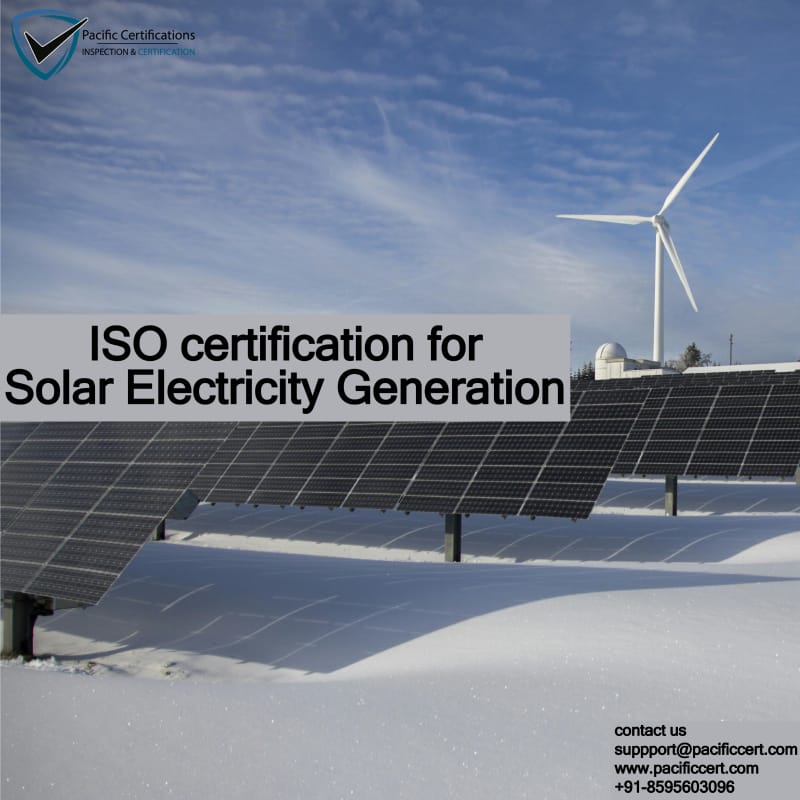
Solar Electricity Generation Companies operate in technology-driven, asset-intensive environments where operators balance high upfront investments, performance variability from weather patterns, grid integration demands, and long-term asset degradation under harsh conditions. Utility-scale solar farms, rooftop PV arrays, hybrid solar-storage projects, and independent power producers (IPPs) handle panel installation, inverter synchronization, SCADA monitoring, DC/AC conversion, remote O&M, and dust or soiling mitigation while navigating supply chain disruptions for modules and trackers, cyber threats to control systems, and escalating demands for zero-emission reliability in global decarbonization efforts.
ISO certifications equip solar electricity generation companies with proven frameworks to systematize operations, boost energy yield through optimized performance and prove compliance with international regulatory standards on emissions, grid stability, and ESG reporting. These standards shift companies from reactive fixes to proactive, data-backed strategies that cut downtime, extend panel lifespans beyond 25-30 years, lower levelized cost of energy (LCOE), and unlock financing in competitive tenders.
In solar energy, sustainability succeeds when performance, safety, and governance work together.
Quick Summary
ISO certifications provide solar electricity generation companies with internationally recognized frameworks to manage service quality through ISO 9001, energy performance through ISO 50001, environmental impacts through ISO 14001, occupational health and safety through ISO 45001, asset lifecycle through ISO 55001, information security through ISO/IEC 27001, and business continuity through ISO 22301. These enable operators to maximize PV yield, minimize degradation, ensure grid compliance, and build investor trust in a sector where certified systems often achieve 5-10% higher uptime.
For more information on how we can assist your solar electricity generation business with ISO certifications, contact us at [email protected].
Applicable ISO Standards for Solar Electricity Generation Companies
Below are the most relevant ISO and IEC standards applicable to solar electricity generation companies:
ISO 9001: Quality Management Systems (QMS)
Quality Management Systems standardizes processes for solar farm construction, module procurement, performance testing, and grid handover, reducing variability in yield guarantees and O&M contracts while proving consistent delivery to off-takers and regulators.
ISO 14001: Environmental Management Systems
Environmental Management Systems identifies impacts from land clearing, water for cleaning, hazardous waste like broken panels, and dust emissions, driving controls that align with global ESG frameworks and reduce permitting delays.
ISO 45001: Occupational Health and Safety Management Systems
Occupational Health and Safety protects technicians from arc flash in combiner boxes, falls during panel cleaning, electrical shocks, and heavy lifting of trackers, via hazard assessments, training, and emergency protocols tailored to rooftop and ground-mount sites.
ISO 50001: Energy Management Systems
Energy Management Systems targets significant uses like inverter efficiency, tracker misalignment, and soiling losses in PV arrays, enabling baselines, audits, and improvements that lift energy output by 3-5% annually and support net-zero claims.
ISO 55001:2014 – Asset Management Systems
Asset Management Systems governs PV arrays, inverters, transformers, and BoS over full lifecycles, linking strategies to risk-based maintenance, degradation monitoring, and repowering decisions for optimal ROI in capital-heavy solar assets
IEC/ISO 61215 – Photovoltaic Module Performance
IEC/ISO 61215 specifies performance and durability requirements for crystalline silicon and thin-film photovoltaic modules. For solar generation companies, this standard supports long-term output reliability, warranty validation, and investor assurance.
IEC/ISO 61730 – Photovoltaic Module Safety
IEC/ISO 61730 addresses electrical, mechanical, and fire safety of PV modules. It is critical for ensuring safe installation, operation, and regulatory acceptance of solar power systems.
Click here to find out more applicable standards to your industry
What are the Requirements of ISO Certifications for Solar Electricity Generation Companies?
Solar electricity generation businesses seeking ISO certification must establish and maintain documented policies, procedures, and records aligned with the selected ISO standards. Key requirements include the following:
ISO 9001:2015 – Quality Management Systems Requirements
Define processes for PV installation, inverter commissioning, performance ratio testing, and grid synchronization.
Set objectives for yield targets, downtime reduction, and stakeholder satisfaction metrics.
Control documents for module specs, O&M logs, and non-conformance records across sites.
Conduct internal audits on array cleaning, fault diagnostics, and supplier evaluations.
Implement corrective actions for underperformance or equipment failures.
ISO 50001:2018 – Energy Management Systems Requirements
Identify key energy uses in panels, inverters, trackers, and auxiliary cooling.
Establish baselines for specific yield and soiling rates per MW.
Implement controls like automated cleaning and vegetation management.
Monitor KPIs and review energy projects quarterly.
Update plans based on weather data and degradation trends.
ISO 45001:2018 – Occupational Health and Safety Requirements
Assess hazards like arc flash, falls from arrays, electrical shocks, and lifting.
Define controls including lockout-tagout, PPE, and fall arrest systems.
Train staff on PV-specific risks and emergency evacuations.
Report near-misses from combiner box work or drone inspections.
Audit safety performance via incident rates and drills.
ISO 14001:2015 – Environmental Management Systems Requirements
Map aspects like panel waste, water use, soil erosion, and habitat disruption.
Set targets for recycling rates and emissions from vehicles.
Control spills from inverters and dust suppression measures.
Verify compliance with site permits annually.
Engage stakeholders on biodiversity impacts.
ISO 55001:2014 – Asset Management Systems Requirements
Align policy with lifecycle goals for arrays and BoS.
Develop plans for degradation monitoring and repowering.
Maintain registers of module serials and performance data.
Review risks like hotspots or tracker failures.
Integrate cost-performance trade-offs in decisions.
Tip:Map your solar asset lifecycle—procurement, erection, commissioning, O&M, decommissioning—against standards to pinpoint gaps in controls and documentation for smoother audits.
For further information on how we can assist your solar electricity generation business with ISO certifications, contact us at [email protected].
What are the Benefits of ISO Certifications for Solar Electricity Generation Companies?
ISO certifications equip solar electricity generation businesses with robust operational and market advantages, including streamlined processes and enhanced credibility, as outlined below for utility-scale farms, rooftop operators, hybrid IPPs, and maintenance providers.
Improves PV yield consistency, cutting soiling and degradation losses by 5-10%.
Reduces safety incidents like arc flash and falls through structured hazard controls.
Strengthens grid operator trust via verified performance and uptime guarantees.
Enhances environmental compliance, minimizing waste and water impacts.
Boosts asset longevity with risk-based maintenance on panels and inverters.
Lowers LCOE through energy-efficient operations and supply chain optimization.
Secures financing and tenders by demonstrating ESG-aligned governance.
Mitigates cyber risks to SCADA, ensuring resilient monitoring networks.
The global solar electricity market reached about USD 138 billion in 2026, with installations projected to hit 655 GW annually soon after, driven by double-digit growth in emerging economies and policy pushes for renewables amid decarbonization. Developed markets emphasize hybrid integration, while global frameworks tighten grid codes and ESG disclosures, spurring certified operators.
Investment and regulatory trends increasingly favor ISO-aligned solar projects. Lenders, insurers, and public authorities now routinely assess quality, safety, and asset governance maturity before approving financing or grid interconnection.
ISO adoption yields 20-30% drops in unplanned downtime and audit costs via integrated systems like ISO 9001 with 50001, fueled by aging assets, tracker tech advances, and rising hail/fire incidents that demand proactive risk management over the next decade.
How Pacific Certifications Can Help?
Pacific Certifications, accredited by ABIS, acts as an independent certification body for solar electricity generation companies by conducting impartial audits against applicable ISO standards. Our role is to objectively assess whether documented management systems and operational practices conform to international ISO requirements, based strictly on verifiable evidence and site-level records.
We support solar energy organizations through:
Independent certification audits conducted in accordance with ISO/IEC 17021
Practical assessment of real solar operations, asset controls, and safety systems
Clear audit reporting reflecting conformity status and certification decisions
Internationally recognized ISO certification upon successful compliance
Surveillance and recertification audits to maintain certification validity
Contact us
If you need support with ISO certification for your solar electricity generation business, contact us at [email protected]or +91-8595603096.
Author: Ashish
Read more: Pacific Blogs