ISO Certifications for Recreational Vehicle Manufacturing Businesses, Requirements and Benefits
Introduction
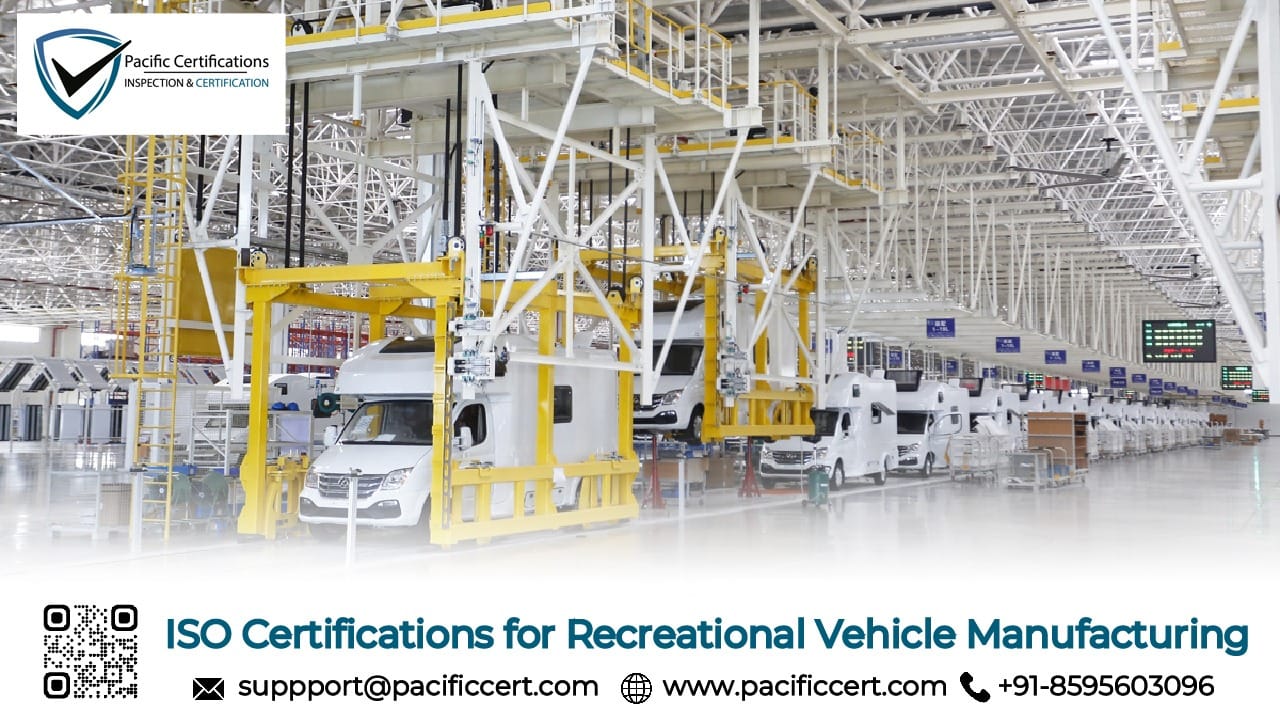
Recreational vehicle (RV) manufacturing blends automotive engineering, mobile‑home design, and leisure‑product innovation. Core activities include chassis fabrication, body panel assembly, electrical‑system integration, plumbing installation, interior furnishing, and final testing for safety and comfort. Manufacturers must manage complex supply chains, coordinate just‑in‑time delivery of components, and ensure that each unit meets stringent durability, emissions, and functional‑safety standards. Typical challenges involve controlling variation in large‑scale assembly, preventing water intrusion or electrical faults, maintaining worker safety on busy production lines, and keeping pace with rapid technological advances such as solar‑panel integration and smart‑home connectivity.
ISO certifications provide a globally recognized framework to embed systematic controls into every production stage. International market expectations and regulatory pressures compel RV builders to demonstrate consistent quality, environmental responsibility, occupational safety, and the reliability of embedded electronics. By aligning with ISO standards, manufacturers can standardize inspection procedures, reduce waste from rework, protect proprietary designs, and build trust with dealers, fleet operators, and end‑users who demand dependable, safe mobile homes.
In RV manufacturing, confidence rolls out of the factory — robust systems turn every mile driven into a promise kept
Quick Summary
ISO certifications offer RV manufacturers internationally recognized frameworks to manage product quality, environmental impact, workplace safety, automotive‑specific quality, and functional safety of electrical systems. The most relevant standards include ISO 9001 for quality management, ISO 14001 for environmental stewardship, ISO 45001 for occupational health, ISO/TS 16949 for automotive‑focused quality, and ISO 26262 for functional safety of vehicle electronics. Producers should pay special attention to traceability of critical parts and validation of software‑controlled subsystems.
For more information on how we can assist your recreational vehicle business with ISO certifications, contact us at support@pacificcert.com.
Applicable ISO Standards for Recreational Vehicle Manufacturing Businesses
Below are the most relevant ISO standards applicable to motorhome builders, travel‑trailer assemblers, camper‑van converters, and specialty‑RV fabricators:
ISO 9001:2015 – Quality Management Systems
This standard is critical because RV manufacturing involves numerous interfaces between chassis, bodywork, and utility systems that must align precisely. It governs document control, internal audits, corrective actions, and management review for processes such as material receipt, welding inspection, electrical harness testing, and water‑tightness verification. Implementing ISO 9001 reduces rework, improves on‑time delivery, and strengthens customer confidence in the durability and safety of each vehicle
ISO 14001:2015 – Environmental Management Systems
RV production consumes significant energy for curing coatings and generates waste from metal shavings, solvents, and packaging materials. The standard helps organizations identify environmental aspects, set measurable objectives, and monitor compliance with legal requirements. Adoption can lower utility expenses, satisfy eco‑conscious dealers, and reduce the ecological footprint of manufacturing sites.
ISO 45001:2018 – Occupational Health and Safety Management Systems
Assembly lines expose workers to risks from heavy‑lifting, high‑temperature welding, and exposure to cleaning chemicals. ISO 45001 requires hazard identification, risk assessment, implementation of controls (such as lift‑assist devices, fume extraction, and personal protective equipment), and monitoring of safety performance. Implementing this standard leads to fewer injuries, lower workers‑compensation costs, and improved morale among crews who see that their safety is a priority.
ISO 26262 – Functional Safety in Automotive Applications
Modern RVs increasingly incorporate electronic control units for braking, battery management, and appliance automation. This standard defines a functional‑safety lifecycle, hazard analysis, and safety integrity levels (ASIL) to ensure that electrical/electronic systems do not pose unreasonable risk. Certification confirms that software and hardware development follow rigorous validation, verification, and configuration‑management practices, which is essential for market acceptance of smart‑RV features.
ISO/TS 16949 – Automotive Quality Management Systems
This technical specification adapts ISO 9001 to the automotive sector’s emphasis on defect prevention and continuous improvement. For RV manufacturers, it applies to chassis frames, suspension systems, and power‑train components where variation can affect safety and ride quality. Implementing ISO/TS 16949 supports tighter tolerances, reduces scrap rates, and aligns production with global automotive‑supply‑chain expectations.
Click here to find out more applicable standards to your industry
What are the Requirements of ISO Certifications for Recreational Vehicle Manufacturing Businesses?
RV manufacturers seeking ISO certification must establish and maintain documented policies, procedures, and records aligned with the selected ISO standards. Key requirements include the following:
ISO 9001:2015 – Quality Management Systems
Define a quality policy that reflects commitment to safe, reliable, and on‑time delivery of recreational vehicles.
Control documents and records to ensure current versions of work instructions and inspection criteria are accessible on the shop floor.
Plan and control production processes, including material verification, weld inspection, electrical continuity testing, and final‑road‑test procedures.
Monitor customer satisfaction through dealer feedback, warranty claims, and repeat‑order tracking.
Conduct internal audits at planned intervals and promptly address any nonconformities identified.
Continually improve the QMS using audit results, production data, and corrective‑action outcomes.
ISO 14001:2015 – Environmental Management Systems
Identify environmental aspects such as energy consumption, volatile‑organic‑compound emissions, and solid‑waste generation.
Establish environmental objectives and targets that are measurable, for example, increasing the recycling rate of aluminum scrap by 15 % within a year.
Implement operational controls like solvent‑recovery units, energy‑efficient lighting, and waste‑segregation stations.
Train staff on environmental responsibilities and procedures for handling hazardous cleaning agents.
Evaluate compliance with applicable environmental legislation and industry guidelines on a regular basis.
Review the EMS at top‑management meetings to drive continual improvement and update objectives as needed.
ISO 45001:2018 – Occupational Health & Safety Management Systems
Establish an occupational health & safety policy that outlines legal compliance and injury‑prevention goals.
Identify hazards such as moving‑assembly lines, exposure to welding arcs, and ergonomic strains from lifting heavy panels.
Assess risks and determine appropriate controls, including guarding, interlocked safety devices, and adjustable‑height workstations.
Provide training and competence‑building activities for operators on machine safety, emergency response, and safe‑handling techniques.
Implement operational controls to manage change, procurement, and contractor safety on‑site.
Monitor safety performance through incident investigations, leading‑indicator metrics, and management review.
ISO/TS 16949:2009 – Automotive Quality Management Systems
Maintain documented procedures for product‑design verification, process‑validation, and change‑management that align with customer‑specific requirements.
Apply statistical‑process‑control methods to critical dimensions such as frame‑wall thickness and suspension‑joint torque.
Ensure traceability of safety‑related parts (e.g., braking components, fuel‑system valves) from supplier receipt to final installation.
Conduct regular internal audits of production processes and supplier quality to detect deviations early.
Implement corrective actions when nonconformities are found, using root‑cause analysis and preventive‑measure planning.
Review the quality‑management system at management meetings to ensure continual adaptation to evolving automotive‑supply‑chain demands.
ISO 26262:2018 – Functional Safety for Road Vehicles
Conduct a hazard‑and‑risk analysis to identify potential malfunction scenarios of electronic control units (e.g., brake‑by‑wire, battery‑management).
Define automotive safety integrity levels (ASIL) for each safety‑related function based on severity, exposure, and controllability of hazards.
Implement a functional‑safety lifecycle that includes requirements specification, architectural design, implementation, verification, and validation stages.
Ensure traceability of safety requirements to design artifacts, source code, and test results throughout development.
Perform functional‑safety audits and assessments to confirm that residual risk meets the target ASIL.
Update the functional‑safety management system based on lessons learned from field incidents and technological changes.
Tip:Begin by mapping your current standard operating procedures for material receipt, welding inspection, and final‑road testing against the clauses of ISO 9001; involve production, quality, and safety leads in a cross‑functional workshop to pinpoint gaps and create an actionable implementation plan.
For more information on how we can assist your recreational vehicle business with ISO certifications, contact us at support@pacificcert.com.
What are the Benefits of ISO Certifications for Recreational Vehicle Manufacturing Businesses?
ISO certifications provide RV manufacturers with strong operational and commercial advantages, including: listed below are the key benefits for the ISO standards applicable to motorhome builders, travel‑trailer assemblers, camper‑van converters, and specialty‑RV fabricators:
Improved product consistency through standardized material‑receipt checks, weld‑inspection criteria, and final‑road‑test procedures.
Stronger safety culture by integrating hazard analysis, risk controls, and ongoing training for welding, lifting, and electrical work.
Better environmental performance via reduced solvent emissions, increased metal‑scrap recycling, and energy‑efficient curing processes.
Higher dealer and customer trust demonstrated through certified quality and safety marks on compliance documents and online configurators.
Greater eligibility for contracts with national‑park concessionaires, fleet‑leasing companies, and export markets that require ISO‑certified suppliers.
Reduced incident rates from proactive risk identification, leading to fewer production‑line injuries, warranty claims, and recall events.
Streamlined audit preparation thanks to well‑maintained documents, records, and traceability of critical assemblies such as chassis and power‑train units.
Enhanced information security protecting proprietary designs, supplier‑data exchanges, and production‑planning systems from cyber threats.
Increased resilience to disruptions through tested continuity plans, clear recovery objectives, and backup communication methods for enterprise‑resource‑planning platforms.
Improved regulatory readiness by aligning with automotive‑safety, environmental‑protection, occupational‑health, and data‑privacy expectations.
The recreational vehicle (RV) manufacturing industry is experiencing strong, data-backed growth as travel preferences shift toward flexible, experience-driven mobility. The global market is projected to expand significantly, with estimates suggesting it could grow from around USD 60–80 billion in the mid-2020s to over USD 140 billion by 2030, reflecting a compound annual growth rate of approximately 8–11%. In some projections, the market could exceed USD 200 billion by the mid-2030s, driven by sustained demand across both developed and emerging economies.
From an operational and manufacturing perspective, the industry is undergoing rapid transformation. Production processes are increasingly focused on modular design, automation, and supply chain optimization to manage fluctuating demand and cost pressures. Sustainability is becoming a central priority, with growing emphasis on lightweight materials, energy-efficient systems, and reduced emissions. However, manufacturers must also navigate challenges such as raw material price volatility, dealer inventory cycles, and sensitivity to broader economic conditions, which can impact consumer purchasing behavior and production planning.
Looking ahead, the RV manufacturing sector is expected to remain highly dynamic, supported by continued innovation in electric and hybrid drivetrains, connected vehicle ecosystems, and digital sales platforms. In both mature markets seeking product innovation and emerging regions expanding outdoor tourism infrastructure, manufacturers that focus on consistent quality, safety, and operational control are better positioned to scale. As competition intensifies, structured manufacturing systems and standardized processes will play a critical role in maintaining product reliability, regulatory compliance, and long-term brand credibility.
How Pacific Certifications Can Help
Pacific Certifications, accredited by ABIS, acts as an independent certification body for recreational vehicle manufacturers by conducting impartial audits against applicable ISO standards. Our role is to objectively assess whether documented management systems and RV‑specific practices conform to international ISO requirements, based strictly on verifiable evidence and operational records.
We support RV providers through:
Independent certification audits conducted in accordance with ISO/IEC 17021
Practical assessment of real RV manufacturing operations, safety, and environmental controls
Clear audit reporting reflecting conformity status and certification decisions
Internationally recognized ISO certification upon successful compliance
Surveillance and recertification audits to maintain certification validity
Contact us
If you need support with ISO certification for your recreational vehicle business, contact us at support@pacificcert.com or +91-8595603096.
Author: Alina
Ready to get ISO certified?
Contact Pacific Certifications to begin your certification journey today!
Suggested Certifications –
Read more: Pacific Blogs