Introduction
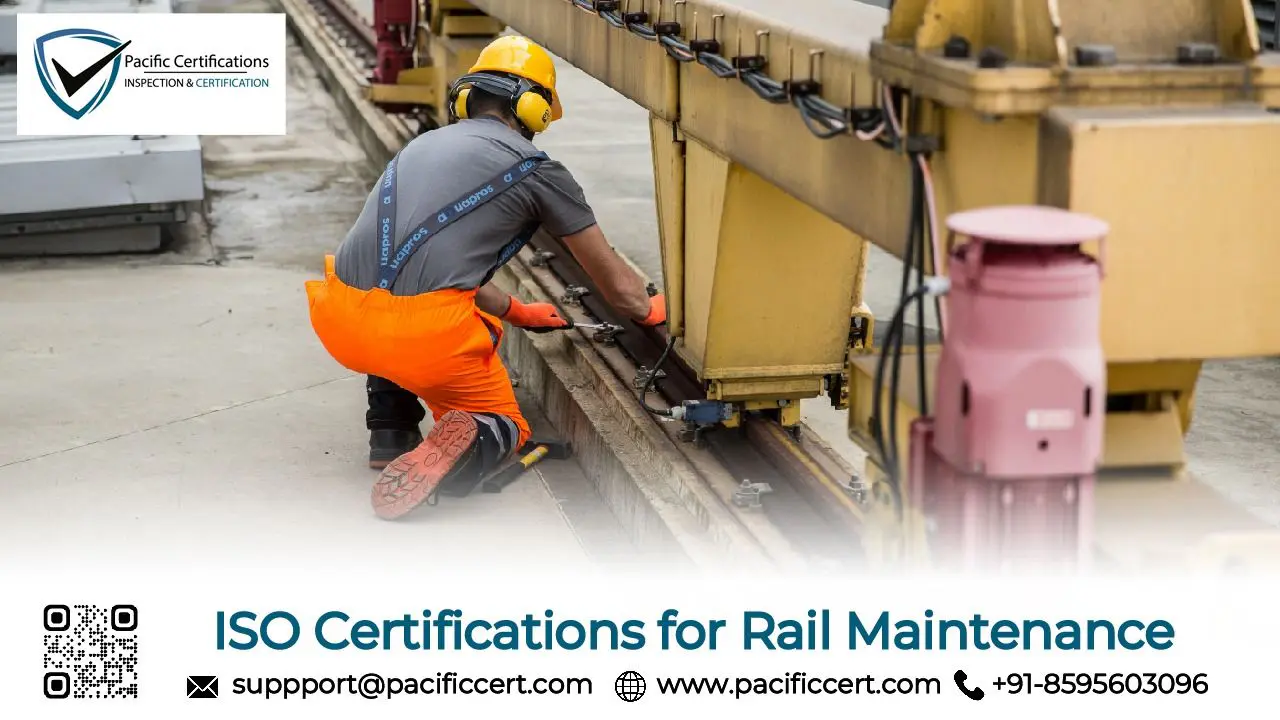
Rail maintenance businesses operate in a safety-critical, asset-intensive, and regulation-driven environment where infrastructure reliability, rolling stock integrity, workforce safety, service continuity, and compliance directly affect passenger safety and network performance. These businesses provide track maintenance, signaling upkeep, rolling stock servicing, traction power maintenance, inspections, fault rectification, and emergency response for metro systems, freight corridors, high-speed rail, and regional networks.
With aging rail infrastructure, increasing passenger volumes, expansion of urban transit systems, and heightened safety oversight, rail maintenance contractors are under constant pressure to demonstrate disciplined maintenance systems and traceable controls. ISO certifications have therefore become an essential framework for rail maintenance businesses to ensure consistent service quality, manage safety risks, protect critical assets, and maintain confidence with rail operators and regulators.
In rail maintenance, reliability is not measured in schedules—it is measured in safety.
Quick Summary
ISO certifications provide rail maintenance businesses with internationally recognized frameworks to manage service quality through ISO 9001, occupational health and safety through ISO 45001, environmental responsibility through ISO 14001, asset lifecycle management through ISO 55001, energy performance through ISO 50001, information security through ISO/IEC 27001, business continuity through ISO 22301, and risk governance through ISO 31000. These certifications support safe, reliable, and compliant rail operations.
Direct Email Support: Reach out to us at support@pacificcert.com for any inquiries regarding ISO certification.
Applicable ISO Standards for Rail Maintenance Businesses
Below are the most relevant ISO standards applicable to railway maintenance contractors, infrastructure service providers, and rolling stock maintenance organizations:
ISO 9001: Quality Management System (QMS)
ISO 9001 supports standardized maintenance procedures, inspection regimes, defect reporting, work order control, subcontractor management, and continual improvement, ensuring predictable maintenance outcomes.
ISO 14001: Environmental Management System (EMS)
Rail maintenance activities generate waste, oils, noise, vibration, and potential soil or water contamination. ISO 14001 helps manage environmental impacts and regulatory compliance.
ISO 45001: Occupational Health & Safety (OHSMS)
Rail maintenance involves working on live tracks, electrical systems, confined spaces, heavy machinery, and night shifts. ISO 45001 establishes systematic hazard identification, risk controls, training, and emergency preparedness to prevent serious incidents.
ISO 55001: Asset Management System (AMS)
ISO 55001 is a cornerstone standard for rail maintenance, enabling structured lifecycle management of tracks, switches, signaling equipment, rolling stock components, depots, and maintenance tools. It ensures asset reliability, availability, and long-term performance.
ISO/TS 22163: Railway Quality Management System (Based on ISO 9001)
This is a specific standard for the railway industry, including maintenance service providers. It builds upon ISO 9001 principles and incorporates railway-specific quality management requirements.
ISO 31000: Risk Management
Risk management is essential in rail maintenance to prevent failures and disruptions. ISO 31000 provides guidelines to identify, assess, and manage risks associated with rail operations.
Click here to find out more applicable standards to your industry
What are the Requirements of ISO Certifications for Rail Maintenance Businesses?
Rail maintenance contractors seeking ISO certification must establish and maintain documented policies, procedures, and records aligned with the selected ISO standards. Key requirements include the following:
ISO 9001:2015 – Quality Management Systems Requirements
Define standardized procedures for track inspection, rolling stock maintenance, signaling upkeep, and fault rectification
Control maintenance work orders, inspection records, technical manuals, and revision-controlled documentation
Manage subcontractors, spare parts, tools, and calibration of inspection equipment
Implement inspection, verification, and acceptance processes after maintenance activities
Monitor service performance, defects, non-conformities, and corrective actions
ISO 45001:2018 – Occupational Health and Safety Management Systems Requirements
Identify hazards related to live rail tracks, overhead power lines, signaling systems, heavy machinery, and night work
Conduct task-specific risk assessments and implement safe systems of work and permits
Provide rail-specific safety training, PPE, lock-out/tag-out, and access controls
Establish emergency response procedures for electrical incidents, derailments, and worker injuries
Monitor incidents, near misses, contractor safety performance, and OH&S improvement actions
ISO 14001:2015 – Environmental Management Systems Requirements
Identify environmental aspects such as waste materials, lubricants, noise, vibration, and fuel spills
Assess environmental impacts related to maintenance activities along rail corridors
Implement waste management, spill prevention, and noise mitigation controls
Ensure compliance with environmental permits and transport authority requirements
Monitor environmental performance and implement continual improvement measures
ISO 55001:2014 – Asset Management Systems Requirements
Establish asset management policies covering tracks, rolling stock, signaling, and electrical systems
Maintain accurate asset registers, condition monitoring records, and maintenance histories
Define asset ownership, responsibilities, and maintenance planning processes
Monitor asset reliability, availability, and lifecycle performance indicators
Support long-term asset integrity and renewal planning
ISO 22301:2019 – Business Continuity Management Systems Requirements
Identify critical maintenance activities, skilled workforce dependencies, and spare-parts availability
Conduct business impact analysis for service disruptions or infrastructure failures
Develop contingency plans for emergency repairs, access restrictions, and workforce shortages
Establish recovery procedures to restore rail services within required timeframes
Test continuity arrangements and train teams on response responsibilities
Tip:Start by mapping one complete maintenance cycle—from inspection and fault detection to repair, verification, documentation, and handover—against ISO requirements to identify safety, asset, and compliance gaps early.
For further information on how we can assist your rail maintenance business with ISO certifications, contact us at support@pacificcert.com.
What are the Benefits of ISO Certifications for Rail Maintenance Businesses?
ISO certifications are suitable for track maintenance contractors, rolling stock service providers, signaling maintenance firms, and rail infrastructure operators. Key benefits include:
Improved reliability and availability of rail infrastructure and assets, reducing service disruptions.
Safer working conditions for maintenance crews and contractors, lowering accident and incident risks.
Stronger compliance with rail safety, environmental, and transport regulations, supporting operational approvals.
Higher credibility with rail operators, transit authorities, and public agencies, strengthening long-term contracts.
Better control of maintenance planning, records, and asset data, improving lifecycle decision-making.
Improved coordination across maintenance, safety, and operations teams, enhancing execution discipline.
Greater resilience during emergency repairs and unplanned failures, supporting rapid service restoration.
Improved readiness for audits, regulatory inspections, and safety reviews, reducing operational and legal risk.
The rail maintenance industry is growing steadily as governments and transport operators invest in upgrading rail networks, improving safety, and modernizing transportation infrastructure. Global studies indicate that the rail maintenance, repair, and overhaul (MRO) market was valued at approximately 75–80 billion USD in 2023 and is expected to reach around 110–120 billion USD by 2030, reflecting a compound annual growth rate of about 5–6%. The growth is driven by aging railway infrastructure, increasing passenger and freight rail demand, and expansion of metro and high-speed rail systems across many regions.
Major infrastructure investments are also contributing to this expansion. Global railway infrastructure spending is projected to exceed 370 billion USD annually by 2030, particularly in Asia-Pacific, Europe, and the Middle East where new high-speed rail corridors and urban transit systems are being developed. At the same time, digital technologies such as predictive maintenance systems, AI-based track monitoring, and automated inspection vehicles are transforming how rail maintenance activities are planned and executed. As rail operators prioritize safety, reliability, and regulatory compliance, maintenance contractors are increasingly expected to follow structured operational procedures and internationally recognized management systems, encouraging wider adoption of ISO-based frameworks across rail maintenance
How Pacific Certifications Can Help?
Pacific Certifications, accredited by ABIS, acts as an independent certification body for rail maintenance businesses by conducting impartial audits against applicable ISO standards. Our role is to objectively assess whether documented management systems and maintenance practices conform to international ISO requirements, based strictly on verifiable evidence and operational records.
We support rail maintenance providers through:
Independent certification audits conducted in accordance with ISO/IEC 17021
Practical assessment of real maintenance, safety, and asset controls
Clear audit reporting reflecting conformity status and certification decisions
Internationally recognized ISO certification upon successful compliance
Surveillance and recertification audits to maintain certification validity
Contact us
If you need support with ISO certification for your rail maintenance business, contact us at support@pacificcert.com or +91-8595603096.
Author: Ashish
Read more: Pacific Blogs