ISO Certifications for Public General Hospitals, Requirements and Benefits
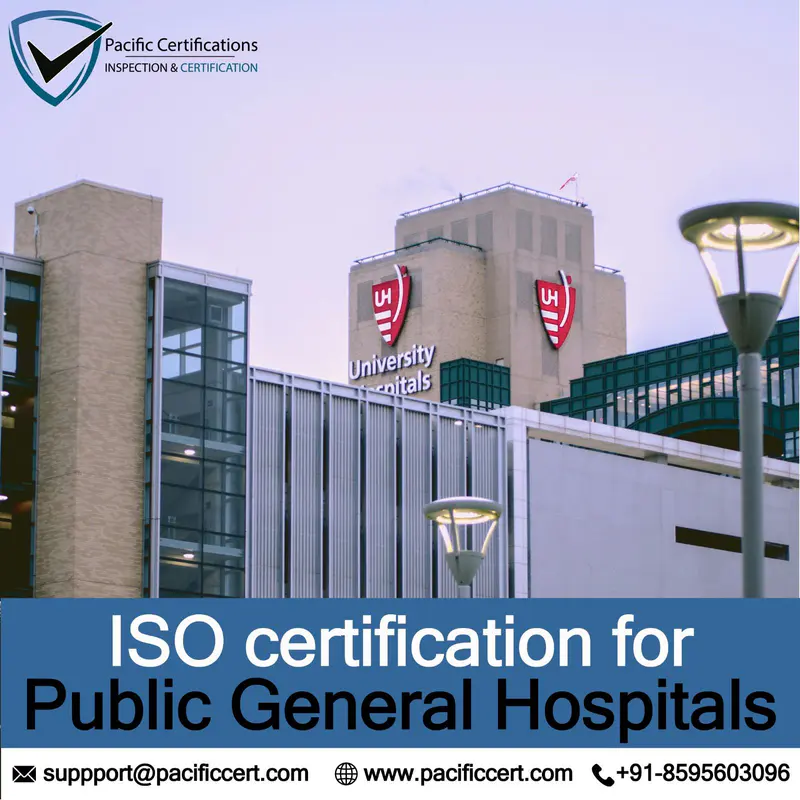
Introduction
Public general hospitals operate under intense pressure where patient safety, clinical quality, equity of access, and compliance with national health regulations must all be managed within constrained public budgets. They handle high patient volumes across emergency care, surgery, maternity, pediatrics, intensive care, and outpatient services while dealing with overcrowding, staff shortages, ageing infrastructure, and strict government oversight on quality, safety, and procurement. At the same time, they must maintain transparent operations, meet accreditation and audit requirements, and demonstrate value to governments, donors, and taxpayers in terms of outcomes, efficiency, and responsible use of public funds.
ISO certifications give public general hospitals structured management systems to standardize processes, reduce variation, and embed continuous improvement in environments where resources are often stretched. They help move from reactive problem‑solving to documented, measured, and auditable systems that improve care reliability, strengthen patient and staff safety, support compliance, and build confidence among governments, regulators, communities, and development partners. Public trust and consistent quality at scale define success in public general hospital operations.
Quality in healthcare is not negotiable—it is the foundation of patient trust and clinical excellence.
Quick Summary
ISO certifications provide public general hospitals with internationally recognized frameworks to manage clinical quality through ISO 9001, healthcare-specific quality systems through ISO 7101, medical device management through ISO 13485, laboratory competence through ISO 15189, occupational health and safety through ISO 45001, patient data security through ISO 27001, environmental compliance through ISO 14001, and business continuity through ISO 22301.
For more information on how we can assist your hospital business with ISO certifications, contact us at support@pacificcert.com.
Applicable ISO Standards for Public General Hospitals Businesses
Below are the most relevant ISO standards applicable to public general hospitals, specialty medical centers, teaching hospitals, and multi-specialty healthcare facilities:
ISO 7101:2023 – Healthcare Quality Management System
ISO 7101 addresses the unique complexities of healthcare environments by focusing on patient-centered leadership, clinical governance, infection prevention protocols, and equity in care delivery. This healthcare-specific standard supports tracking clinical indicators, improving treatment processes, and demonstrating measurable quality improvements across emergency services, surgical units, and inpatient departments.
ISO 9001: Quality Management Systems (QMS)
ISO 9001 establishes structured frameworks for improving consistency across patient care pathways, administrative processes, and support services in hospitals. Hospitals use this standard to standardize clinical workflows, reduce medical errors, monitor key performance indicators such as patient waiting times, and foster continuous improvement cultures across departments and specialties.
ISO 13485: Medical Devices - Quality Management Systems
ISO 13485 is critical for public hospitals managing medical devices throughout their lifecycle including procurement qualification ensuring value for public funds, receiving inspection, storage and handling, sterilization and reprocessing of reusable surgical instruments meeting validated protocols, preventive maintenance ensuring reliability, calibration of diagnostic equipment, traceability for patient safety and recall effectiveness, and adverse event reporting to Health Canada. This standard ensures regulatory compliance, protects patients from device-related adverse events through systematic quality controls, demonstrates fiscal responsibility and due diligence for publicly funded operations, enables effective recalls, supports accreditation requirements, and establishes hospitals as safe, professionally managed healthcare facilities meeting internationally recognized quality standards critical to public accountability and patient trust in government-operated healthcare.
ISO 15189:2022 – Medical Laboratories Quality and Competence
ISO 15189 ensures competence and accuracy in diagnostic laboratory operations through documented procedures, risk-based thinking, and traceability across pre-examination, examination, and post-examination phases. The standard mandates personnel competence, equipment calibration, sample handling controls, internal audits, and corrective actions to maintain diagnostic reliability and patient safety.
ISO 45001: Occupational Health and Safety Management Systems
ISO 45001 protects healthcare workers from biohazards, needlestick injuries, ergonomic risks, chemical exposures, and psychological harm associated with high-stress clinical environments. Hospitals implement this standard to establish safety protocols, conduct risk assessments, provide protective equipment, and reduce workplace incidents affecting medical staff, nurses, and support personnel.
ISO 14001: Environmental Management System (EMS)
Environmental Management Systems addresses the environmental footprint of public hospitals, including biomedical and general waste, chemicals, wastewater, energy use, and emissions from boilers and generators. It helps public facilities identify key environmental aspects, set improvement targets, and implement controls for waste segregation, safe disposal, chemical handling, and resource efficiency, improving compliance with environmental and biomedical waste regulations and supporting national sustainability and public health goals.
ISO 22301:2019 – Business Continuity Management
ISO 22301 ensures public general hospitals maintain critical services during power outages, natural disasters, pandemics, cyberattacks, and equipment failures. The standard requires documented continuity plans, emergency response protocols, backup systems for vital equipment, and regular testing to ensure uninterrupted patient care during disruptions.
ISO 31000:2018 - Risk Management
ISO 31000 provides public general hospitals with structured approaches to identify, assess, and treat clinical, operational, financial, and reputational risks including overcrowding, long waiting times, medicine stock‑outs, infrastructure failures, infection outbreaks, and adverse clinical events. It supports the development of risk registers, prioritization of mitigation actions, and integration of risk thinking into governance and planning, enabling public hospitals to manage uncertainty more proactively and transparently.
ISO 27001: Information Security Management Systems
ISO 27001 protects electronic health records, telemedicine platforms, medical imaging systems, and patient databases from cybersecurity threats and unauthorized access. With healthcare emerging as a prime target for data breaches, this standard helps hospitals implement access controls, encryption protocols, incident response procedures, and compliance with global data protection frameworks.
Click here to find out more applicable standards to your industry
What are the Requirements of ISO Certifications for Public General Hospitals Businesses?
Public general hospitals seeking ISO certification must establish and maintain documented policies, procedures, and records aligned with the selected ISO standards. Key requirements include the following:
ISO 9001:2015 – Quality Management Systems Requirements
Define quality objectives for clinical departments including emergency services, surgery, radiology, and outpatient clinics aligned with patient safety goals
Establish documented procedures for patient admission, treatment protocols, discharge planning, and medical record management
Implement internal audit programs to assess compliance with clinical pathways and administrative processes
Monitor key performance indicators such as patient waiting times, treatment outcomes, readmission rates, and patient satisfaction scores
Conduct management reviews to evaluate quality system effectiveness and identify improvement opportunities
Maintain records of corrective actions, patient complaints, incident reports, and quality improvement initiatives
ISO 45001:2018 – Occupational Health & Safety Requirements
Conduct hazard identification and risk assessments for biohazards, needlestick injuries, chemical exposures, radiation risks, and ergonomic hazards
Implement safety protocols for operating theaters, intensive care units, isolation wards, and diagnostic laboratories
Provide personal protective equipment including gloves, masks, gowns, and eye protection for clinical staff
Establish incident reporting systems for workplace injuries, exposure events, and near-miss occurrences
Deliver occupational health training on infection control, safe patient handling, waste management, and emergency response
Monitor workplace safety metrics including injury rates, exposure incidents, and compliance with safety procedures
ISO/IEC 27001:2022 – Information Security Management Requirements
Define information security policies governing access to electronic health records, medical imaging systems, and patient databases
Implement access controls limiting clinical data access to authorized healthcare professionals based on role requirements
Establish encryption protocols for data transmission between hospital systems, telemedicine platforms, and external healthcare providers
Conduct regular vulnerability assessments and penetration testing of hospital IT infrastructure
Develop incident response procedures for data breaches, ransomware attacks, and system compromises
Maintain audit logs documenting access to patient records and modifications to clinical data
ISO 15189:2022 – Medical Laboratories Requirements
Document pre-examination procedures for patient preparation, sample collection, labeling, transportation, and acceptance criteria
Establish equipment calibration schedules for analyzers, microscopes, centrifuges, and diagnostic instruments with metrological traceability
Implement quality control programs using internal controls, external proficiency testing, and inter-laboratory comparisons
Define competence requirements for laboratory personnel including education, training, certification, and ongoing assessment
Control environmental conditions including temperature, humidity, cleanliness, and contamination prevention in testing areas
Maintain records of test results, quality control data, equipment maintenance, reagent lot numbers, and corrective actions
Tip: Hospitals should begin ISO implementation by conducting gap analysis comparing current practices against standard requirements, prioritizing patient safety-critical areas such as medication management, infection control, and emergency response systems before expanding to administrative functions.
For more information on how we can assist your hospital business with ISO certifications, contact us at support@pacificcert.com.
What are the Benefits of ISO Certifications for Public General Hospitals Businesses?
ISO certifications provide public general hospitals with strong operational and commercial advantages, including enhanced patient safety, improved regulatory compliance, and greater stakeholder confidence; listed below are the key benefits for public general hospitals, specialty medical centers, teaching hospitals, and multi-specialty healthcare facilities.
Improved patient safety through standardized clinical protocols, medication management systems, and infection control procedures that reduce medical errors and adverse events
Enhanced regulatory compliance with international healthcare standards, national health authorities, and accreditation bodies facilitating inspections and licensing renewals
Stronger data protection safeguarding electronic health records, telemedicine platforms, and patient information from cybersecurity threats and unauthorized access
Better operational efficiency through streamlined patient workflows, optimized resource utilization, and reduced waste in clinical and administrative processes
Higher patient satisfaction resulting from consistent service delivery, reduced waiting times, improved communication, and evidence-based care protocols
Greater staff engagement fostering morale, competence, and retention through structured training programs and workplace safety protections
Reduced workplace injuries protecting healthcare workers from biohazards, needlestick exposures, ergonomic risks, and occupational health hazards
Improved reputation and credibility attracting patients, medical professionals, research partnerships, and international medical tourism opportunities
Enhanced business continuity maintaining critical services during emergencies, natural disasters, pandemics, and infrastructure failures
The global hospital services market is projected to expand from USD 14.32 trillion in 2025 to USD 24.17 trillion by 2035, growing at a CAGR of 5.99%, driven by increasing prevalence of chronic diseases, aging populations, digital health technologies including electronic health records and AI-driven diagnostics, and expanded healthcare infrastructure in developing economies. Healthcare has emerged as the fastest-growing ISO certification segment with a projected CAGR of 13.5% from 2025 to 2032, fueled by stringent patient safety regulations, medical device manufacturing standards, and pharmaceutical quality requirements.
Hospitals implementing ISO certifications report 20-30% reductions in clinical incidents, improved patient satisfaction scores, and enhanced compliance readiness during regulatory inspections. The integration of ISO 27001 for cybersecurity and ISO 22301 for business continuity is accelerating as hospitals expand telemedicine services, adopt electronic health record systems, and address rising data privacy regulations, with over 60% of healthcare organizations undergoing digital transformation prioritizing information security certifications.
How Pacific Certifications Can Help?
Pacific Certifications, accredited by ABIS, acts as an independent certification body for public general hospitals by conducting impartial audits against applicable ISO standards. Our role is to objectively assess whether documented management systems and clinical governance practices conform to international ISO requirements, based strictly on verifiable evidence and operational records.
We support hospital providers through:
Independent certification audits conducted in accordance with ISO/IEC 17021
Practical assessment of real clinical operations, patient safety protocols, and infection control systems
Clear audit reporting reflecting conformity status and certification decisions
Internationally recognized ISO certification upon successful compliance
Surveillance and recertification audits to maintain certification validity
Contact Us
If you need more support with ISO certifications for Insurance Brokerage Firms, contact us at support@pacificcert.com or +91-8595603096.
Author: Ashish
Read more: Pacific Blogs