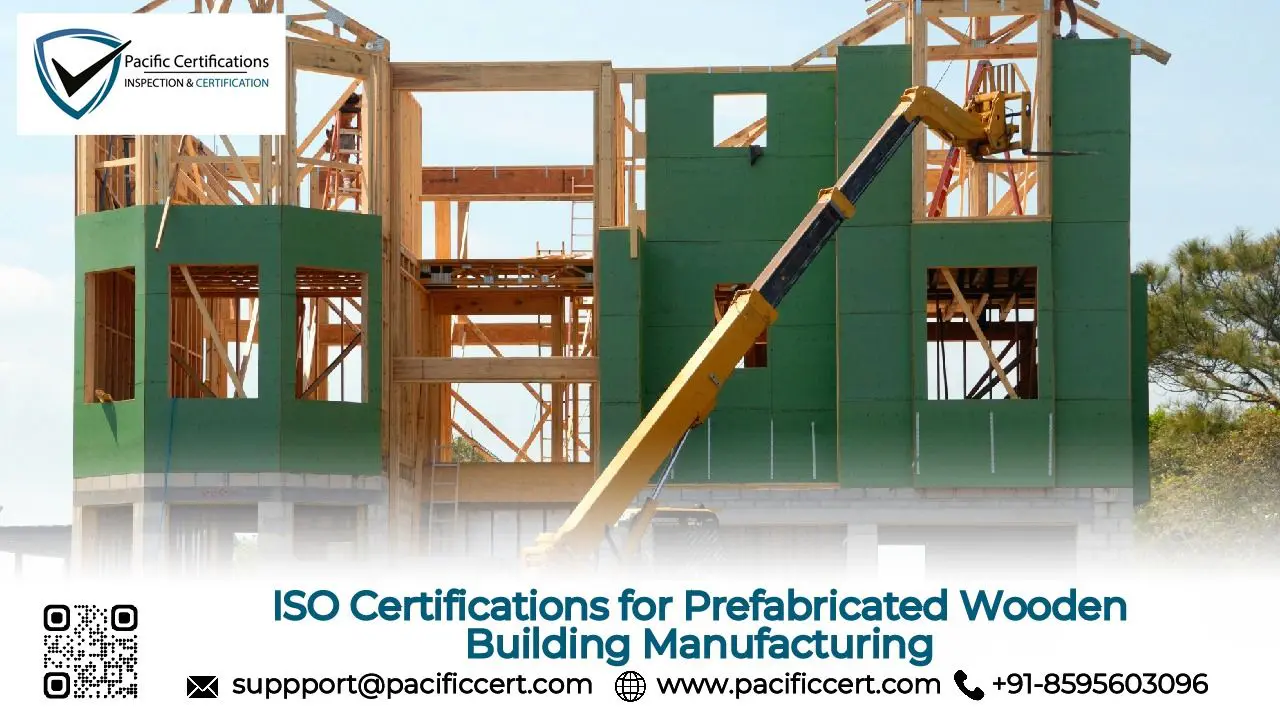
ISO Certifications for Prefabricated Wooden Building Manufacturing, Requirements and Benefits
Introduction
Prefabricated wooden building manufacturing runs on precision and speed. Factories cut cross-laminated timber panels, laminate glulam beams under hydraulic pressure, and assemble load-bearing wall modules before shipping them to construction sites. CNC routers shape components to millimeter tolerances while industrial kilns dry large timber batches around the clock. These operations create real and serious challenges. Combustible wood dust accumulates quickly near saws and sanders. Crane lifts of heavy panel stacks introduce fall and collision risks. Chemical adhesives used in bonding and treatment add further layers of health and environmental exposure.
Global buyers and project developers no longer accept verbal assurances of quality. International compliance frameworks now push manufacturers to demonstrate structured controls over every stage of production. From raw timber intake to final module dispatch, documented systems have become a condition of entry in competitive markets. ISO certifications give prefabricated wooden building manufacturers the tools to organize those systems, prove conformance to global standards, and build the kind of trust that wins long-term contracts.
In prefabricated wood manufacturing, the strength of your process determines the safety and quality of every building you ship.
Quick Summary
ISO certifications provide prefabricated wooden building manufacturing businesses with internationally recognized frameworks to manage product quality through ISO 9001, worker health and safety through ISO 45001, environmental responsibility through ISO 14001, and energy performance through ISO 50001. Sustainable building lifecycle considerations are addressed through ISO 20887. Manufacturers in this sector should pay close attention to dust hazard documentation and timber sourcing traceability. Both directly affect audit scope and can determine how quickly an organization achieves initial certification readiness.
For more information on how we can assist your prefabricated wooden building manufacturing business with ISO certifications, contact us at support@pacificcert.com.
Applicable ISO Standards for Prefabricated Wooden Building Manufacturing
Below are the most relevant ISO standards applicable to panel assembly plants, timber frame producers, modular home manufacturers, and glulam beam fabricators:
ISO 9001: Quality Management System (QMS)
Every prefabricated wooden building leaves the factory as a finished structural component. There is limited room for correction once panels reach the construction site. ISO 9001 sets a formal framework for documenting production controls, from glulam bonding procedures to finished module inspection protocols. Manufacturers use it to reduce rework, strengthen supplier verification, and maintain consistent output that meets structural specifications across every order.
ISO 14001: Environmental Management System (EMS)
Prefab wood production generates significant offcut waste, adhesive residue, and timber treatment chemicals. ISO 14001 builds a structured approach to tracking these outputs and reducing their environmental impact. Manufacturers use it to establish sourcing controls for certified timber, monitor disposal practices, and set measurable reduction targets. It also supports green building project bids where clients require verified environmental credentials.
ISO 45001: Occupational Health and Safety Management System
Wood dust from sawing and sanding operations is more than a cleaning issue. It is a combustible hazard that can trigger fires and explosions in enclosed factory spaces. ISO 45001 helps manufacturers map these hazards formally, set controls like extraction systems and PPE programs, and train workers on emergency procedures. It directly reduces injury rates during crane lifts and machine operations where risks are highest.
ISO 26000: Social Responsibility
ISO 26000 provides guidance on implementing socially responsible practices. Prefabricated wooden building manufacturers can use this standard to align their operations with ethical and sustainable principles.
ISO 50001: Energy Management
Industrial kilns, hydraulic presses, and CNC machinery together consume substantial amounts of energy in a typical prefab wood factory. ISO 50001 creates a framework for measuring that consumption, identifying inefficiencies, and implementing targeted improvements. Manufacturers consistently report reductions in energy costs after implementing this standard, and it adds weight to carbon footprint claims in sustainability-focused procurement processes.
ISO 20887: Sustainability in Building Construction
This standard focuses on designing buildings for adaptability and eventual disassembly. For prefab wood manufacturers, it shapes how modular joint systems are engineered and how material recovery is planned at end of life. It aligns factory output with circular economy goals that are becoming central requirements in sustainable construction procurement. Certified manufacturers gain a tangible advantage when bidding on projects with strict lifecycle performance criteria.
ISO 21930: Environmental Declaration of Building Products
ISO 21930 supports transparency by enabling manufacturers to provide environmental product declarations (EPDs), highlighting the sustainability of their materials and processes.
Click here to find out more applicable standards to your industry
What are the Requirements of ISO Certifications for Prefabricated Wooden Building Manufacturing Businesses?
Prefabricated wooden building manufacturers seeking ISO certification must establish and maintain documented policies, procedures, and records aligned with the selected ISO standards. Key requirements include the following:
ISO 9001:2015 – Quality Management Systems Requirements
Define dimensional tolerance specifications for CNC-cut panels and establish inspection checkpoints at each stage of the assembly process.
Control timber and adhesive suppliers by maintaining traceability records tied to material certifications and delivery batch documentation.
Implement a formal corrective action process for structural defects identified in glulam beams and modular frame components.
Monitor customer feedback after module delivery and use those findings to drive measurable improvements in future production batches.
ISO 45001:2018 – Occupational Health and Safety Management Systems Requirements
Assess combustible dust risks near sawing and sanding equipment and document extraction system performance against established thresholds.
Establish lockout and tagout procedures for hydraulic lamination presses and maintain training records for all machine operators.
Manage PPE programs for dust exposure zones, including respirator fit testing and scheduled replacement of filtration components.
Conduct incident investigations following crane lift events and update risk registers to reflect findings and corrective actions taken.
ISO 14001:2015 – Environmental Management Systems Requirements
Document environmental aspects tied to chemical adhesive use in lamination areas and set measurable targets for reducing hazardous waste.
Establish timber sourcing criteria that include chain of custody requirements and verify supplier credentials on a defined review cycle.
Monitor offcut waste volumes from CNC profiling operations and maintain records of recycling and disposal routes used.
ISO 50001:2018 – Energy Management Systems Requirements
Establish baseline energy consumption figures for kiln drying operations and define improvement targets for each production quarter.
Implement monitoring routines for hydraulic press energy draw and document findings as part of the energy performance review process.
Define responsibilities for energy data collection and assign trained personnel to manage the energy management review cycle.
Conduct annual energy audits covering all major consumption points and report results to senior management for decision-making.
Tip: Start by mapping your factory's top energy, safety, and quality risks before drafting any ISO documentation. Bring in production supervisors, safety officers, and purchasing teams early. This cross-functional input helps build practical procedures that reflect real operations and speeds up the audit readiness process considerably.
For more information on how we can assist your prefabricated wooden building manufacturing business with ISO certifications, contact us at support@pacificcert.com.
What are the Benefits of ISO Certifications for Prefabricated Wooden Building Manufacturing Businesses?
ISO certifications give prefabricated wooden building manufacturers clear operational and commercial advantages. Listed below are the key benefits for panel assembly plants, timber frame producers, modular home manufacturers, and glulam beam fabricators:
Improved product consistency through ISO 9001 reduces defective panels and cuts on-site rework costs for construction clients.
Stronger safety culture under ISO 45001 lowers workplace injury rates and reduces downtime from dust-related and machinery incidents.
Reduced environmental liability through ISO 14001 strengthens supplier relationships and supports entry into green building supply chains.
Better energy efficiency via ISO 50001 lowers kiln and press operating costs and supports carbon reduction reporting.
Enhanced market access from ISO 20887 compliance opens doors to circular economy projects where disassembly credentials are required.
Higher contract win rates in public and commercial procurement where ISO certification is a shortlisting requirement.
Streamlined internal audits when multiple standards are integrated cut management overhead and improve documentation quality.
Greater investor and client confidence from third-party certification signals operational maturity and governance discipline.
The global prefab wood building market was valued at approximately USD 35.5 billion in 2025 and is projected to grow at a CAGR of around 5.6 to 7 percent over the next several years, reaching close to USD 47 billion by the end of the decade. This growth reflects a broad structural shift in construction toward faster, lighter, and lower-carbon building methods. Emerging economies are investing in prefab housing to address urban shortages while developed markets push for certified low-carbon materials in commercial and public sector projects. International sustainability frameworks are tightening expectations on lifecycle performance and timber sourcing. Manufacturers who hold recognized certifications gain a clear advantage in procurement processes shaped by these pressures.
ISO implementation in wood manufacturing environments consistently produces measurable results. Firms that adopt ISO 45001 report significant reductions in dust-related incidents and machine injuries, often in the range of 20 to 30 percent within the first two audit cycles. ISO 14001 and ISO 50001 together deliver comparable reductions in waste output and energy use. Looking ahead, drivers including the expansion of mass timber construction, the growing use of digital fabrication tools, and stricter sustainability procurement criteria will continue pushing manufacturers toward certification. Organizations that build certified management systems now will be better positioned to compete in both established markets and high-growth emerging regions over the next decade.
How Pacific Certifications Can Help?
Pacific Certifications, accredited by ABIS, acts as an independent certification body for prefabricated wooden building manufacturing businesses by conducting impartial audits against applicable ISO standards. Our role is to objectively assess whether documented management systems and prefab wood production practices conform to international ISO requirements, based strictly on verifiable evidence and operational records.
We support prefabricated wooden building manufacturers through:
Independent certification audits conducted in accordance with ISO/IEC 17021
Practical assessment of real factory operations, dust safety controls, and timber processing procedures
Clear audit reporting that reflects conformity status and formal certification decisions
Internationally recognized ISO certification upon successful demonstration of compliance
Surveillance and recertification audits to maintain the validity of issued certificates
Contact Us
If you need support with ISO certification for your prefabricated wooden building manufacturing business, contact us at support@pacificcert.com or +91-8595603096.
Author: Ashish
Read more: Pacific Blogs