ISO Certifications for Pilates and Yoga Studios, Requirements and Benefits
Introduction
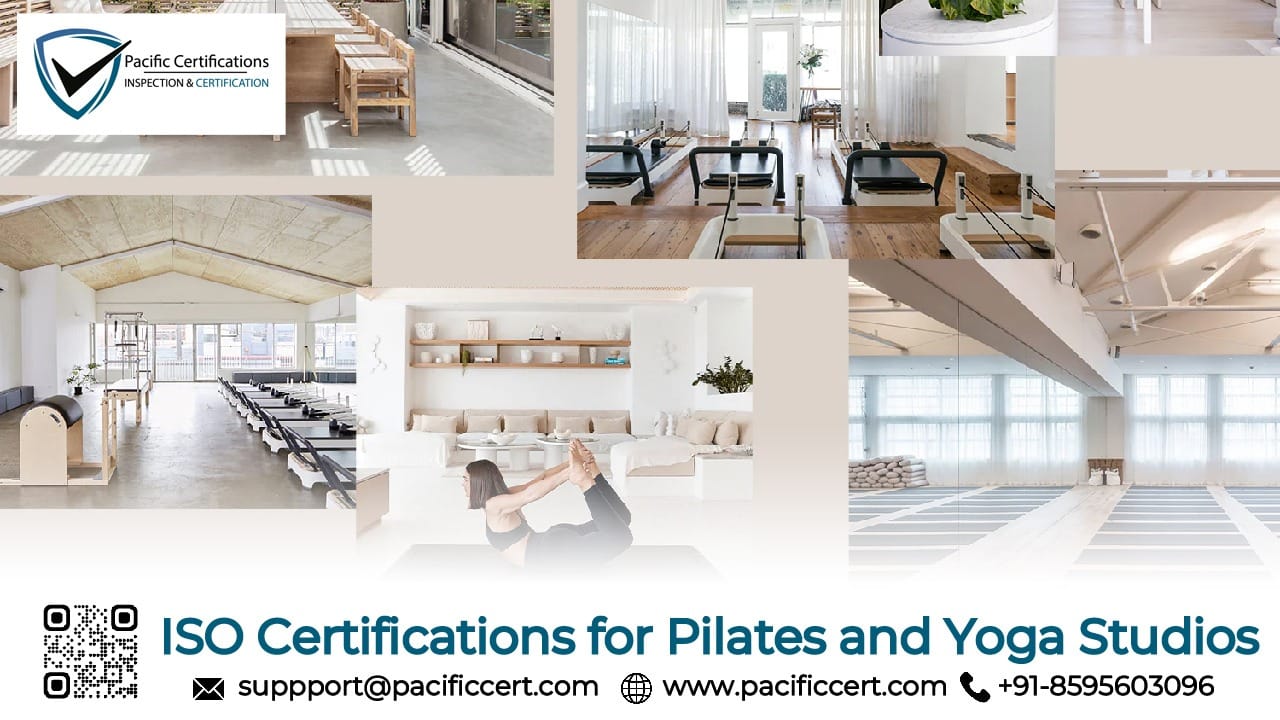
Pilates and yoga studios operate in the wellness sector where client safety, instructional quality, and holistic experience determine business success. Core activities include class instruction, private sessions, workshops, teacher training programs, equipment maintenance, client assessments, and retail of wellness products. Studios must manage diverse client needs ranging from rehabilitation to athletic performance while maintaining clean, safe environments conducive to mindful movement. Typical challenges involve ensuring consistent instructor qualifications, preventing client injuries during practice, managing equipment hygiene, protecting sensitive client health information, and balancing personalized attention with group class efficiency in competitive local markets.
ISO certifications provide globally recognized frameworks to systematize operational excellence in wellness businesses. International market expectations and growing client awareness pressure studios to demonstrate consistent quality, safety, environmental responsibility, and data protection. By aligning with ISO standards, studios can standardize class procedures, validate instructor competencies, reduce operational risks, protect client privacy, and build trust with participants seeking authentic, safe wellness experiences in an increasingly discerning marketplace.
In mindful movement practices, trust flows from certified systems — every breath reflects a commitment to excellence.
Quick Summary
ISO certifications provide Pilates and yoga studios with internationally recognized frameworks to manage instructional quality, client safety, environmental impact, data security, complaint resolution, and educational program integrity. The most relevant standards include ISO 9001 for quality management, ISO 21001 for educational organizations, ISO 45001 for occupational health & safety, ISO 10002 for complaint handling, ISO 14001 for environmental stewardship, and ISO/IEC 27001 for information security. Studios should prioritize validating instructor credentials, securing client health data, and maintaining hygienic practice spaces.
For more information on how we can assist your Pilates and yoga studio with ISO certifications, contact us at support@pacificcert.com.
Applicable ISO Standards for Pilates and Yoga Studios Businesses
Below are the most relevant ISO standards applicable to independent yoga studios, Pilates franchises, wellness centers offering mind-body programs, and teacher training academies:
ISO 9001: Quality Management Systems
Quality management ensures consistent, high-standard instruction that meets client expectations for skill development and wellness outcomes. The standard governs document control, internal audits, corrective actions, and management review for processes such as class sequencing, instructor evaluation, equipment inspection, and client progress tracking. Benefits include reliable class experiences, fewer client complaints regarding instruction quality, and stronger market positioning as studios demonstrate commitment to professional service delivery that retains clients and attracts referrals.
ISO 21001: Educational Organizations Management Systems
This standard is critical for studios offering teacher training, certification programs, or progressive skill workshops where learning outcomes matter. It covers curriculum design, instructor competency assessment, learner satisfaction measurement, and program improvement processes for educational offerings. Implementing ISO 21001 enhances credibility with certification bodies, assures participants of meaningful skill acquisition, and satisfies regulatory expectations for educational service providers in the wellness sector.
ISO 45001: Occupational Health and Safety Management Systems
Physical practice environments pose risks from improper alignment, equipment failure, and studio hazards like wet floors or overheating. ISO 45001 requires hazard identification, risk assessment, implementation of controls (such as proper prop maintenance, instructor spotting techniques, and emergency procedures), and monitoring of safety performance. Adoption leads to reduced injury rates, lower liability concerns, and increased client confidence in studios that prioritize safe practice environments for both beginners and advanced participants.
ISO 10002: Customer Satisfaction and Complaints Handling
Client feedback directly impacts studio reputation and retention in service-oriented wellness businesses. This standard mandates processes for receiving, investigating, resolving, and learning from complaints about class levels, instructor conduct, facility cleanliness, or booking issues. Implementation creates responsive service recovery, transforms negative feedback into improvement opportunities, and demonstrates client-centric values that foster loyalty and positive word-of-mouth in competitive local markets.
ISO 14001: Environmental Management Systems
Studios generate waste from laundry, single-use props, and cleaning agents while consuming energy for heating, cooling, and lighting practice spaces. ISO 14001 helps identify environmental aspects, set measurable objectives (e.g., reducing towel-wash water consumption by 20% annually), and monitor compliance with sustainability goals. Adoption lowers operational costs, appeals to eco-conscious clients, and supports authentic alignment with yogic principles of environmental stewardship that many practitioners value.
ISO/IEC 27001: Information Security Management Systems
Modern studios collect sensitive client data including health conditions, injury histories, and payment details through online booking and intake forms. This standard requires risk assessments, access controls, encryption, incident response planning, and continual improvement of digital security measures. Certification protects against data breaches, supports compliance with privacy expectations, and reassures clients that their personal wellness information remains confidential and secure.
Click here to find out more applicable standards to your industry
What are the Requirements of ISO Certifications for Pilates and Yoga Studios Businesses?
Pilates and yoga studios seeking ISO certification must establish and maintain documented policies, procedures, and records aligned with the selected ISO standards. Key requirements include the following:
ISO 9001:2015 – Quality Management Systems
Define a quality policy committing to excellent, consistent instruction and client-centered service.
Control documents and records to ensure current versions of class protocols and instructor guidelines are accessible.
Plan and control service delivery processes, including class preparation, instructor verification, equipment checks, and client welcome procedures.
Monitor client satisfaction through feedback forms, online reviews, and retention metrics, acting on trends.
Conduct internal audits at planned intervals (e.g., quarterly) and promptly address nonconformities like inconsistent cueing.
Continually improve the QMS using audit results, client data, and corrective actions to refine class experiences.
ISO 21001:2018 – Educational Organizations Management Systems
Establish an educational policy aligned with studio mission and learner needs for skill development.
Maintain documented procedures for curriculum design, instructor assessment, and program evaluation.
Control educational resources including manuals, videos, and props to ensure current, accurate versions.
Monitor learner satisfaction through post-workshop surveys, skill assessments, and completion rates.
Conduct internal audits of educational processes and management reviews to ensure program effectiveness.
Implement corrective actions when programs fail to meet stated learning objectives or competency benchmarks.
ISO 45001:2018 – Occupational Health & Safety Management Systems
Establish an OH&S policy committing to safe practice environments and injury prevention for all participants.
Identify hazards such as improper prop use, floor surface risks, and instructor overexposure during demonstrations.
Assess risks and determine controls including equipment inspection schedules, safety briefings, and modified pose options.
Provide training for instructors on injury prevention, emergency response, and safe adjustment techniques.
Implement operational controls like regular prop sanitation, flooring maintenance, and emergency exit clarity.
Monitor safety incident reports, near-misses, and participant feedback to drive continual safety improvements.
ISO 10002:2014 – Customer Satisfaction & Complaints Handling
Define a complaints policy affirming commitment to timely, fair resolution of client concerns.
Maintain documented procedures for receiving complaints via email, in-person, or digital channels.
Ensure complainant access to simple, confidential processes for submitting feedback without barriers.
Train staff in active listening, empathy, and solution-focused responses to diverse client concerns.
Monitor complaint volume, resolution time, and satisfaction with outcomes to identify service trends.
Review the complaints system at management meetings to improve processes based on analyzed feedback.
ISO 14001:2015 – Environmental Management Systems
Identify environmental aspects such as laundry water/energy use, prop waste, and cleaning chemical discharge.
Establish measurable objectives like increasing reusable prop usage by 30% or reducing electricity consumption.
Implement controls including cold-water laundry cycles, recycling programs, and energy-efficient lighting.
Train staff on proper waste segregation, eco-friendly cleaning, and resource conservation practices.
Evaluate compliance with internal targets and update objectives based on measurement data review.
Review the EMS regularly to ensure continual improvement and adapt to changing studio operations.
ISO/IEC 27001:2022 – Information Security Management Systems
Conduct risk assessments to identify threats to booking systems, client databases, and payment processors.
Produce a statement of applicability selecting controls like encryption, access limits, and backup protocols.
Implement access controls including unique staff logins, role-based permissions, and secure password policies.
Encrypt sensitive client data at rest and in transit, especially health information and payment details.
Establish incident management to detect, report, contain, and recover from security events like hacking attempts.
Perform internal audits and management reviews to verify ISMS effectiveness and drive ongoing improvements.
Tip: Begin by mapping your current standard operating procedures for client intake, class preparation, and equipment sanitation against ISO 9001 clauses; involve lead instructors, front desk staff, and maintenance personnel in a workshop to identify gaps and create a phased implementation plan.
For more information on how we can assist your Pilates and yoga studio with ISO certifications, contact us at support@pacificcert.com.
What are the Benefits of ISO Certifications for Pilates and Yoga Studios Businesses?
ISO certifications provide Pilates and yoga studios with strong operational and commercial advantages, including: listed below are the key benefits for the ISO standards applicable to independent yoga studios, Pilates franchises, wellness centers offering mind-body programs, and teacher training academies:
Improved class consistency through standardized sequencing, instructor evaluation, and equipment preparation.
Stronger educational credibility by validating curriculum quality, instructor competencies, and learning outcomes.
Better safety culture via proactive hazard identification, injury prevention training, and emergency readiness.
Higher client trust demonstrated through certified quality and safety marks on websites, studio walls, and promotional materials.
Greater eligibility for corporate wellness partnerships, teacher training affiliations, and retreat collaborations requiring ISO-certified providers.
Reduced incident rates from systematic risk management, leading to fewer client injuries, equipment damages, and studio disruptions.
Streamlined audit preparation thanks to maintained documents, records, and traceability of instructional programs.
Enhanced information security protecting client health data, payment information, and digital scheduling systems.
Increased resilience to disruptions through tested continuity plans, clear recovery objectives, and backup communication methods.
Improved environmental performance via reduced waste, efficient resource use, and sustainable operational practices.
The Pilates and yoga studio market is showing steady, data-backed growth as wellness shifts from a lifestyle trend to a long-term priority. Recent industry estimates suggest the global yoga market is expected to exceed USD 200 billion by 2030, growing at a CAGR of around 9–10%, while the broader Pilates and boutique fitness segment is expanding at a similar pace, supported by rising demand for low-impact and personalized fitness solutions. Growth is particularly strong in North America, Europe, and increasingly in Asia-Pacific, where urban populations are adopting structured wellness routines.
Consumer behavior is also shifting in measurable ways. Studies indicate that over 60% of fitness consumers now prefer hybrid models, combining in-studio sessions with online or app-based classes. Boutique studios, including Pilates and yoga, are outperforming traditional gyms in retention rates, with higher per-client spending driven by premium experiences, small group classes, and specialized programs such as rehabilitation, mobility training, and mental wellness sessions. Corporate wellness programs are also contributing to demand, as organizations invest in stress reduction and employee well-being initiatives.
From an operational perspective, studios are investing in digital scheduling systems, client management platforms, and performance tracking tools to improve efficiency and customer experience. At the same time, there is increasing focus on instructor certification, safety protocols, and consistent service delivery as competition intensifies. Looking ahead, the industry is expected to grow further with rising health awareness, aging populations seeking low-impact fitness, and continued integration of technology. Studios that combine structured operations with a strong client experience and measurable outcomes are better positioned to scale and maintain long-term growth in this expanding wellness market.
How Pacific Certifications Can Help
Pacific Certifications, accredited by ABIS, acts as an independent certification body for Pilates and yoga studios by conducting impartial audits against applicable ISO standards. Our role is to objectively assess whether documented management systems and studio‑specific practices conform to international ISO requirements, based strictly on verifiable evidence and operational records.
We support wellness providers through:
Independent certification audits conducted in accordance with ISO/IEC 17021
Practical assessment of real studio operations, safety, and instructional controls
Clear audit reporting reflecting conformity status and certification decisions
Internationally recognized ISO certification upon successful compliance
Surveillance and recertification audits to maintain certification validity
Contact us
If you need support with ISO certification for your Pilates and yoga studio, contact us at support@pacificcert.com or +91-8595603096.
Author: Alina
Ready to get certified?
Contact Pacific Certifications to begin your certification journey today!
Suggested Certifications –
Read more: Pacific Blogs