Introduction
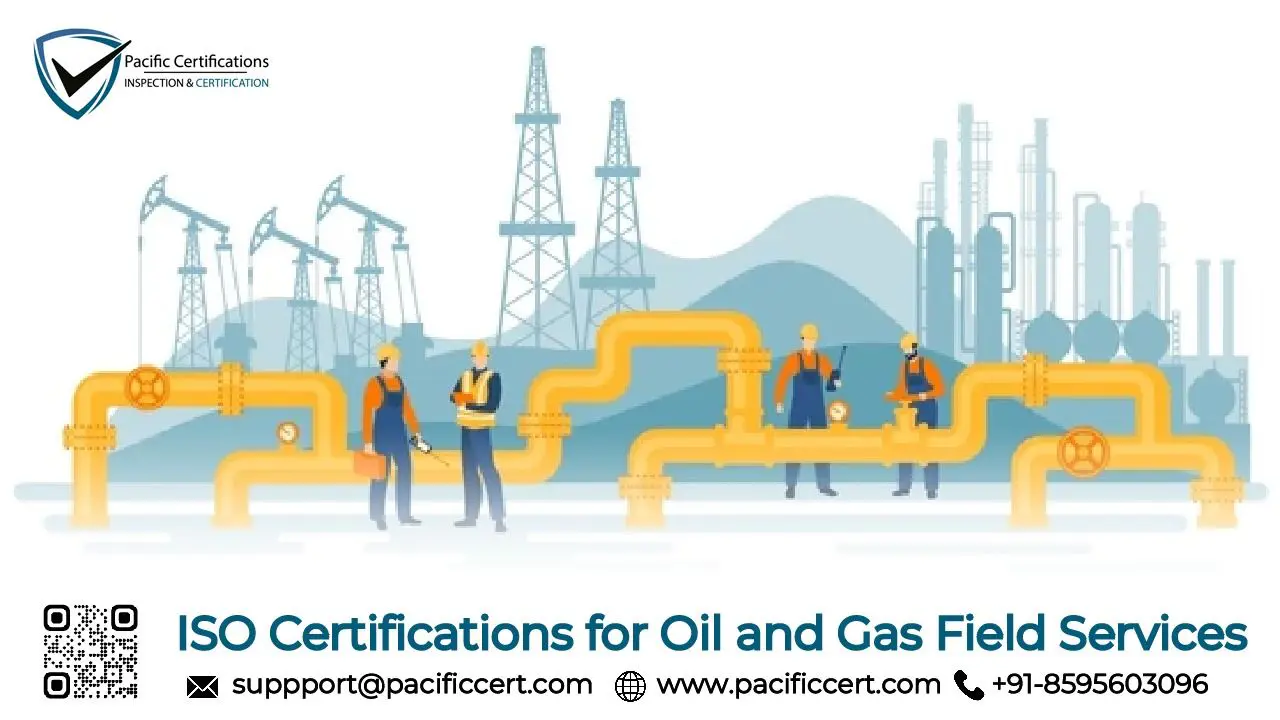
Oil and gas field services form the foundation of upstream exploration, drilling, and production support. These include activities such as well construction, equipment maintenance, pressure control, seismic surveys, and pipeline operations, all performed in high-risk and high-cost environments. In this industry, unplanned downtime or non-compliance can lead to catastrophic safety incidents, environmental harm, and financial loss. ISO certifications provide oilfield services with internationally recognized frameworks to manage quality, safety, environmental protection, and energy efficiency across operations.
With the global oilfield services market value is projected by Fortune Business Insights to reach nearly USD 500 billion by 2030 (5.8% CAGR), certification has become both a compliance requirement and a competitive differentiator. Clients, regulators, and contractors increasingly demand ISO-certified partners to ensure operational integrity and risk reduction throughout the energy value chain.
In oil and gas operations, consistency and safety are not optional, they’re the result of well-governed systems working under pressure.
Quick Summary
ISO certifications enable oil and gas field service providers to manage complex operations with documented systems for quality, safety, and environmental integrity. In an era of digital oilfields and sustainability mandates, certification enhances compliance and ensures trust across the global energy supply chain.
Contact us at support@pacificcert.com for inquiries about ISO certification requirements.
Applicable ISO Standards for Oil and Gas Field Services
The oil and gas sector must comply with multiple ISO standards to address different aspects of operations. Below are the most relevant certifications:
ISO 9001:2015 – Quality Management System (QMS)
ISO 9001:2015 is the global standard for quality management. It helps oil and gas companies ensure consistent service quality, process efficiency, and customer satisfaction. Implementing ISO 9001 fosters a culture of continuous improvement, which is crucial for maintaining operational excellence.
ISO 14001:2015 – Environmental Management System (EMS)
Given the environmental impact of oil and gas operations, ISO 14001:2015 is essential for managing sustainability and regulatory compliance. It helps organizations minimize their ecological footprint, reduce waste, and meet government environmental regulations.
ISO 45001:2018 – Occupational Health and Safety Management System (OHSMS)
Oil and gas field services involve hazardous environments, making worker safety a top priority. ISO 45001:2018 ensures organizations implement proactive risk management strategies to prevent workplace incidents, injuries, and occupational health risks.
ISO 29001:2020 – Quality Management for Oil and Gas Industry
This sector-specific standard builds upon ISO 9001 but is tailored to the unique requirements of the oil and gas industry. ISO 29001 focuses on supply chain reliability, defect prevention, and risk management in petroleum, petrochemical, and natural gas sectors.
ISO 50001:2018 – Energy Management System (EnMS)
Energy efficiency is a major concern in oil and gas operations. ISO 50001:2018 helps companies optimize energy consumption, reduce costs, and improve sustainability performance.
ISO 22301:2019 – Business Continuity Management System (BCMS)
Given the risks of equipment failures, cyber threats, and natural disasters, ISO 22301 helps oil and gas businesses establish a robust continuity plan to minimize disruptions and maintain critical operations.
ISO 27001: Information Security Management Systems (ISMS)
With growing digital threats, cybersecurity is essential for oil and gas firms. ISO 27001:2022 ensures sensitive data, such as exploration reports and operational processes, are well protected against cyber risks.
Click here to find out more applicable standards to your industry
What are the requirements of ISO Certifications for Oil and Gas Field Services?
Each ISO standard has specific requirements that oil and gas companies must meet. Below is a brief overview of key requirements for each standard:
Define certification scope covering field services such as drilling, pressure control, wireline operations, or maintenance.
Establish policies for quality, health and safety, and environmental protection, aligning with client and regulatory expectations.
Document processes for job planning, equipment maintenance, chemical handling, and emergency response.
Conduct hazard identification and risk assessment for high-pressure systems, confined spaces, and offshore operations.
Maintain traceability and calibration records for instruments, testing equipment, and critical tools.
Implement environmental controls for oil spills, emissions, and waste segregation.
Train personnel in safety procedures, competency assessments, and proper PPE usage.
Monitor energy use, fuel consumption, and emissions to identify efficiency improvements.
Maintain supplier evaluation systems to ensure material and service quality in compliance with ISO 29001 guidelines.
Perform internal audits, corrective actions, and management reviews to ensure continual improvement.
Specific requirements of ISO Certifications for Oil and Gas Field Services:
ISO 9001:2015 – Quality Management System (QMS) Requirements
Establish a documented quality management system with policies and objectives.
Conduct regular internal audits and continuous performance evaluations.
Ensure customer satisfaction by consistently delivering high-quality services.
Implement risk-based thinking and process improvements.
ISO 14001:2015 – Environmental Management System (EMS) Requirements
Identify and control environmental impacts of operations.
Comply with environmental regulations and legal requirements.
Implement waste management and pollution prevention measures.
Set objectives for sustainable resource usage and energy efficiency.
ISO 45001:2018 – Occupational Health and Safety Management System (OHSMS) Requirements
Conduct risk assessments to prevent workplace hazards.
Provide employee training and awareness on health and safety practices.
Establish incident reporting and emergency preparedness procedures.
Maintain compliance with occupational safety regulations.
ISO 29001:2020 – Quality Management for Oil and Gas Industry Requirements
Implement industry-specific quality control and defect prevention.
Ensure supply chain reliability and compliance with oil and gas sector requirements.
Focus on risk management and continuous improvement.
ISO 50001:2018 – Energy Management System (EnMS) Requirements
Develop an energy management policy to optimize energy consumption.
Monitor and improve energy efficiency in operations.
Identify and reduce energy wastage and environmental footprint.
ISO 22301:2019 – Business Continuity Management System (BCMS) Requirements
Establish business continuity plans to manage disruptions.
Conduct risk assessments for potential operational threats.
Ensure disaster recovery and crisis response readiness.
ISO 27001:2022 – Information Security Management System (ISMS) Requirements
Identify and mitigate cybersecurity threats and risks.
Implement data protection and access control measures.
Ensure business-critical information is safeguarded against breaches.
Tip: Start with ISO 9001 and ISO 45001 for service quality and safety management, then integrate ISO 14001 and ISO 29001 to build a sector-specific, comprehensive management framework.
For ISO certification audits, contact Pacific Certifications at: support@pacificcert.com.
What are the benefits of ISO Certifications for Oil and Gas Field Services?
An ISO Certification helps oilfield service companies enhance safety performance, meet client compliance demands, and improve operational efficiency across sites. Below are the key benefits:
ISO-certified systems improve job quality, reduce non-conformities, and increase equipment reliability.
Certification demonstrates safety commitment, lowering accident rates and insurance costs.
Environmental management reduces pollution and improves compliance with national and client HSE standards.
Certified systems ensure consistent documentation and performance reporting across multiple field sites.
ISO 29001 alignment supports qualification for major energy company supplier lists and contract tenders.
Energy management initiatives reduce fuel use and carbon footprint in drilling and transportation operations.
Certification strengthens reputation, trust, and client retention in competitive contract bidding.
Routine audits and reviews drive continuous improvement and regulatory readiness.
The oil and gas field services sector plays a critical role in supporting exploration, drilling, production, and maintenance activities across the energy industry. Market research shows that the global oilfield services market was valued at approximately 305–320 billion USD in 2023 and is projected to reach nearly 450–470 billion USD by 2030, growing at a compound annual growth rate of around 5–6%. Demand is largely driven by rising global energy consumption, continued exploration of offshore and unconventional reserves, and increasing investment in well maintenance, drilling optimization, and production enhancement services.
Global upstream investments are also strengthening the market. Industry analysts estimate that global oil and gas upstream spending exceeded 520 billion USD in 2023, with continued investments expected across regions such as North America, the Middle East, Africa, and offshore basins. At the same time, oil and gas operators are placing stronger emphasis on safety performance, environmental compliance, and operational reliability due to strict regulatory oversight and high-risk operating environments. As a result, oilfield service providers are increasingly required to demonstrate structured management practices related to quality control, occupational health and safety, environmental protection, and risk management, which is encouraging broader adoption of internationally recognized ISO-based management systems across the sector.
How Pacific Certifications can help?
Pacific Certifications, accredited by ABIS, provides impartial auditing and certification services under ISO/IEC 17021 and ISO/IEC 17024 frameworks for oilfield service providers. We certify organizations to standards including ISO 9001, ISO 14001, ISO 45001, ISO 29001, ISO 50001, and ISO 22301, ensuring alignment with global best practices in oil and gas operations.
Our auditors have extensive experience in upstream, midstream, and field-service environments, ensuring relevant, industry-focused assessments. Pacific Certifications also offers accredited training programs: Lead Auditor, Internal Auditor, and Awareness courses, enabling teams to manage compliance and improve performance effectively.
Contact Us
If you need support with ISO certification for your Oil and Gas Field Service business, contact us at support@pacificcert.com or +91-8595603096.
Author: Poonam
Read More at: Blogs by Pacific Certifications