ISO Certifications for Office Property Operators, Requirements and Benefits
Introduction
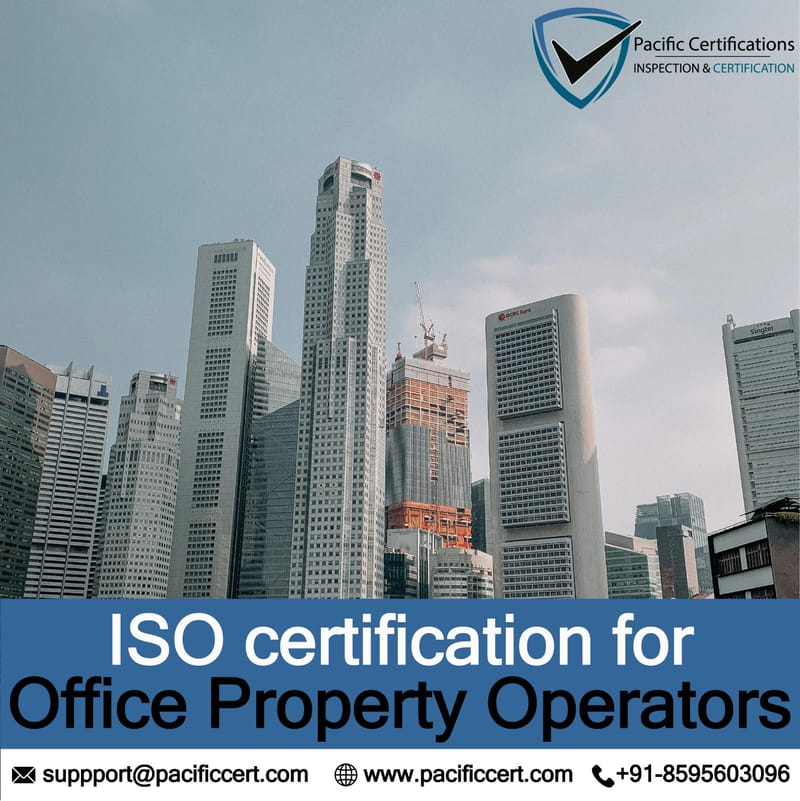
Office property operators manage complex commercial environments where corporate office buildings, business centers, coworking spaces, and commercial office parks must balance tenant satisfaction, operational efficiency, sustainability performance, and regulatory compliance across evolving workplace requirements. Businesses face operational challenges including rising tenant expectations demanding smart building systems, connectivity, amenities, and operational excellence beyond traditional four-walls space, escalating operational costs in energy, maintenance, and staffing pressuring margins, declining office demand with cities like San Francisco and New York requiring strategic repositioning, and technology integration complexities across legacy systems. Market dynamics intensify as tenants become more selective demanding high-end finishes, convenience, and accessibility, making even brand-new towers vulnerable to vacancies if they fail to meet modern workforce needs.
ISO certifications provide office property operators with systematic frameworks to standardize facility management, optimize energy consumption, ensure workplace safety, and demonstrate professional capability to corporate tenants and institutional investors. Corporate tenants increasingly require documented management systems as prerequisite qualifications, while investors scrutinize ESG performance and operational efficiency metrics that ISO certifications systematically address.
Tenant experience and operational excellence define success in office property operations.
Quick Summary
ISO certifications provide office property operators with internationally recognized frameworks to manage facility operations through ISO 41001, service quality through ISO 9001, information security through ISO/IEC 27001, occupational health and safety through ISO 45001, environmental management through ISO 14001, energy efficiency through ISO 50001, risk management through ISO 31000, and business continuity through ISO 22301.
For more information on how we can assist your office property operations business with ISO certifications, contact us at [email protected].
Applicable ISO Standards for Office Property Operators Businesses
Below are the most relevant ISO standards applicable to office tower operators, suburban office park managers, flexible workspace providers, and institutional office portfolio managers:
ISO 9001: Quality Management Systems (QMS)
ISO 9001 ensures consistent tenant service quality through documented procedures for communication protocols, work order management, preventive maintenance scheduling, amenity standards, contractor performance requirements, emergency response, and complaint resolution. Implementation standardizes service across portfolios, reduces tenant issue response times, improves first-time resolution rates, establishes vendor quality requirements, and enhances tenant satisfaction supporting lease renewals, retention, and premium rental rates in competitive markets.
ISO 14001:2015 Environmental Management Systems
ISO 14001 manages environmental impacts from office operations including waste management and recycling programs, energy consumption from HVAC and lighting, water conservation, sustainable procurement, refrigerant management, and pollution prevention supporting tenant ESG requirements and green building certifications. This standard ensures environmental compliance, reduces operating costs through resource efficiency, supports LEED and BOMA certifications, and demonstrates sustainability leadership attracting corporate tenants with net-zero and ESG mandates.
ISO 45001:2018 Occupational Health and Safety Management Systems
ISO 45001 systematically manages safety hazards affecting maintenance personnel, contractors, tenants, and visitors including maintenance risks, contractor safety during tenant improvements, emergency evacuation procedures for high-rise towers, fire safety system maintenance, workplace ergonomics, and security incidents. Implementation protects stakeholders through hazard identification, contractor qualification verification, preventive maintenance ensuring building safety,
ISO 27001:2022 Information Security Management Systems
Information security addresses the office property industry's handling of sensitive tenant information, building management system data, access control databases, and financial records requiring protection against cyber threats, data breaches, and unauthorized access. This standard establishes comprehensive frameworks for access controls, data encryption, secure building automation networks, and incident response procedures safeguarding tenant privacy and operational technology systems.
ISO 50001:2018 Energy Management Systems
Energy costs represent substantial operational expenses for office buildings where HVAC systems, lighting across multiple floors, elevators, data centers, and tenant energy consumption create significant usage requiring systematic management to address rising operational costs pressuring margins. This standard provides structured approaches to conduct energy reviews, implement LED retrofits, optimize HVAC scheduling, install building automation systems, and achieve 20-30% consumption reductions improving net operating income while supporting sustainability commitments.
ISO 41001:2018 – Facility Management Systems
Facility management addresses the office property industry's strategic need to align facility operations with organizational objectives, optimize space utilization across office floors, coordinate multi-system building operations, deliver measurable value to tenants, and position facilities as strategic enablers rather than operational overhead. This standard transforms facility management from reactive cost-focused function to proactive value-creating strategic capability directly supporting tenant productivity, satisfaction, and retention through systematic performance measurement linking FM to business outcomes beyond traditional cost-per-square-foot metrics.
Click here to find out more applicable standards to your industry
What are the Requirements of ISO Certifications for Office Property Operators?
Office property operators seeking ISO certification must establish documented policies, procedures, and records aligned with selected standards. Key requirements include:
ISO 41001:2018 – Facility Management Systems
Establish facility management policy aligning operations with owner investment goals, tenant satisfaction, workplace experience, ESG requirements, and competitive positioning supporting premium rates
Define system scope documenting properties managed, services provided, organizational boundaries, and stakeholder interfaces across owners, tenants, contractors, and regulatory authorities
Implement strategic planning including tenant demand forecasting, capital improvement prioritization, preventive maintenance scheduling, lifecycle investment planning, and sustainability initiatives
Ensure operational controls for tenant service requests, preventive maintenance programs, amenity coordination, contractor management, emergency response, cleaning standards, and compliance monitoring
Manage external services establishing vendor evaluation criteria, performance monitoring through service level agreements, regular scorecards, and re-selection processes ensuring quality
Monitor performance through tenant satisfaction surveys, maintenance response times, building system uptime, energy consumption benchmarks, operating cost ratios, tenant retention rates, and NOI performance
ISO 9001:2015 – Quality Management Systems
Develop quality policy for tenant service consistency, satisfaction targets, maintenance response commitments, amenity quality, contractor performance, and continuous improvement initiatives
Define management processes including tenant inquiries, move-in coordination, service request workflows, preventive maintenance, amenity operations, contractor management, emergency procedures, and complaint resolution
Control supplier quality establishing performance criteria for maintenance contractors, cleaning services, security providers, technology vendors, and amenity operators with regular evaluation and corrective actions
Implement documentation including standard operating procedures, maintenance logs, inspection records, tenant communications, vendor contracts, service level tracking, and compliance documentation
Monitor quality metrics including tenant satisfaction surveys, complaint rates, maintenance response times, preventive maintenance adherence, vendor performance ratings, and lease renewal percentages
Maintain resources ensuring qualified property managers, chief engineers, licensed trades personnel, property management software, building automation systems, and financial resources
ISO/IEC 27001:2022 – Information Security Management Systems
Establish security policy protecting tenant financial information, lease agreements, proprietary business data, employee access control data, building automation data, surveillance footage, and property management databases
Identify information assets including tenant databases, building automation systems, surveillance systems, financial systems, tenant portals, document management systems, and workplace technology infrastructure
Assess security risks from unauthorized access, data breaches, cyber attacks, payment fraud, insider threats, physical security breaches, surveillance vulnerabilities, and PIPEDA non-compliance
Implement security controls including data encryption, secure portals with multi-factor authentication, building automation cybersecurity, role-based access controls, surveillance retention policies, and physical security
Ensure tenant privacy through transparent collection practices, explicit consent procedures, limited information collection, access rights upon request, and breach notification procedures under PIPEDA
Monitor security through access log reviews, incident tracking, privacy complaint analysis, vulnerability assessments, vendor compliance verification, and PIPEDA compliance audits
ISO 50001:2018 – Energy Management Systems
Establish energy policy with management commitment to continual improvement, compliance with energy regulations, and energy-efficient procurement decisions
Implement energy management team led by designated energy manager with cross-functional participation from operations, engineering, finance, and sustainability
Conduct energy reviews identifying significant uses (HVAC, lighting, elevators, plug loads), analyzing consumption patterns, establishing baselines, and identifying improvement opportunities
Establish objectives, targets, and action plans defining measurable goals, specific projects (lighting retrofits, HVAC optimization, automation upgrades), timelines, and resource requirements
Implement operational controls for HVAC optimization, lighting management, building automation programming, preventive maintenance, procurement specifications, and tenant engagement programs
Monitor performance indicators tracking consumption against targets, analyzing trends, evaluating project effectiveness, conducting audits, and demonstrating continual improvement
ISO 45001:2018 – Occupational Health and Safety Management Systems
Establish safety policy addressing maintenance worker safety, contractor safety during tenant improvements, tenant and visitor safety, emergency evacuation procedures, and fire safety system maintenance
Identify workplace hazards including electrical work, confined space entry, working at heights, equipment operation risks, contractor activities, evacuation challenges, fire hazards, and slip-and-fall risks
Implement safety controls including maintenance procedures, contractor qualification verification, preventive maintenance programs, evacuation plans with regular drills, hazard signage, PPE requirements, and incident reporting
Ensure worker competency through training on safe maintenance procedures, confined space protocols, lockout/tagout procedures, emergency response roles, contractor requirements, and incident reporting
Monitor health metrics including injury rates, near-miss reports, contractor safety performance, drill effectiveness, safety inspection findings, training completion, and regulatory compliance
Conduct regular safety audits of building systems, maintenance work areas, contractor compliance, emergency response equipment, and incident investigation procedures
ISO 14001:2015 – Environmental Management Systems
Establish environmental policy addressing waste management, energy consumption, water conservation, sustainable procurement, refrigerant management, and pollution prevention supporting tenant ESG requirements
Identify environmental aspects including waste streams, energy consumption from HVAC and lighting, water usage, refrigerant emissions, cleaning chemicals, and procurement impacts
Assess environmental risks from regulatory non-compliance, tenant ESG requirement failures, refrigerant leaks, hazardous material handling, and resource inefficiency
Implement operational controls for waste recycling programs, energy efficiency initiatives, water conservation measures, refrigerant management procedures, chemical storage protocols, and sustainable procurement policies
Monitor environmental performance through waste diversion rates, energy consumption benchmarks, water usage metrics, refrigerant tracking, and regulatory compliance verification
Support green building certifications including LEED and BOMA BEST through documented environmental management programs
Tip: Start by documenting existing facility management practices, tenant service procedures, maintenance protocols, energy programs, and security policies already operating across your portfolio. Involve property managers, chief engineers, tenant relations directors, sustainability coordinators, and IT specialists in developing practical procedures reflecting actual operations rather than theoretical documentation disconnected from managing premium office properties.
For more information on how we can assist your office property operations business with ISO certifications, contact us at [email protected].
What are the Benefits of ISO Certifications for Office Property Operators?
ISO certifications provide office property operators with strong operational and commercial advantages, including listed below are the key benefits for ISO standards applicable to corporate office buildings, business centers, and commercial office parks:
Enhanced tenant satisfaction and retention through consistent service delivery, responsive maintenance, seamless digital access, transparent communication, and value-add amenities meeting modern workforce expectations
Improved operational efficiency and cost savings achieving 20-30% energy reductions, optimized maintenance processes, data-driven vendor management, and reduced operational surprises
Stronger competitive positioning and occupancy rates as ISO certification demonstrates professional management, smart building capabilities, and sustainability commitments attracting selective tenants
Better safety and security outcomes protecting occupants through systematic emergency preparedness, security measures, and indoor environmental quality enhancing tenant peace of mind
Greater investor confidence and property valuations as certification demonstrates ESG performance, operational excellence, risk mitigation, and transparent reporting valued by institutional investors
Reduced liability exposure and insurance premiums as systematic safety, quality, and risk management demonstrates proactive controls reducing claims frequency and severity
The global office real estate market valued at USD 2.23 trillion in 2024 projects growth to USD 3.4 trillion by 2032 at a compound annual growth rate of 5.4%, with North America maintaining strong share and Asia-Pacific growing fastest led by China, India, and Singapore driven by economic expansion, business investment, and technology industry influence. However, demand dynamics show significant bifurcation with projected decreases in major cities including San Francisco at -20%, New York at -16%, and Munich at -16% while Houston and Beijing show modest 2% increases, requiring strategic property repositioning.
Industry outlook indicates accelerating tenant selectivity demanding operational excellence and superior experiences, technology integration becoming essential with smart building systems, digital tenant platforms, and data analytics driving differentiation, sustainability leadership required with growing emphasis on LEED certification, energy efficiency, and ESG reporting, flexible workspace solutions expanding to meet hybrid work patterns, and operational cost pressures necessitating systematic efficiency approaches through preventive maintenance, vendor management optimization, and energy conservation. Primary growth drivers include urbanization concentrating businesses in metropolitan centers, multinational expansion requiring modern efficient office space, sustainability consciousness with corporate tenants prioritizing green buildings, technology adoption enabling intelligent building operations and superior tenant experiences, and flight to quality where properties demonstrating systematic management through ISO certification command premium positioning.
How Pacific Certifications Can Help?
Pacific Certifications, accredited by ABIS, acts as an independent certification body for office property operations businesses by conducting impartial audits against applicable ISO standards. Our role is to objectively assess whether documented management systems and office property operational practices conform to international ISO requirements, based strictly on verifiable evidence and operational records.
We support office property operators through:
Independent certification audits conducted in accordance with ISO/IEC 17021
Practical assessment of real office facility management operations, building system maintenance, corporate tenant service delivery, workplace experience programs, energy management initiatives, worker safety controls, and data security practices
Clear audit reporting reflecting conformity status and certification decisions
Internationally recognized ISO certification upon successful compliance
Surveillance and recertification audits to maintain certification validity
Objective evaluation of management systems across multiple office properties, building classes, and geographic locations
Contact Us
If you need more support with ISO certifications for your property management business, contact us at [email protected] or +91-8595603096.
Author: Ashish
Read More at: Blogs by Pacific Certifications