Introduction
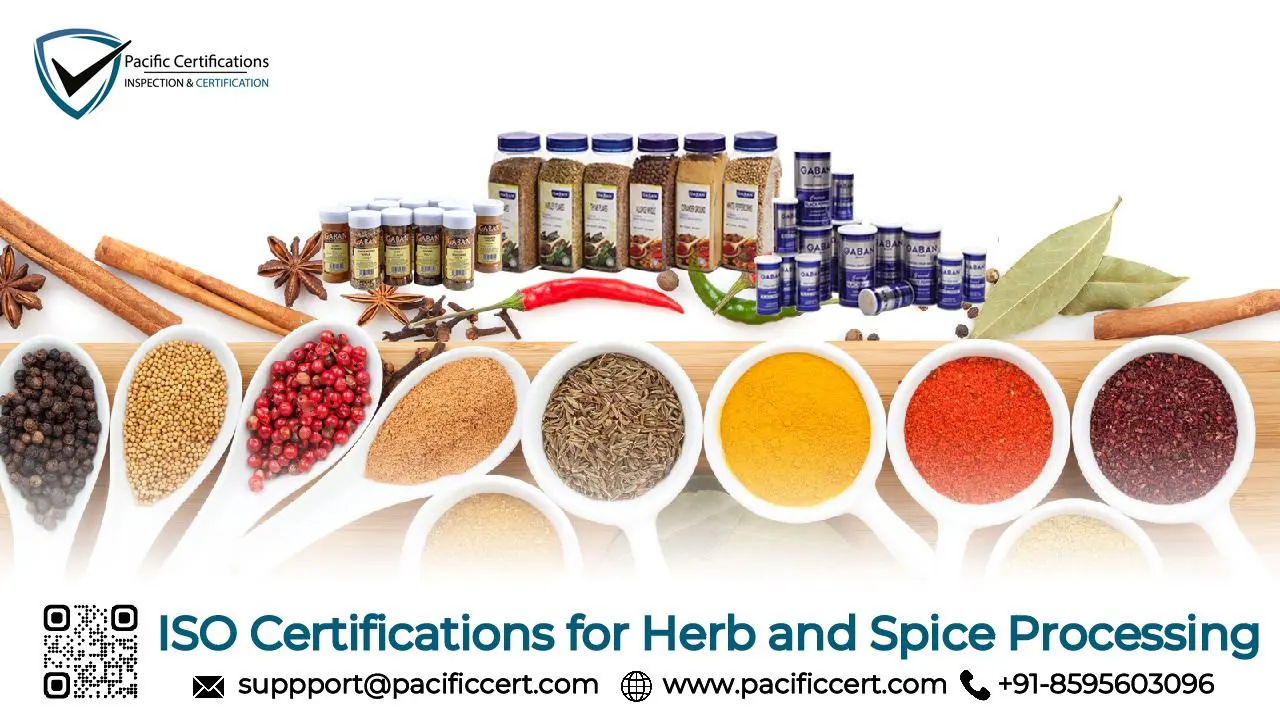
The herb and spice processing sector operates at the intersection of agriculture, food science, and consumer health trends. Core activities include cleaning, sorting, drying, grinding, blending, packaging, and labeling of dried herbs, seeds, roots, and fruit powders. Processers must manage biological hazards like Salmonella and mold, chemical contaminants such as pesticide residues and mycotoxins, and physical risks including stones or metal fragments while maintaining precise flavor profiles and active compound levels. Typical challenges involve preventing cross‑contamination between batches, ensuring consistent potency of essential oils, maintaining traceability from farm to shelf, complying with diverse international food‑safety regulations, and protecting brand reputation in a market where adulteration scandals can erode consumer trust rapidly.
ISO certifications provide a globally recognized framework to embed systematic controls into every production step. International market pressures and regulatory expectations compel processors to demonstrate consistent safety, quality, environmental stewardship, and occupational health. Aligning with ISO standards helps standardize testing procedures, protect proprietary blends, reduce waste, and build confidence among retailers, regulators, and consumers who demand transparent, safe, and authentic flavor ingredients.
In herb and spice processing, purity is the essence of flavor, rigorous systems turn every batch into a promise kept
Quick Summary
ISO certifications provide herb and spice processors with internationally recognized frameworks to manage food safety, quality, environmental impact, workplace safety, laboratory competence, and traceability. The most relevant standards include ISO 22000 for food safety management, ISO 9001 for quality assurance, ISO 14001 for environmental management, ISO 45001 for occupational health, ISO/IEC 17025 for testing and calibration, and ISO 22005 for traceability in the food chain. Processors should pay special attention to maintaining traceability from ingredient receipt to finished product and ensuring that laboratory results reliably support purity and potency claims.
Explore which ISO standards best fit your herb and spice processing operations: Consider how food safety, quality, environment, worker safety, risk management, and traceability are currently managed from farm to finished pack.
Applicable ISO Standards for Herb and Spice Processing Businesses
Below are the most relevant ISO standards applicable to dried‑herb mills, spice‑blending facilities, essential‑oil extractors, and organic‑certified processors:
ISO 22000: Food Safety Management System
This standard is critical because herb and spice processing involves biological hazards such as Salmonella and chemical risks like aflatoxins and pesticide residues that can compromise consumer safety. It covers prerequisite programs, HACCP principles, traceability, and supplier controls across ingredient handling, drying, grinding, blending, and packaging. Implementing ISO 22000 reduces recall risks, satisfies global food‑safety expectations, and reassures retailers and consumers that products are safe to consume.
ISO 9001: Quality Management System
Quality management ensures that each batch meets the declared levels of volatile oils, curcumin, capsaicin, or other active compounds promised on the label. The standard governs document control, internal audits, corrective actions, and management review for processes such as moisture testing, particle‑size verification, metal detection, and final weight validation. Benefits include fewer product re‑works, higher customer satisfaction, and stronger positioning in premium‑spice markets.
ISO 14001: Environmental Management System
Herb and spice processing consumes significant energy for drying and cooling and generates waste from packaging and off‑spec product. ISO 14001 helps organizations identify environmental aspects, set measurable objectives (reducing wastewater discharge by 15 % within a year), and monitor compliance with legal requirements. Adoption can lower utility costs, satisfy eco‑conscious partners, and reduce the ecological footprint of processing facilities.
ISO 17025: Testing and Calibration Laboratories
Accurate contaminant detection and potency profiling are essential for label compliance and safety. This standard specifies requirements for competence, impartiality, and consistent operation of laboratories that test herbs and spices for pesticide residues, heavy metals, microbiological load, and active‑compound levels. Certification ensures that test results are reliable, supporting regulatory submissions and customer trust.
ISO 45001: Occupational Health & Safety Management System
Processing staff face risks from dust inhalation, rotating grinders, and exposure to cleaning solvents or fumigants. ISO 45001 requires hazard identification, risk assessment, implementation of controls (such as dust‑collection systems, guarding, interlocks, and personal protective equipment), and monitoring of safety performance. Implementing this standard leads to lower injury rates, reduced workers‑compensation premiums, and improved morale among crews who see that their safety is a priority.
ISO 22005: Traceability in the Food Chain
This standard provides a framework for tracking ingredients through the supply chain, which is vital for verifying organic claims, preventing fraudulent substitutions, and enabling rapid recalls. It covers supply‑chain documentation, batch‑tracking systems, recall procedures, and data management. Implementation helps processors verify the origin of raw materials, maintain segregation of lots, and respond quickly to food‑safety incidents.
Click here to find out more applicable standards to your industry
What are the Requirements of ISO Certifications for Herb and Spice Processing Businesses?
Herb and spice processors seeking ISO certification must establish and maintain documented policies, procedures, and records aligned with the selected ISO standards. Key requirements include the following:
ISO 22000:2018 – Food Safety Management Systems Requirements
Define a food safety policy that commits to safe ingredient handling and legal compliance.
Establish prerequisite programs covering cleaning, pest control, and staff hygiene.
Conduct hazard analysis and determine critical control points for drying, grinding, and packaging.
Implement traceability systems to track batches from raw‑material receipt to final shipment.
Monitor critical limits (e.g., dry‑air temperature), perform corrective actions when deviations occur, and verify effectiveness.
Conduct internal audits and management reviews to ensure the FSMS remains effective and improves over time.
ISO 9001:2015 – Quality Management Systems Requirements
Develop a quality policy that reflects dedication to consistent potency and customer satisfaction.
Control documents and records to ensure current versions of standard operating procedures are accessible on the processing floor.
Plan and control production processes, including moisture monitoring, particle‑size checks, and blend uniformity.
Monitor customer satisfaction through feedback forms, complaint logs, and repeat‑order tracking.
Perform internal audits at planned intervals and promptly address any nonconformities identified.
Continually improve the QMS using audit results, production data, and corrective‑action outcomes.
ISO 14001:2026 – EnvironmentalManagement Systems Requirements
Identify environmental aspects such as water usage, energy consumption, and waste from packaging.
Establish environmental objectives and targets that are measurable, for example, increasing recycling of cardboard by 20% within a year.
Implement operational controls like water‑recycling systems, energy‑efficient motors, and waste‑segregation stations.
Train staff on environmental responsibilities and procedures for handling cleaning solvents.
Evaluate compliance with applicable environmental legislation and industry guidelines on a regular basis.
Review the EMS at top‑management meetings to drive continual improvement and update objectives as needed.
ISO 45001:2018 – Occupational Health & Safety Management Systems Requirements
Establish an occupational health & safety policy that outlines legal compliance and injury‑prevention goals.
Identify hazards such as dust exposure, moving conveyors, and exposure to fumigants.
Assess risks and determine appropriate controls, including dust collection, guarding, interlocks, and PPE provision.
Provide training and competence‑building activities for operators on machine safety and emergency response.
Implement operational controls to manage change, procurement, and contractor safety on‑site.
Monitor safety performance through incident investigations, leading‑indicator metrics, and management review.
ISO/IEC 17025:2017 – Testing and Calibration Laboratories Requirements
Conduct a risk assessment to identify threats to test validity, such as equipment drift or operator error.
Produce a statement of applicability selecting controls from the standard’s requirements (e.g., calibration, method validation).
Implement access‑control measures, including unique analyst IDs, secure login, and role‑based permissions.
Ensure traceability of measurements to national or international standards through regular calibration.
Establish internal quality control, including use of reference materials and proficiency testing.
Conduct internal audits and management reviews to ensure the laboratory remains competent and impartial.
ISO 22005:2007 – Traceability in the Feed and Food Chain Requirements
Implement a system to document ingredient origins, suppliers, and relevant certificates (e.g., organic, fair‑trade).
Develop batch‑tracking mechanisms to link raw material lots to intermediate and finished products.
Establish recall procedures for food‑safety incidents, including communication plans and product retrieval.
Maintain proper documentation and storage for traceability compliance, ensuring records are accessible for audits.
Regularly verify traceability data accuracy and reconcile discrepancies between recorded and physical inventory.
Tip: Begin by mapping your current standard operating procedures for raw‑material receipt, moisture testing, and final packaging against the clauses of ISO 22000; engage production, quality, and maintenance leads in a cross‑functional workshop to pinpoint gaps and create an actionable implementation plan.
For more information on how we can assist your herb and spice processing business with ISO certifications, contact us at support@pacificcert.com.
What are the Benefits of ISO Certifications for Herb and Spice Processing Businesses?
ISO certified herbs exporters get strong operational and commercial advantages, including:
Improved product safety through systematic hazard analysis, critical‑point monitoring, and traceability of ingredients.
Stronger quality culture by integrating potency testing, blend consistency checks, and final‑product verification for reliable flavor and efficacy.
Better environmental performance via reduced water usage, energy‑efficient drying equipment, and waste‑minimization programs.
Higher customer trust demonstrated through certified safety and quality marks on packaging, websites, and retailer specifications.
Greater eligibility for contracts with global retailers, food manufacturers, and distributors that require ISO‑certified suppliers.
Reduced incident rates from proactive risk identification, leading to fewer processing stops, product recalls, and worker injuries.
Streamlined audit preparation thanks to well‑maintained documents, records, and traceability of batch numbers.
Enhanced information security protecting proprietary formulations, supplier data, and customer‑order logs.
Increased resilience to disruptions through tested continuity plans, clear recovery objectives, and backup communication methods.
Improved regulatory readiness by aligning with food‑safety, environmental, occupational‑safety, and testing‑competence expectations.
The herb and spice processing industry is experiencing steady global growth, driven by rising demand for natural ingredients, clean-label products, and diverse culinary preferences. The global spices and seasonings market is valued at over USD 20–24 billion in 2024–2025 and is projected to reach approximately USD 30–36 billion by 2030, growing at a CAGR of around 5–6%. Growth is supported by expanding food processing industries, increasing consumption of packaged and ready-to-eat foods, and strong export demand from regions such as Asia, Africa, and Latin America.
Key trends shaping the sector include growing preference for organic, minimally processed, and traceable products, along with stricter food safety and quality requirements across international markets. Processors are investing in advanced cleaning, grinding, sterilization, and packaging technologies to maintain product quality and extend shelf life. At the same time, sustainability and ethical sourcing are becoming more important, with buyers demanding transparency in supply chains and responsible agricultural practices.
Looking ahead, the industry is expected to continue expanding as global food demand rises and consumer awareness around health and authenticity increases. Businesses that focus on consistent quality, food safety compliance, traceability, and efficient processing systems will be better positioned to access export markets, meet regulatory requirements, and build long-term credibility in the competitive herb and spice processing sector.
How Pacific Certifications Can Help?
Pacific Certifications, accredited by ABIS, acts as an independent certification body for herb and spice processing businesses by conducting impartial audits against applicable ISO standards. Our role is to objectively assess whether documented management systems and herb‑spice‑processing‑specific practices conform to international ISO requirements, based strictly on verifiable evidence and operational records.
We support herb and spice processors through:
Independent certification audits conducted in accordance with ISO/IEC 17021
Practical assessment of real herb and spice processing operations, safety, and environmental controls
Clear audit reporting reflecting conformity status and certification decisions
Internationally recognized ISO certification upon successful compliance
Surveillance and recertification audits to maintain certification validity
Contact Us
If you need support with ISO certification for your herb and spice processing business, contact us at support@pacificcert.com or +91-8595603096.
Author: Alina
Read more: Pacific Blogs