Introduction
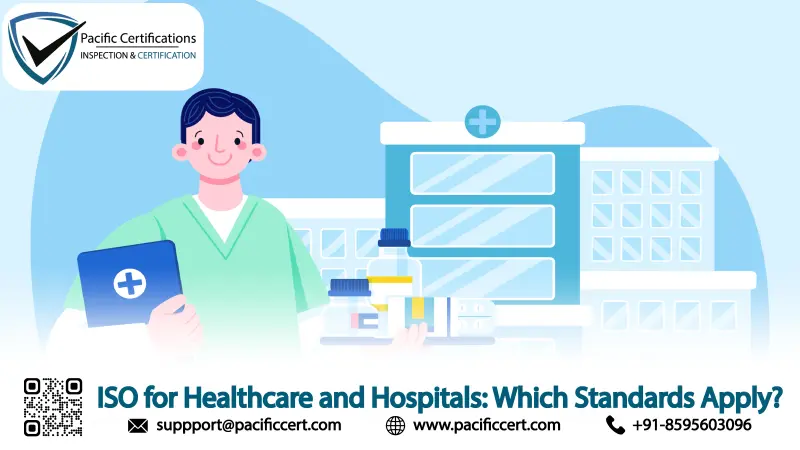
Hospitals are among the most complicated organizations to manage. Hospitals manage sensitive patient and financial information, medical devices and equipment, drugs and medications and delivery of life-critical services. Errors can result in damages such as harm to patients, damage to reputation and penalties for violating regulations. ISO standards can add structure for hospitals to establish safer care for patients, manage resources more effectively and meet legal and ethical obligations.
Lately, Healthcare organizations and hospitals face rising pressure. Patients demand safer care, regulators are tightening requirements, and digitization is reshaping medical services. ISO standards provide recognized frameworks that help healthcare providers deliver safe, reliable and globally comparable services.
By adopting ISO Standards, such as ISO 9001 for quality, ISO/IEC 27001 for information security management, or ISO 13485 for medical devices, healthcare professionals can provide assurance for systematic control over their practices and outcomes. ISO certifications increase confidence for patients, partners, and regulators and can help minimize risk and lower costs.
In modern healthcare, patient trust rests on proven systems of quality, safety, and data integrity. ISO certifications provide the structure needed to deliver care that is safe, reliable, and ethically governed.
Quick summary
ISO certifications help healthcare institutions safeguard patients, strengthen governance, and align with global medical expectations. Standards such as ISO 9001 for quality management, ISO 13485 for medical devices, ISO 45001 for occupational health and safety, and ISO/IEC 27001 for data protection are critical. Certification improves patient trust, ensures compliance with international healthcare obligations and helps institutions monitor performance through KPIs such as incident resolution times, infection control success rates and audit closure periods.
Explore which ISO standards are most relevant to your hospital or clinic: Consider where quality, patient safety, data protection, occupational health, or environmental impact are your most urgent priorities.
Which ISO standards apply to healthcare and hospital?
Several ISO standards remain highly relevant for hospitals:
ISO 9001 (Quality Management Systems)
ISO 9001 establishes a structured framework for improving the quality and consistency of patient care and hospital operations. It helps healthcare institutions standardize clinical pathways, optimize administrative workflows, and embed evidence-based decision-making. Hospitals use ISO 9001 to monitor performance, reduce medical errors, improve patient experience, and foster a culture of continuous improvement across all service units.
ISO 7101:2023 – Healthcare Quality Management System
ISO 7101 is specifically designed for healthcare settings, addressing the complexities of clinical services, patient outcomes, and safety protocols. It goes beyond general quality management by focusing on patient-centered leadership, clinical governance, infection prevention, and equity in care delivery. The standard supports tracking clinical indicators, improving treatment processes, and demonstrating measurable quality improvements across departments and specialties.
ISO/IEC 27001 (Information Security)
ISO/IEC 27001 safeguards electronic health records, telemedicine systems, diagnostic technologies, and medical IoT devices. Hospitals implement this standard to protect patient privacy, guard against cyberattacks, manage third-party digital risks, and establish strong incident-response controls. It supports compliance with global healthcare data regulations and fosters trust in digital-first medical environments.
ISO 13485 (Medical Devices)
ISO 13485 applies to healthcare environments involved in medical-device sterilization, maintenance, calibration, or manufacturing. Hospitals use it to establish traceable quality controls for devices ranging from surgical instruments to monitoring systems. It helps ensure equipment safety performance, sterility, and regulatory compliance, supporting reliable patient treatment environments.
ISO 14001 (Environmental Management)
ISO 14001 helps hospitals manage biomedical waste, chemical disposal, emissions, water usage, and energy consumption responsibly. It fosters sustainable healthcare practices and compliance with environmental regulations. Implementing this standard improves waste handling in clinics, laboratories, and operating suites, supports sustainable procurement, and enhances community trust through visible environmental stewardship..
ISO 45001 (Occupational Health & Safety)
ISO 45001 enables hospitals to protect clinical and non-clinical staff from workplace hazards, including biological exposures, ergonomic risks, stress factors, violence, and fatigue. It promotes proactive risk controls, emergency preparedness, and safety training. Healthcare facilities adopt this standard to strengthen worker health and morale, support legal compliance, and reduce workplace-related incidents in high-risk medical environments.
ISO 15189 (Medical Laboratories)
ISO 15189 establishes competence standards for clinical laboratories in hospitals and diagnostic centers. It ensures accuracy, reliability, and traceability in testing and calibration processes. Compliance supports patient-specific diagnostics, reduces reporting errors, improves turnaround times, and reinforces lab accreditation and global trust in laboratory results used for clinical decisions.
ISO 22301 (Business Continuity)
ISO 22301 ensures healthcare providers maintain clinical and operational continuity during emergencies such as pandemics, cyber disruptions, natural disasters, or mass-casualty events. It focuses on risk planning, crisis response procedures, resource availability, and recovery mechanisms. Hospitals use it to protect critical services, safeguard patient care, and remain operational during unexpected disruptions.
Why ISO certification matters in healthcare and hospitals?
Healthcare is one of the most highly regulated industries globally; but simply being "compliant" is not enough. ISO certification improves matters, as it is an international standard that is beyond the requirements of national laws, allowing for more consistency in international operations. For hospitals involved with medical tourism, research or global supply chains, ISO certification substantially shows their reliability and trustworthiness to partners and customers alike.
In addition, certification improves the accountability of staff, reduces mistakes and provides systems for continuous improvement. Thus, whether tackling quality management, environmental concerns or patient safety, ISO certified hospitals will be better prepared for the challenges faced in future.
What are the requirements of ISO certifications for healthcare?
Hospitals seeking certification need to address key requirements depending on the chosen standard. Common elements include:

Established scope of the management system services.
Established policies for quality, safety or information technology risk.
Conducting risk assessments – specifically related to patient care and information.
Keeping records of medical processes and controls.
Training doctors, nurses, staff on compliance responsibilities.
Establishing operational controls (everything from waste management to handling medical devices).
Conducting internal audits to discover gaps and opportunities for improvement.
Involving management in developing reviews and oversight on objectives.
Taking action to correct nonconformities and continuing improvement.
How to prepare for ISO certification in hospitals?
Hospitals and healthcare facilities can prepare for ISO certification through structured steps:
Compare current hospital practices with ISO requirements.
Create policies for patient care, data privacy, and safety.
Educate staff on how ISO standards connect to daily responsibilities.
Maintain medical records, safety procedures and audit logs.
Identify risks in patient care, infections, data handling and supply chains.
Conduct trial audits before formal certification.
Involve hospital leadership in reviewing progress and ensuring accountability.
Certification audit
The certification audit validates the effectiveness of hospital systems:
Stage 1 audit – Review hospital policies, patient care guidelines, and records.
Stage 2 audit – On-site examination of implementation and controls.
Certification – Granted once all nonconformities are corrected.
Surveillance audits – Conducted annually to verify continued compliance.
Recertification – Required every three years; hospitals must be recertified.
What are the benefits of ISO Certifications in healthcare?
Before listing the benefits, it is worth noting that ISO in healthcare creates a culture of accountability where patient safety is the top priority. Some benefits include:

Certification ensures structured systems for preventing medical errors.
Patients and regulators trust ISO-certified hospitals more.
Helps meet both local laws and international healthcare standards.
Protects patient records and aligns with global privacy requirements.
Structured systems reduce errors, waste, and costs.
Ensures employees are aware of their safety and quality responsibilities.
Facilitates international partnerships, accreditations and medical tourism opportunities.
In recent years, healthcare institutions have increasingly used ISO certification to align with global regulatory expectations. With digital healthcare expanding, ISO/IEC 27001 for data security and ISO 22301 for continuity planning are increasingly important.
Institutions are focusing more on SLAs with suppliers for timely delivery of medicines, equipment and critical services. KPIs such as infection prevention success rates, recovery times after disruptions and patient satisfaction scores are now being used to measure real-world benefits of certification. This shift shows that ISO standards are not only about compliance but about building safer, more reliable healthcare systems.
Contact us
Pacific Certifications provides accredited ISO certification services for hospitals and healthcare providers. We audit organizations to ensure they meet global standards for safety, quality, and patient trust.
Request your ISO audit plan and fee estimate, we will help you map Stage-1/Stage-2 timelines and evidence requirements for your organization. Contact us at support@pacificcert.com or visit www.pacificcert.com.
Author: Alina Ansari
Read more: Pacific Blogs