Introduction
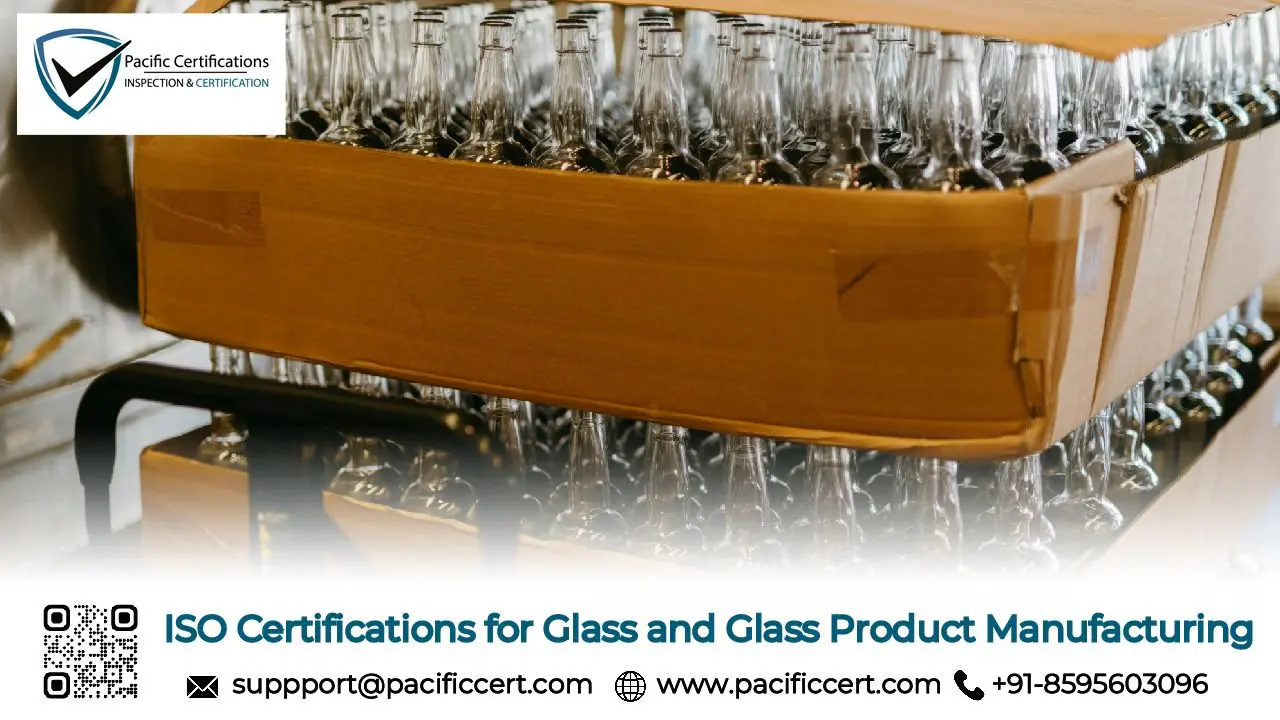
Glass and glass product manufacturing is a highly technical industry that relies on precise thermal control, chemical processing, and automated production lines. Manufacturers produce float glass for construction, bottles and containers for food, beverages, and pharmaceuticals, automotive windshields, and specialized glass used in laboratories and electronics. The process typically involves mixing silica sand, soda ash, and recycled glass, melting the batch in furnaces at very high temperatures, shaping the molten glass through forming or floating processes, and carefully cooling it to prevent internal stress or breakage. Operations are energy-intensive, with fuel and electricity often forming a major share of production costs. At the same time, workers face risks from heat, dust, chemicals, and sharp glass fragments, while customers demand strict dimensional accuracy and consistent strength. Environmental rules on furnace emissions, waste handling, and energy use, along with fluctuating raw material prices, make the industry even more challenging.
ISO certifications help glass manufacturers manage these pressures through structured and independently verified management systems. Standards related to quality, environment, safety, and energy performance provide a clear framework to control furnace efficiency, reduce workplace hazards, maintain product consistency, and meet regulatory requirements. Many construction companies, automotive suppliers, and pharmaceutical packaging buyers now expect certified management systems as a basic requirement, not an option. Certification gives objective proof that processes are controlled and monitored, reduces the risk of production failures, and strengthens credibility during tenders and supplier approvals. As global supply chains become more regulated, certified glass manufacturers are better positioned to win contracts, maintain long-term customers, and compete in international markets.
In glass manufacturing, thermal precision meets human safety—certified systems make both reliable.
Quick Summary
ISO certifications provide glass and glass product manufacturing businesses with internationally recognized frameworks to manage quality through ISO 9001, occupational health and safety through ISO 45001, environmental performance through ISO 14001, energy management through ISO 50001, and testing competence through ISO/IEC 17025. Processors should emphasize furnace emission documentation and breakage rate controls, as construction and pharmaceutical buyers scrutinize these metrics during supplier qualification alongside automotive OEMs demanding verified dimensional capability.
For more information on how we can assist your glass and glass product manufacturing business with ISO certifications, contact us at support@pacificcert.com.
Applicable ISO Standards for Glass and Glass Product Manufacturing Businesses
Below are the most relevant ISO standards applicable to float glass producers, container glass bottle manufacturers, automotive glazing fabricators, and technical/specialty glass processors:
ISO 9001: Quality Management System (QMS)
ISO 9001 requires documented control plans for batch homogeneity verification, float line thickness profiling, bottle strength testing, and annealing furnace temperature uniformity monitoring. Manufacturers reduce cullet recycle rates through systematic root cause analysis linking distortion patterns to mixer contamination or lehr zoning failures. Global construction specifiers and packaging buyers reference certification during pre-qualification, favoring ISO 9001 processors for volume glazing and container supply contracts.
ISO 14001: Environmental Management System (EMS)
ISO 14001 mandates environmental aspect inventories covering regenerative flue gas scrubbers, cullet preheating efficiency, and batch house dust extraction performance with established emission reduction targets. Management integrates environmental KPIs with production throughput during reviews, authorizing selective catalytic reduction systems or electric boosting investments.
ISO 50001: Energy Management System (EnMS)
Furnace fuel representing 35% of costs alongside 24/7 blower and compressor loads create compelling energy management imperatives. ISO 50001 establishes sub-metered baselines for regenerative chamber efficiency, oxy-fuel burner performance, and cullet preheat contribution, with KPIs tracking kWh per tonne melted. Cross-functional energy teams review variances monthly, prioritizing electric boosting retrofits or waste heat boilers yielding 10-15% consumption reductions. Certification aligns with glass industry decarbonization roadmaps while improving margins against low-cost flat glass imports.
ISO 45001: Occupational Health and Safety Management System (OH&S)
Workers confront molten glass splashes exceeding 1,200°C, respirable silica exposures during batch handling, lacerations from accelerated shard fragments, and repetitive strain across inspection lines. The standard demands hazard mapping for every gob shear, blow mold transfer, and annealing lehr access point, documenting machine guarding, thermal PPE specifications, and silica exposure monitoring protocols. Facilities achieve incident reductions through near-miss reporting identifying systemic gaps like inadequate shatter screens or ventilation shortfalls
Click here to find out more applicable standards to your industry
What are the Requirements of ISO Certifications for Glass and Glass Product Manufacturing Businesses?
Glass and glass product manufacturing businesses seeking ISO certification must establish and maintain documented policies, procedures, and records aligned with the selected ISO standards. Key requirements include the following:
ISO 9001:2015 – Quality Management Systems Requirements
Document batch recipes specifying silica sand purity, soda ash ratios, and cullet percentages with laboratory verification before furnace charging operations commence each shift.
Implement control plans verifying float glass thickness profiling every 30 minutes using laser gauges and bottle wall distribution through ultrasonic testing post-forming.
Establish supplier qualification procedures evaluating raw material consistency for feldspar fineness, limestone reactivity, and dolomite contamination levels quarterly.
Conduct process capability studies measuring optical distortion, surface blemish rates, and annealing stress patterns across production campaigns using statistical software.
ISO 14001:2015 – Environmental Management Systems Requirements
Map NOx and SOx emission sources across regenerative chambers, oxy-fuel ports, and batch preheaters establishing scrubber efficiency targets through continuous stack monitoring.
Document cullet management protocols maximizing post-consumer glass recovery while verifying contamination levels below 2% through quarterly sieve analysis testing.
Implement wastewater treatment verification for chemical strengthening lines tracking sodium nitrate concentration and pH neutralization before discharge to treatment lagoons.
Maintain dust extraction performance records for batch houses measuring silica particulate capture efficiency quarterly against design specifications.
ISO 45001:2018 – Occupational Health and Safety Management Systems Requirements
Conduct hazard analysis covering molten glass gob shears operating at 1,200°C, documenting shatter screen positioning and thermal curtain deployment timing specifications.
Establish silica exposure monitoring programs using personal samplers during batch mixing and furnace maintenance with quarterly ventilation performance verification.
Develop lockout-tagout procedures for 6.6kV regenerative blower motors, electric boost transformers, and compressed air isolation before lehr maintenance access.
Implement emergency response protocols for furnace crown penetrations including fire suppression activation and personnel evacuation routes from batch house mezzanines.
ISO 50001:2018 – Energy Management Systems Requirements
Establish furnace-specific energy baselines measuring natural gas consumption per tonne melted, regenerative chamber efficiency, and oxy-fuel burner oxygen utilization rates.
Install sub-metering on 1MW electric boost electrodes, 500kW compressed air compressors, and cooling tower fan arrays tracking performance against design specifications.
Conduct thermal imaging surveys of furnace crowns and sidewalls identifying refractory hot spots contributing 5-8% avoidable heat loss during production campaigns.
Review energy opportunity register prioritizing cullet preheat optimization, variable frequency drive retrofits, and waste heat boiler investments yielding payback under 24 months.
Tip: Launch certification preparation by assembling furnace engineers, batch house supervisors, safety coordinators, and quality technicians to trace material flow from silica receiving through optical inspection stations, collaboratively identifying control gaps against target standards while building cross-departmental ownership essential for audit success.
For more information on how we can assist your glass and glass product manufacturing business with ISO certifications, contact us at support@pacificcert.com.
What are the Benefits of ISO Certifications for Glass and Glass Product Manufacturing Businesses?
ISO certifications deliver glass and glass product manufacturing businesses systematic process control and verified compliance credentials, listed below are the key benefits for the ISO standards applicable to float glass producers, container manufacturers, automotive glaziers, and technical glass fabricators:
Improved dimensional consistency through ISO 9001 reduces cullet generation from thickness deviations while qualifying for automotive OEM Tier 1 supply programs.
Stronger worker protection via ISO 45001 cuts silica exposure incidents and molten glass burns, maintaining furnace campaign reliability essential for quarterly delivery commitments.
Enhanced environmental compliance under ISO 14001 documents NOx reduction satisfying construction client sustainability mandates while avoiding regulatory production halts.
Greater energy efficiency through ISO 50001 achieves 10-15% furnace consumption reductions, strengthening competitiveness against low-cost sheet glass imports.
Reduced quality escapes via systematic defect prevention lowers warranty claims from optical distortion in architectural glazing applications.
Higher pre-qualification scores as multinational construction and pharmaceutical buyers reference certification bypassing extensive factory audit requirements.
Global flat glass demand accelerates with urbanization driving curtain wall systems and energy-efficient glazing, while container glass consumption grows steadily alongside beverage packaging innovation and pharmaceutical serialization requirements. Lightweight automotive glass incorporating advanced coatings reduces vehicle weight by 5-8kg per windshield assembly, creating premium specification opportunities. Sustainability pressures intensify through embodied carbon disclosure mandates targeting 30% furnace emission reductions through electric boosting and hydrogen combustion pilots. Over the next decade, technical glass applications in solar panel encapsulation and laboratory equipment expand alongside growing demand for chemically strengthened smartphone cover glass.
Certified glass processors often see clear operational improvements after implementing ISO systems. Many report thermal efficiency gains of around 12–18% after adopting ISO 50001, along with lower material waste when production is controlled under ISO 9001. In construction projects, tender documents now frequently require suppliers to hold valid certifications, and buyers tend to prefer manufacturers who can prove consistent dimensional accuracy rather than relying only on final inspection.
At the same time, stricter emission rules for furnaces, rising energy costs, new lightweight glass requirements in the automotive sector, and tighter controls for pharmaceutical packaging are pushing manufacturers toward more structured compliance systems. Companies with certified management systems are usually better prepared to meet these demands, while those without formal controls often struggle to keep up. In high-end architectural projects as well as large-scale container glass production, ISO frameworks help maintain stable operations today while also making it easier to adapt to new technologies and future regulations.
How Pacific Certifications Can Help?
Pacific Certifications, accredited by ABIS, acts as an independent certification body for glass and glass product manufacturing businesses by conducting impartial audits against applicable ISO standards. Our role is to objectively assess whether documented management systems and glass production practices conform to international ISO requirements, based strictly on verifiable evidence and operational records.
We support glass and glass product manufacturing providers through:
Independent certification audits conducted in accordance with ISO/IEC 17021 across quality, safety, environmental, and energy management systems
Practical assessment of real float lines, container forming operations, furnace controls, and optical testing laboratories during production hours
Clear audit reporting reflecting conformity status and certification decisions without ambiguity
Internationally recognized ISO certification upon successful demonstration of compliance
Surveillance and recertification audits to maintain certification validity across the full three-year certification cycle
Contact Us
If you need support with ISO certification for your glass and glass product manufacturing business, contact us at support@pacificcert.com or +91-8595603096.
Author: Alina
Read More at: Blogs by Pacific Certifications