Introduction
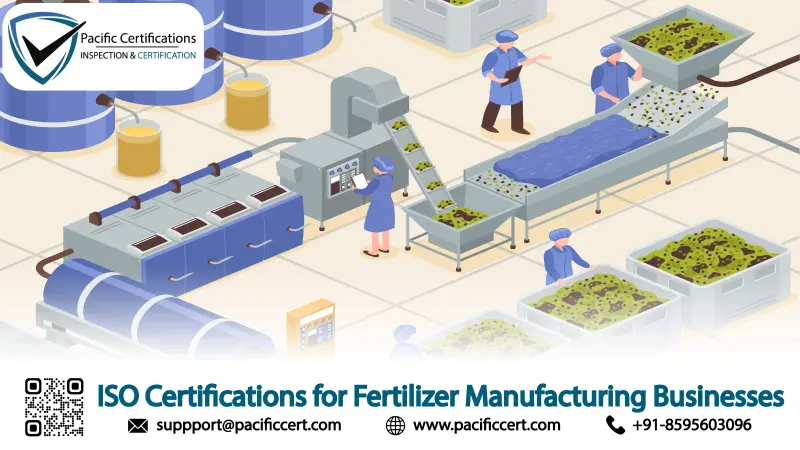
Fertilizer manufacturing combines chemical processing, large-scale production, and strict environmental control to meet the nutrient demands of modern agriculture. Plants typically produce urea through ammonia synthesis, phosphate fertilizers using acid reactors, NPK blends in granulation drums, and potash-based products through compaction and screening systems. These operations involve high-pressure and high-temperature reactions, handling of corrosive acids, control of dust and emissions, and precise granulation to maintain consistent product quality. Manufacturers must manage risks related to ammonia leaks, acid exposure, stack emissions, and raw material price fluctuations, while also meeting increasing regulatory pressure on pollution control and nutrient runoff. At the same time, global demand for reliable fertilizer supply keeps production volumes high, leaving little room for operational failure.
ISO certifications help fertilizer manufacturers manage these risks through structured and independently verified management systems covering safety, quality, environment, and operational control. Governments, large distributors, and agricultural buyers often expect certified systems as proof that production is stable, safe, and compliant with regulations. ISO standards provide documented control over chemical handling, emission monitoring, worker safety, and product consistency, turning complex compliance requirements into organized processes that can be audited. Certification also gives distributors and procurement agencies confidence that the manufacturer can maintain reliable supply without compromising safety or environmental limits. In competitive markets for urea, phosphate, and compound fertilizers, certified companies are often preferred because they can demonstrate controlled operations, lower risk, and stronger long-term reliability.
In fertilizer manufacturing, chemical precision powers agriculture—certified systems ensure safety and sustainability.
Quick Summary
ISO certifications provide fertilizer manufacturing businesses with internationally recognized frameworks to manage quality through ISO 9001, occupational health and safety through ISO 45001, environmental performance through ISO 14001, energy management through ISO 50001, and risk governance through ISO 31000. Producers should prioritize ammonia plant ATEX zoning documentation and NOx emission monitoring protocols, as agribusiness cooperatives and government tenders scrutinize these alongside phosphate dust control verification.
For more information on how we can assist your fertilizer manufacturing business with ISO certifications, contact us at support@pacificcert.com.
Applicable ISO Standards for Fertilizer Manufacturing Businesses
Below are the most relevant ISO standards applicable to urea prill producers, phosphate granulators, NPK compound blenders, and potash compaction plants:
ISO 9001: Quality Management Systems (QMS)
Fertilizer blends failing nutrient uniformity specifications generate field efficacy complaints eroding farmer confidence across growing seasons. ISO 9001 requires control plans verifying granulator bed moisture profiles, coating uniformity on urea prills, and NPK sieve analysis confirming 90%+ 2-4mm sizing. Manufacturers reduce reblend rates through root cause analysis linking segregation patterns to drum rotation speed or binder spray inconsistencies. Agribusiness cooperatives reference certification during national tender processes, favoring ISO 9001 suppliers for subsidized distribution programs.
ISO 14001 – Environmental Management
Ammonia plants emit NOx exceeding 200mg/Nm³ alongside fluorine from phosphate digestion averaging 20ppm stack concentrations. ISO 14001 mandates aspect inventories covering SCR catalyst performance, wet scrubber liquor recirculation, and phosphogypsum stack leachate control with reduction targets verified continuously. Management integrates emission KPIs with production rates during reviews, authorizing plasma treatment or dual-alkali scrubbing upgrades. Certified producers satisfy importer sustainability requirements while minimizing permit revocation risks disrupting peak season deliveries.
ISO 45001 – Occupational Health and Safety
Operators confront ammonia vapor concentrations exceeding 300ppm IDLH alongside 98% sulfuric acid splashes and combustible dust clouds from NPK handling. The standard demands ATEX zoning for synthesis compressor areas, documenting intrinsically safe instrumentation and explosion venting calculations. Facilities achieve incident declines through near-miss programs identifying gaps like inadequate drench shower coverage or ungrounded dust collection ducts. Certification reassures national procurement boards of verified safety supporting subsidized fertilizer distribution reliability.
ISO 50001 – Energy Management
Synthesis gas compressors consuming 25MW alongside 1,200°C reformer radiant sections drive energy representing 40% of operating costs. ISO 50001 establishes sub-metered baselines for steam/methane reformer efficiency, acid plant SO2 conversion rates, and granulator dryer thermal performance. Energy committees review variances monthly prioritizing syngas recycle compression optimization or waste heat power generation yielding 12-18% reductions. Certification aligns with national energy intensity targets while bolstering margins against subsidized imports.
Click here to find out more applicable standards to your industry
What are the Requirements of ISO Certifications for Fertilizer Manufacturing Businesses?
Fertilizer manufacturing businesses seeking ISO certification must establish and maintain documented policies, procedures, and records aligned with the selected ISO standards. Key requirements include the following:
ISO 9001:2015 – Quality Management Systems
Document granulation control parameters specifying drum rotation speed, binder spray rates, and bed moisture maintaining 2-4mm particle uniformity above 92% yield threshold.
Implement nutrient analysis protocols verifying NPK ratios within ±0.5% tolerance using calibrated spectrometry before bulk blending and bagging operations.
Establish raw material incoming inspection covering phosphate rock P2O5 content, ammonia liquor density, and potash KCl purity through quarterly supplier audits.
Conduct particle size distribution testing confirming 95% retention on 2mm sieves for urea prills post-prilling tower quench chamber optimization.
ISO 14001:2015 – Environmental Management Systems
Monitor NOx stack concentrations from ammonia oxidation maintaining SCR inlet temperatures above 380°C with catalyst activity testing every six months.
Document phosphogypsum stack integrity verification including liner leak detection, leachate collection sump levels, and rainfall pond overflow capacity assessments.
Implement fluorine gas scrubber performance tracking confirming 95% capture efficiency through dual alkali liquor pH and freeboard monitoring systems.
Maintain dust suppression records for conveyor transfers using water fogging systems verified quarterly against PM10 emission guarantees.
ISO 45001:2018 – Occupational Health and Safety Management Systems
Classify ATEX zones around ammonia compressors documenting Zone 1 gas detection coverage and intrinsically safe solenoid valve specifications.
Establish sulfuric acid handling protocols including secondary containment bunding capacity for 98% spills and neutralization sump mixing efficiency verification.
Conduct combustible dust hazard analysis for NPK silos calculating Kst values and explosion venting panel sizing per NFPA guidelines.
Implement confined space entry procedures for prilling tower scrubber maintenance documenting atmospheric testing and retrieval systems.
ISO 50001:2018 – Energy Management Systems
Baseline ammonia synthesis energy consumption measuring specific energy per tonne across reformer, compressor, and shift converter stages monthly.
Monitor syngas compressor polytropic efficiency maintaining above 78% through interstage seal performance and vibration spectrum analysis.
Track sulfuric acid plant SO2 conversion rates optimizing contact chamber temperatures and catalyst bed pressure drops quarterly.
Review granulator dryer thermal efficiency targeting 1.2 GJ/tonne steam consumption through concurrent airflow and bed depth optimization.
Tip: Assemble synthesis engineers, granulation supervisors, EHS officers, and quality analysts to trace nutrient flow from phosphate digestion through bagging scales, mapping controls against standards collaboratively while cultivating ownership vital for regulatory compliance and production scalability.
For more information on how we can assist your fertilizer manufacturing business with ISO certifications, contact us at support@pacificcert.com.
What are the Benefits of ISO Certifications for Fertilizer Manufacturing Businesses?
ISO certifications deliver fertilizer manufacturing businesses structured process safety and compliance verification, listed below are the key benefits for the ISO standards applicable to urea prillers, phosphate granulators, NPK blenders, and potash compactors:
Improved granulation uniformity through ISO 9001 reduces reprocessing costs while qualifying for national subsidy distribution programs.
Stronger emission control via ISO 14001 cuts NOx violations enabling uninterrupted peak season production campaigns.
Enhanced worker safety under ISO 45001 minimizes ammonia incidents maintaining synthesis reliability critical for quarterly contracts.
Greater energy efficiency from ISO 50001 achieves 12-18% synthesis gas reductions bolstering margins against gas price volatility.
Reduced regulatory downtime through proactive ATEX compliance and dust hazard mitigation.
Higher tender success rates as cooperatives reference certifications for multi-year supply agreements.
Global fertilizer capacity expansions target precision agriculture nutrient delivery alongside bio-based alternatives reducing synthetic reliance. Urea demand grows steadily driven by rice paddy applications while phosphate rock beneficiation advances yield higher P2O5 concentrates. Sustainability transitions favor green ammonia via electrolysis alongside coated controlled-release formulations extending field efficacy 60 days. Over the next decade, digital twin reactor modeling optimizes synthesis efficiency while carbon capture integration targets 90% CO₂ sequestration from urea plants.
Certified producers document superior metrics including 15-20% emission reductions through ISO 14001 alongside measurable safety improvements under ISO 45001. Agribusinesses embed supplier certification in RFPs favoring ISO 9001/31000 integrators over traditional operators. Tightening nutrient runoff legislation, rising natural gas costs, green ammonia pilots, and subsidy program requirements position certified manufacturers advantageously. In subsidized national markets demanding verified quality alongside premium export segments, ISO frameworks support both volume production and specialty formulation transitions.
How Pacific Certifications Can Help?
Pacific Certifications, accredited by ABIS, acts as an independent certification body for fertilizer manufacturing businesses by conducting impartial audits against applicable ISO standards. Our role is to objectively assess whether documented management systems and production practices conform to international ISO requirements, based strictly on verifiable evidence and operational records.
We support fertilizer manufacturing providers through:
Independent certification audits conducted in accordance with ISO/IEC 17021 across quality, safety, environmental, energy, and risk management systems
Practical assessment of real ammonia synthesis units, granulation towers, emission scrubbers, and nutrient testing laboratories during operational shifts
Clear audit reporting reflecting conformity status and certification decisions without ambiguity
Internationally recognized ISO certification upon successful demonstration of compliance
Surveillance and recertification audits to maintain certification validity across the full three-year certification cycle
Contact us
If you need support with ISO certification for your fertilizer manufacturing business, contact us at support@pacificcert.com or +91-8595603096.
Author: Alina
Read more: Pacific Blogs