Introduction
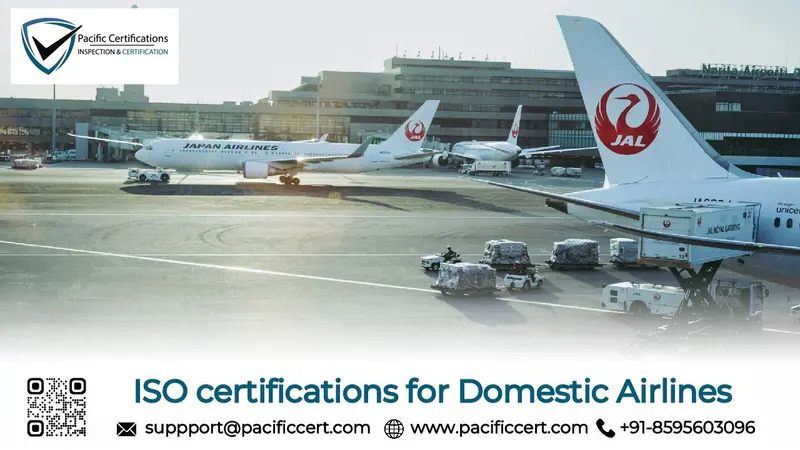
Domestic airlines operate within a competitive aviation landscape where service quality, safety compliance, and operational efficiency directly impact passenger choice and market share. Core activities include scheduled passenger flights on regional and national routes, cargo transportation, in-flight services, baggage handling, aircraft maintenance, and customer service operations. Airlines face persistent challenges: maintaining consistent service standards across fluctuating demand, ensuring absolute safety in flight and ground operations, managing fuel costs while meeting passenger expectations, protecting sensitive passenger and operational data, and adapting to regulatory changes—all under constant scrutiny from aviation authorities focused on air safety and consumer protection.
ISO certifications provide essential frameworks to address these pressures by establishing internationally recognized benchmarks that transcend fragmented national aviation regulations. Rather than reacting to isolated incidents or compliance gaps, these standards create proactive systems for quality management, occupational safety, environmental stewardship, and operational resilience, critical for building trust with passengers, regulators, and industry partners. They transform operational inconsistencies into standardized processes that directly support reliable service delivery, demonstrable risk reduction, and verifiable compliance with global aviation frameworks, which is indispensable in an industry where reputation for safety, efficiency, and customer care directly influences brand loyalty and route profitability.
In domestic aviation, every on-time departure reflects disciplined systems working quietly behind the scenes.
Quick Summary
ISO certifications help domestic airlines improve operational consistency, enhance safety, reduce environmental impact, secure digital systems, and maintain service continuity. The most relevant standards include ISO 9001, ISO 14001, ISO 45001, ISO 22301, ISO/IEC 27001, and ISO 50001. Certification reassures aviation authorities, airport partners, and passengers that airline operations are professionally managed, compliant, and resilient.
For more information on how we can assist your domestic airline operations with ISO certifications, please contact us at support@pacificcert.com.
Applicable ISO Standards for Domestic Airlines
Below are the most relevant ISO standards applicable to domestic passenger airlines, regional carriers, and aviation service providers:
ISO 9001: Quality Management Systems
This standard is critical for domestic airlines as it provides a systematic framework to ensure consistent, high-quality service delivery, a core expectation from passengers entrusting their safety and travel plans to carriers. It addresses processes like flight scheduling and punctuality, aircraft maintenance accuracy, in-flight service quality, baggage handling efficiency, and customer complaint resolution. Implementing ISO 9001 leads to fewer service discrepancies, demonstrable alignment with IATA Operational Safety Audit (IOSA) standards, enhanced passenger trust through transparent processes, and improved operational efficiency in resource allocation and schedule management.
ISO 45001: Occupational Health and Safety Management Systems
The safety of personnel working in flight decks, maintenance hangars, ramp operations, and cabin services represents a daily operational priority; this standard provides a proactive system to prevent work-related injuries and illnesses unique to aviation professions. It addresses hazard identification for flight-related risks, ground handling dangers during aircraft servicing, fatigue management through flight duty period controls, and exposure to hazardous materials during maintenance or fueling operations.
ISO 14001: Environmental Management System (EMS)
Domestic aviation contributes to regional carbon emissions and noise pollution; this standard helps operators manage environmental aspects systematically through measurable objectives and operational controls. It covers aspects like fuel consumption tracking and optimization strategies, emission reduction technologies for aircraft engines, proper disposal and recycling of maintenance waste, noise abatement practices for flight paths and ground operations, and integration of sustainable aviation fuels or more efficient aircraft into fleet renewal programs.
ISO 27001: Information Security Management Systems (ISMS)
With the proliferation of online booking systems, electronic passenger manifests, digital flight planning tools, and real-time aircraft tracking, protecting vast volumes of sensitive operational and personal data is non-negotiable for modern domestic airlines. This standard governs controls for securing personally identifiable information of passengers, payment details, intellectual property, employee records, and flight operations data against cyber threats targeting aviation platforms.
ISO 22301:2019 – Business Continuity Management Systems
Domestic airlines often provide critical services during regional emergencies where prolonged disruption incurs significant economic and social costs; this standard ensures operators can maintain or rapidly restore essential flight operations and customer service functions during emergencies. It encompasses planning for scenarios like extreme weather grounding fleets, cyberattacks disabling reservation systems, or major incidents affecting key airports, defining response roles, communication plans, and recovery resources.
ISO 50001: Energy Management Systems
Fuel and energy costs represent a major portion of airline operating expenses. ISO 50001 supports systematic monitoring of fuel consumption, ground energy use, and efficiency initiatives, helping domestic airlines control costs and reduce environmental impact.
Click here to find out more applicable standards to your industry
What are the requirements of ISO Certifications for Domestic Airlines?
Understanding ISO requirements helps airlines implement systems that support real operations rather than paperwork. Below is an overview of the general and standard-specific requirements applicable to domestic airlines.
General requirements:
Covering flight operations, ground handling, maintenance coordination, and passenger services
Written commitments on safety, service quality, environmental responsibility, and data protection
Identifying risks such as flight delays, safety incidents, IT failures, and regulatory non-compliance
Standardizing processes for check-in, boarding, turnaround, maintenance release, and incident handling
Ensuring staff competence through training on safety, customer service, and operational procedures
Tracking KPIs such as on-time performance, baggage handling errors, incidents, and complaints
Maintaining records of operations, inspections, incidents, and audits
Conducting periodic internal audits and management reviews
Standard requirements: ISO 9001: Quality Management Systems Requirements
Quality Policy and Objectives: The airline must establish a quality policy and set measurable quality objectives aligned with customer and regulatory requirements.
Documented Information: Proper documentation of processes, procedures, and records is necessary to demonstrate compliance with the standard.
Process Approach: The airline must adopt a process approach, ensuring that all processes are efficient and contribute to the overall quality management system.
Leadership and Commitment: Top management must demonstrate leadership and commitment to the QMS, ensuring that it is integrated into the organization’s overall strategy.
Customer Focus: The airline must ensure that customer needs and expectations are understood and met, leading to enhanced customer satisfaction.
ISO 45001: Occupational Health and Safety Management Systems Requirements
Hazard Identification and Risk Assessment: The airline must identify hazards and assess the risks associated with its operations, taking steps to mitigate these risks.
Legal Compliance: The airline must comply with relevant health and safety legislation and regulations.
OHS Policy: The airline must establish and implement an occupational health and safety policy, ensuring the health and safety of all employees and stakeholders.
Emergency Preparedness and Response: The airline must have procedures in place to respond to emergencies, ensuring the safety of employees and passengers.
ISO 14001: Environmental Management Systems Requirements
Environmental Policy: The airline must establish an environmental policy that includes commitments to environmental protection, compliance with legal requirements, and continuous improvement.
Environmental Aspects and Impacts: The airline must identify the environmental aspects of its operations and evaluate their impacts, taking steps to manage and reduce these impacts.
Compliance Obligations: The airline must comply with all applicable environmental laws and regulations.
Operational Control: The airline must implement operational controls to manage significant environmental aspects and ensure compliance with its environmental policy.
ISO 27001: Information Security Management Systems Requirements
Risk Assessment: The airline must conduct a risk assessment to identify and evaluate information security risks, taking steps to mitigate these risks.
Information Security Policy: The airline must establish and implement an information security policy, ensuring the protection of sensitive information.
Access Control: The airline must implement access controls to protect sensitive information from unauthorized access.
Incident Management: The airline must have procedures in place to respond to information security incidents, ensuring that they are managed effectively.
ISO 22301: Business Continuity Management Systems Requirements
Business Impact Analysis: The airline must conduct a business impact analysis to identify critical business functions and assess the impact of disruptions.
Business Continuity Plans: The airline must develop and implement business continuity plans to ensure the continued operation of critical functions during a disruption.
Training and Awareness: The airline must ensure that employees are trained and aware of their roles and responsibilities in the event of a disruption.
Exercise and Testing: The airline must regularly test its business continuity plans to ensure their effectiveness.
ISO 50001: Energy Management Systems Requirements
Energy Policy: The airline must establish an energy policy that includes commitments to energy efficiency, compliance with legal requirements, and continuous improvement.
Energy Review: The airline must conduct an energy review to identify significant energy uses and opportunities for improvement.
Energy Performance Indicators: The airline must establish energy performance indicators to measure and monitor energy performance.
Energy Objectives and Targets: The airline must set energy objectives and targets, aligned with its energy policy and legal requirements.
Tip:Domestic airlines often begin with ISO 9001 to stabilize service quality, followed by ISO 45001 to strengthen workforce safety. With increasing reliance on digital systems, ISO/IEC 27001 is becoming a critical next step.
Ensure your Domestic Airline meets global standards with ISO certification. Contact us at support@pacificcert.com or call +91-8595603096 for more information.
What are the benefits of ISO Certifications for Domestic Airlines?
ISO certifications provide domestic airlines with strong operational and commercial advantages, including: listed below are the key benefits for the ISO standards applicable to passenger carriers, cargo operators, and aviation service providers:
Enhanced reputation and passenger trust through verified commitment to quality, safety, and environmental responsibility.
Improved regulatory compliance by aligning with national aviation authority requirements, streamlining certification processes.
Increased operational efficiency through standardized processes that reduce waste, errors, and delays in flight and ground operations.
Better risk management via proactive identification and mitigation of safety, security, and operational risks, reducing incidents and disruptions.
Greater access to partnerships and alliances as airlines prefer ISO-certified carriers for verified performance and reliability.
Reduced operational costs through optimized fuel consumption, predictive maintenance, and efficient resource utilization across fleets and facilities.
Higher customer satisfaction from reliable on-time performance, accurate information provision, and consistent service delivery throughout the journey.
Strengthened data security protecting passenger information, payment details, and operational systems from cyber threats and breaches.
Improved environmental performance quantifying and mitigating aircraft emissions, noise pollution, and waste generation through systematic management.
Enhanced employee engagement through demonstrable commitment to workforce safety, training, and continual improvement in aviation operations.
Domestic aviation is in a period of measurable recovery and structural change. According to the International Air Transport Association (IATA), global domestic passenger traffic recovered to nearly 95% of pre-pandemic levels in 2025, with faster rebounds in markets such as India, China, and Latin America. IATA forecasts that by 2030 domestic traffic will exceed 7.1 billion passengers annually, driven by rising middle-class demand, urbanization, and intra-regional travel liberalization.
Cost pressures continue to influence airline strategies. Jet fuel — historically one of the largest operating expenses — accounted for approximately 23% of airline costs in 2024, even as carriers implement fuel-efficiency programs and route optimization technologies. At the same time, fleet modernization and sustainable aviation fuel (SAF) adoption are reshaping cost structures, with global SAF production capacity projected to grow five-fold by 2030, according to industry analysts.
Safety and performance expectations are tightening. Aviation regulators in multiple regions, including the European Union Aviation Safety Agency (EASA) and the U.S. Federal Aviation Administration (FAA), reported a rise in audit actions related to operational risk management and data security, prompting airlines to strengthen governance frameworks.
Digital transformation is also accelerating. Surveys of airline CIOs show that over 80% of domestic carriers have increased investments in cybersecurity and operational IT systems, in response to a nearly 30% rise in cyber attempts targeting aviation critical systems over the same period.
Sustainability is an increasing differentiator in competitive markets. Domestic carriers are setting emissions reduction targets with several aiming for net-zero carbon operations by 2050, and are under growing pressure from regulators and passengers to reduce noise and local air quality impacts. Structured systems such as ISO 14001 and ISO 50001 help airlines integrate environmental and energy performance into core operations, a requirement that industry reports indicate can lead to 10–15% reductions in fuel and energy consumption over three years.
How Pacific Certifications Can Help?
Pacific Certifications, accredited by ABIS, acts as an independent certification body for domestic airline operators. We conduct impartial audits to assess whether airline management systems and operational practices conform to applicable ISO standards, based strictly on documented evidence and real operational controls.
We support domestic airlines through:
Independent certification audits conducted in accordance with ISO/IEC 17021
Objective assessment of airline operations, safety systems, and controls
Clear audit reporting and certification decisions
Issuance of internationally recognized ISO certificates
Surveillance and recertification audits to maintain certification validity
Contact Us
If you need support with ISO certification for your domestic airline operations, contact support@pacificcert.comor +91-8595603096.
Author: Seema
Read More at: Blogs by Pacific Certifications