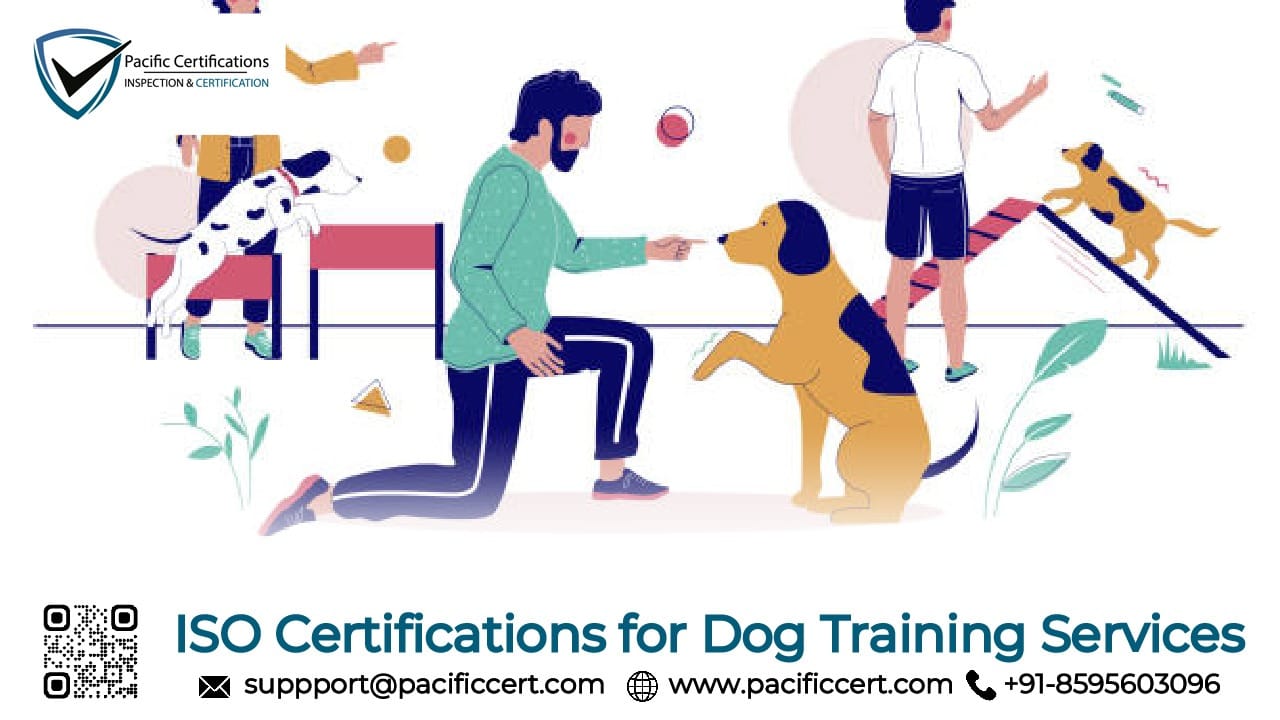
ISO Certifications for Dog Training Services, Requirements and Benefits
Introduction
The dog training industry operates at the intersection of animal behavior science, client education, and service delivery. Core activities include obedience instruction, behavior modification programs, puppy socialization classes, service dog preparation, therapy dog training, and specialized workshops for issues like aggression or anxiety. Trainers must assess individual canine temperaments, design customized training plans, educate owners on reinforcement techniques, and maintain safe environments for both animals and humans during sessions. Typical challenges involve ensuring consistent training outcomes across different breeds and temperaments, managing liability risks when working with animals, staying current with evolving behavioral science, verifying trainer qualifications, and building client trust in an industry where results depend heavily on both animal and owner cooperation.
ISO certifications provide a globally recognized framework to systematize operational excellence in canine education businesses. International market pressures and growing client expectations compel training services to demonstrate consistent quality, ethical practices, occupational safety, and environmental responsibility. By aligning with ISO standards, trainers can standardize lesson plans, validate instructor competencies, protect client data, reduce operational risks, and build trust with pet owners seeking professional, science-based training for their companions in an increasingly discerning marketplace where animal welfare and ethical methods are paramount concerns.
In canine education, trust is built on proven methods — certified systems turn every training session into a positive transformation
Quick Summary
ISO certifications provide dog training businesses with internationally recognized frameworks to manage service quality, learning program integrity, occupational safety, animal welfare compliance, environmental impact, and information security. The most relevant standards include ISO 9001 for quality management, ISO 29993 for learning services outside formal education, ISO 26000 for social responsibility guidance, ISO 45001 for workplace safety, and ISO 14001 for environmental stewardship. Providers should pay special attention to documenting training methodologies, securing client consent forms, and ensuring safe handling practices for dogs of all sizes and temperaments.
For more information on how we can assist your dog training business with ISO certifications, contact us at support@pacificcert.com.
Applicable ISO Standards for Dog Training Services Businesses
Below are the most relevant ISO standards applicable to independent dog trainers, training academies, behavior consultation services, and specialty programs for service or therapy dogs:
ISO 9001:2015 - Quality Management System (QMS)
Quality management ensures consistent, high-standard instruction that meets client expectations for behavioral improvement and skill development in their dogs. The standard governs document control, internal audits, corrective actions, and management review for processes such as client assessment, training plan customization, session documentation, and follow-up evaluations. Benefits include reliable training experiences, fewer client complaints regarding methodology inconsistency, and stronger market positioning as trainers demonstrate commitment to professional service delivery that retains clients and generates referrals through demonstrated results.
ISO 29993:2017 - Learning Services Outside Formal Education
This standard is critical for dog training businesses as it applies specifically to non-formal education services like canine instruction programs. It covers learning objectives, instructional design, trainer qualifications, learner engagement, and program evaluation for both canine and human participants. Implementing ISO 29993 enhances credibility with veterinary professionals and animal welfare organizations, assures clients of structured skill progression, and satisfies expectations for educational service providers in the pet services sector where measurable outcomes matter.
ISO 26000 - Social Responsibility
ISO 26000 provides essential guidance for ethical dog training businesses aiming to align with animal welfare principles and community values. It addresses humane treatment considerations, avoidance of aversive techniques, responsible business practices, and stakeholder engagement with clients and local animal care networks. Applying its principles reinforces commitment to positive reinforcement methods, builds trust with ethically conscious pet owners, and supports alignment with growing societal expectations for kind, science-based approaches to canine behavior modification that prioritize the animal’s psychological well-being alongside obedience goals.
ISO 45001:2018 - Occupational Health & Safety Management System (OHSMS)
Canine training involves inherent risks from animal behavior unpredictability, equipment use during agility work, and facility hazards like wet floors or improperly stored treats. ISO 45001 requires hazard identification, risk assessment, implementation of controls (such as bite prevention training, proper leashing protocols, and first-aid readiness), and monitoring of safety performance. Implementing this standard leads to reduced injury rates for trainers and clients, lower liability concerns, and improved morale among staff who see that their safety is prioritized when working with animals that may react unpredictably despite training.
ISO 14001:2015 - Environmental Management System (EMS)
Training facilities generate waste from disposable training aids, single-use treat packaging, and cleaning chemicals while consuming energy for lighting, heating, and indoor space management. ISO 14001 helps identify environmental aspects, set measurable objectives (e.g., increasing recycling of training material packaging by 25% annually), and monitor compliance with sustainability goals. Adoption lowers operational costs, appeals to environmentally conscious pet owners, and supports authentic alignment with stewardship values that many clients associate with responsible pet care and training businesses that claim to love animals holistically.
Click here to find out more applicable standards to your industry
What are the Requirements of ISO Certifications for Dog Training Services Businesses?
Dog training businesses seeking ISO certification must establish and maintain documented policies, procedures, and records aligned with the selected ISO standards. Key requirements include the following:
ISO 9001:2015 – Quality Management Systems
Define a quality policy committing to effective, safe, and ethical training services for dogs and their owners.
Control documents and records to ensure current versions of training protocols, client agreements, and progress tracking forms are accessible.
Plan and control service delivery processes, including initial behavioral assessments, customized plan development, session execution, and outcome evaluation.
Monitor client satisfaction through feedback forms, post-training surveys, and retention metrics, acting on identified trends.
Conduct internal audits at planned intervals (e.g., quarterly) and promptly address nonconformities like inconsistent cueing techniques.
Continually improve the QMS using audit results, client data, and corrective actions to refine training methodologies.
ISO 29993:2017 – Learning Services Outside Formal Education
Establish clear learning objectives for different training programs (obedience, behavior modification, service dog prep).
Maintain documented procedures for trainer competency assessment and ongoing professional development.
Control educational resources including training manuals, demonstration videos, and training aids to ensure current, accurate versions.
Monitor learner satisfaction through pre- and post-assessments for dogs and owner feedback on skill acquisition.
Conduct internal audits of training processes and management reviews to confirm program effectiveness against stated goals.
Implement corrective actions when programs fail to meet stated learning outcomes or competency benchmarks for canine skills.
ISO 45001:2018 – Occupational Health & Safety Management Systems
Establish an occupational health & safety policy committing to safe interactions between trainers, clients, and dogs.
Identify hazards such as unexpected canine aggression, slippery training surfaces, and ergonomic strain from demonstrating techniques.
Assess risks and determine appropriate controls including muzzle guidelines for assessments, non-slip flooring, and adjustable training equipment.
Provide training for staff on canine body language recognition, emergency response, and safe handling techniques.
Implement operational controls like regular equipment inspection, facility safety checks, and accessible first-aid supplies.
Monitor safety performance through incident reports, near-miss documentation, and trainer feedback to drive continual safety improvements.
ISO 14001:2015 – Environmental Management Systems
Identify environmental aspects such as waste from treat packaging, energy consumption of climate control, and chemical use in cleaning.
Establish environmental objectives and targets that are measurable, for example, switching to biodegradable waste bags within six months.
Implement controls including bulk treat purchasing, reusable training aids, and energy-efficient lighting in training spaces.
Train staff on proper waste segregation, eco-friendly cleaning products, and resource conservation practices during sessions.
Evaluate compliance with internal targets and update objectives based on measurement data review from facility operations.
Review the EMS regularly to ensure continual improvement and adapt to changing training methodologies or facility expansions.
Tip:Begin by mapping your current standard operating procedures for client intake, behavior assessment, and session documentation against ISO 9001 clauses; involve lead trainers, administrative staff, and facility managers in a workshop to identify gaps and create a phased implementation plan focused on client safety and canine welfare.
For more information on how we can assist your dog training business with ISO certifications, contact us at support@pacificcert.com.
What are the Benefits of ISO Certifications for Dog Training Services Businesses?
ISO certifications provide dog training businesses with strong operational and commercial advantages, including: listed below are the key benefits for the ISO standards applicable to independent dog trainers, training academies, behavior consultation services, and specialty programs for service or therapy dogs.
Improved training consistency through standardized assessment protocols, individualized plan development, and session documentation.
Stronger learning program integrity by validating curriculum quality, trainer competencies, and measurable skill progression in dogs.
Better safety culture via proactive hazard identification, bite prevention training, and emergency readiness for unpredictable animal behavior.
Higher client trust demonstrated through certified quality and safety marks on websites, training contracts, and facility signage.
Greater eligibility for veterinary referrals, shelter partnerships, and service dog organization contracts requiring ISO-certified providers.
Reduced incident rates from systematic risk management, leading to fewer trainer injuries, client accidents, and canine stress during sessions.
Streamlined audit preparation thanks to maintained documents, records, and traceability of training methodologies and outcomes.
Enhanced information security protecting client contact data, payment information, and detailed canine behavioral records.
Increased resilience to disruptions through tested continuity plans, clear recovery objectives, and backup communication methods for scheduling systems.
Improved environmental performance via reduced waste, sustainable resource use, and eco-conscious operational practices.
The dog training services market is experiencing steady growth, supported by rising pet ownership and increased spending on pet care and behavior management. The global pet services market, which includes training, is valued at over USD 25–30 billion in 2024–2025, with projected growth of 5–7% CAGR through 2030. Demand is driven by urban pet owners seeking professional training for obedience, socialization, and behavioral correction, as well as specialized services such as service dog training and advanced behavior programs.
Key trends include growing preference for structured, certified training programs, increased awareness of animal welfare and ethical training practices, and the expansion of online and hybrid training models. Clients are placing greater emphasis on trainer credibility, consistency in training outcomes, and safety for both pets and handlers. Digital booking systems, progress tracking tools, and personalized training plans are also becoming standard across the industry.
Looking ahead, the market is expected to become more quality-driven and professionalized. Training providers that implement standardized processes for training methods, safety protocols, client communication, and performance tracking are better positioned to build trust, attract long-term clients, and differentiate themselves in an increasingly competitive and reputation-based industry.
How Pacific Certifications Can Help
Pacific Certifications, accredited by ABIS, acts as an independent certification body for dog training businesses by conducting impartial audits against applicable ISO standards. Our role is to objectively assess whether documented management systems and dog‑training‑specific practices conform to international ISO requirements, based strictly on verifiable evidence and operational records.
We support dog training providers through:
Independent certification audits conducted in accordance with ISO/IEC 17021
Practical assessment of real dog training operations, safety, and environmental controls
Clear audit reporting reflecting conformity status and certification decisions
Internationally recognized ISO certification upon successful compliance
Surveillance and recertification audits to maintain certification validity
Contact us
If you need support with ISO certification for your dog training business, contact us at support@pacificcert.com or +91-8595603096.
Author: Alina
Ready to get ISO certified?
Contact Pacific Certifications to begin your certification journey today!
Suggested Certifications –
Read more: Pacific Blogs