ISO Certifications for Diagnostic Imaging Services, Requirements and Benefits
Introduction
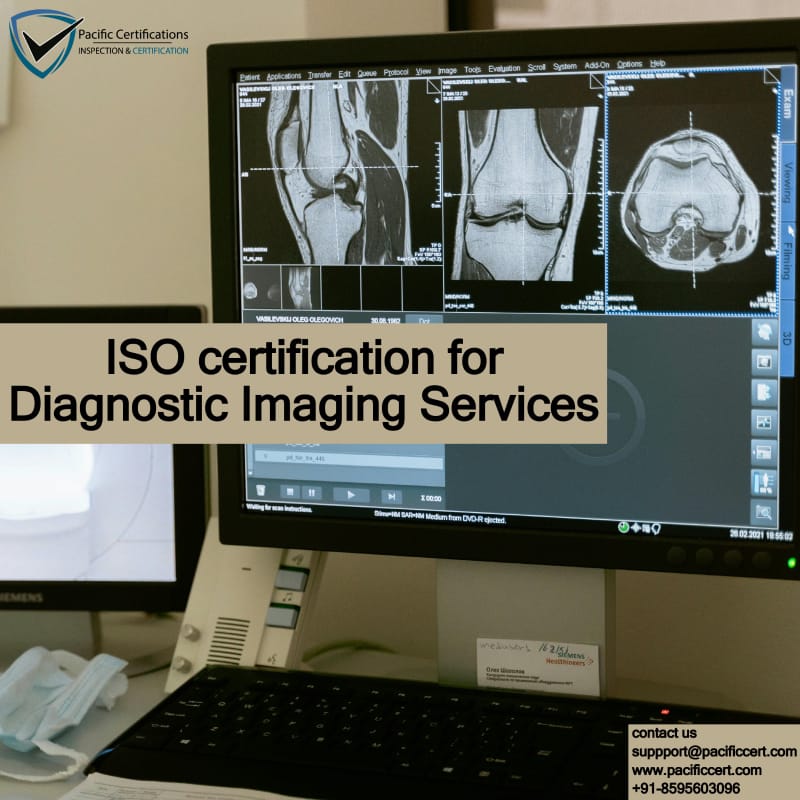
Diagnostic imaging services operate in technology‑intensive, safety‑critical environments where accurate imaging, radiation safety, and fast, reliable reporting directly affect diagnosis and treatment. They manage modalities such as X‑ray, CT, MRI, ultrasound, mammography, nuclear medicine, and interventional imaging while coordinating radiologists, technologists, referring clinicians, PACS/RIS systems, and equipment vendors. At the same time, imaging centers must comply with radiation regulations, equipment quality‑control requirements, privacy laws for image and report data, and growing expectations for timely reporting, teleradiology, and AI‑assisted workflows in both hospital‑based and standalone facilities.
ISO certifications provide diagnostic imaging centers and radiology departments with structured management systems to standardize workflows, manage medical‑device risk, protect digital images and patient data, and demonstrate consistent quality and safety to patients, referrers, and regulators. They help organizations move from individual‑dependent practices to documented, measured, and continuously improved systems, supporting fewer errors, better uptime and throughput, stronger legal and regulatory compliance, and a more competitive position in a global imaging market that is expanding with ageing populations, chronic disease, and demand for early diagnosis. Image quality, patient safety, and operational reliability define success in diagnostic imaging services
Radiation safety, diagnostic accuracy, and patient protection define success in diagnostic imaging services.
Quick Summary
ISO certifications provide diagnostic imaging services with internationally recognized frameworks to manage service quality through ISO 9001, medical device quality through ISO 13485, occupational health and safety through ISO 45001, patient information security through ISO/IEC 27001, environmental management through ISO 14001, risk management through ISO 31000, and business continuity through ISO 22301.
For more information on how we can assist your diagnostic imaging services business with ISO certifications, contact us at [email protected].
Applicable ISO Standards for Diagnostic Imaging Services Businesses
Below are the most relevant ISO standards applicable to hospital radiology departments, independent diagnostic imaging centers, mobile imaging services, and specialty imaging clinics:
ISO 9001: Quality Management Systems (QMS)
ISO 9001 ensures diagnostic imaging service operations deliver consistent, reliable diagnostic quality through documented procedures for patient scheduling and preparation, imaging protocol selection and optimization, radiation dose management, image acquisition and quality control, radiologist interpretation and reporting, critical finding communication, and quality improvement programs addressing diagnostic accuracy, patient safety, and service timeliness supporting accreditation standards and competitive excellence in diagnostic imaging markets projected to reach $932.27 billion by coming years.
ISO 13485:2016 - Medical Devices - Quality Management Systems
ISO 13485 is critical for diagnostic imaging services managing complex medical imaging equipment including X-ray systems, CT scanners, MRI systems, ultrasound machines, mammography units, and fluoroscopy systems requiring systematic quality management through procurement qualification from certified manufacturers, receiving inspection verifying specifications, preventive maintenance schedules preventing equipment failures, quality assurance testing with daily, weekly, and annual calibration protocols maintaining diagnostic accuracy and radiation dose precision, equipment performance monitoring, and traceability.
ISO 15189:2012 - Medical Laboratories - Requirements for Quality and Competence
Medical Laboratories can be applied to diagnostic imaging services where imaging operations have lab‑like elements such as quality‑control testing, contrast agent handling, and structured validation and calibration of measuring functions. It combines quality management with technical competence, requiring validated methods, equipment calibration, qualified staff, and robust quality control and traceability, supporting patient safety and accuracy in quantitative imaging and interventional procedures.
ISO 27001:2022 - Information Security Management
ISO/IEC 27001 addresses critical information security risks in diagnostic imaging service operations including unauthorized access to sensitive patient diagnostic images in PACS systems, radiology reports containing findings and diagnoses, patient health information, personal information, and clinical data requiring protection under PIPEDA regulations, cyber attacks targeting PACS with valuable diagnostic imaging data, improper disclosure of diagnostic images to unauthorized third parties, and DICOM de-identification failures exposing patient identifiers in research databases.
ISO 31000:2018 – Risk Management
ISO 31000 provides diagnostic imaging services with structured approaches to identify, assess, and mitigate clinical and operational risks including radiation overexposure from equipment malfunction or protocol errors, diagnostic errors from image quality issues or radiologist interpretation variability, contrast agent adverse reactions ranging from mild nausea to life-threatening anaphylaxis affecting 3-15% of procedures, patient positioning injuries, wrong patient or wrong site imaging, equipment failures disrupting essential diagnostic services, and PACS cybersecurity breaches requiring systematic risk treatment supporting patient safety and diagnostic reliability.
Click here to find out more applicable standards to your industry
What are the Requirements of ISO Certifications for Diagnostic Imaging Services?
Diagnostic imaging services seeking ISO certification must establish documented policies, procedures, and records aligned with selected standards. Key requirements include:
ISO 9001:2015 – Quality Management Systems
Define and document core processes for referral handling, patient scheduling, preparation, imaging, reporting, and result communication.
Set clear quality objectives related to image quality, reporting times, patient satisfaction, and incident reduction.
Control clinical and administrative documents and records to ensure consistency, traceability, and version control.
Monitor performance using KPIs, internal audits, incident and complaint data, and regular management reviews.
Record non‑conformities, errors, and complaints and implement corrective and preventive actions.
ISO 13485:2016 – Medical Devices QMS
Define all imaging device‑related activities under organizational responsibility (installation, maintenance, servicing, software configuration, accessories).
Establish documented, validated processes for acceptance testing, preventive maintenance, calibration, and device decommissioning.
Maintain traceability of devices and critical components where required by regulation and risk.
Control suppliers and service providers that affect device performance and safety.
Collect feedback and complaints related to imaging equipment performance and act through risk‑based CAPA.
ISO 15189 / ISO/IEC 17025 – Laboratory Quality and Competence (where applicable)
Define the scope of testing and calibration activities related to imaging quality control and dosimetry.
Document SOPs for QC tests, phantom measurements, and calibrations and validate or verify methods.
Maintain calibrated, well‑maintained equipment with traceable records.
Implement internal quality control and, where applicable, participate in external proficiency or comparison schemes.
Define competence requirements for technical staff and keep training and competency records.
ISO/IEC 27001:2022 – Information Security
Identify key information assets (PACS, RIS, EMR integrations, image archives) and related security risks.
Establish role‑based access controls and strong authentication for imaging systems and data.
Implement technical measures such as secure configurations, backups, encryption where appropriate, and network protection.
Define procedures to detect, report, and respond to cyber and information security incidents.
Train staff regularly on secure handling of imaging data and login credentials.
ISO 45001:2018 – Occupational Health & Safety
Identify major workplace hazards including radiation exposure, magnetic fields, chemical and contrast risks, manual handling, and slip/trip hazards.
Assess risks and define controls such as shielding, exposure monitoring, safe‑work instructions, PPE, and training.
Involve staff in reporting hazards, near‑misses, and incidents and in safety meetings.
Provide targeted safety training for different modalities and roles.
Monitor safety performance and implement improvements based on incident trends.
ISO 14001:2015 – Environmental Management
Identify significant environmental aspects such as energy consumption, chemical and contrast waste, and cooling or HVAC impacts.
Set environmental objectives and targets for resource efficiency and safe waste management.
Implement procedures for segregation, storage, and disposal of chemical and medical waste.
Control chemical storage and maintain utilities and equipment to prevent leaks and unnecessary consumption.
Track environmental data and verify compliance with environmental and waste regulations.
Tip: Begin your ISO implementation by documenting how referrals are processed, how imaging protocols and QC are managed, how equipment maintenance and downtime are handled, how images and reports are stored and shared, and how safety and environmental issues are currently addressed, then map these existing practices to ISO requirements to build a certification‑ready system that reflects real imaging workflows.
For more information on how we can assist your diagnostic imaging services business with ISO certifications, contact us at [email protected].
What are the Benefits of ISO Certifications for Diagnostic Imaging Services?
ISO certifications deliver substantial clinical and operational advantages for diagnostic imaging services, creating systematic frameworks that strengthen patient safety, image quality, staff protection, and organizational performance. Key generic benefits include:
Improves overall consistency and reliability of imaging workflows and reporting across modalities, locations, and shifts.
Reduces technical and process errors by making work systematic, documented, and supported by quality control.
Increases patient and referring‑physician trust in image quality, reporting accuracy, and data protection.
Strengthens compliance with medical‑device, radiation‑safety, health and safety, environmental, and data‑protection regulations.
Enhances reputation with hospitals, clinicians, payers, and regulators, supporting contracts, network participation, and teleradiology partnerships.
Supports smoother audits and inspections through clear documentation, traceability, and performance evidence.
Provides management with better data for decisions on capacity planning, technology investment, maintenance, and process improvements.
The global diagnostic imaging market is projected to grow to approximately USD 32.90 billion by 2030, advancing at a CAGR of around 4.4% from 2025 to 2030 as more patients require early and accurate diagnosis of chronic and age‑related diseases. Other estimates place the market at roughly USD 20.34 billion in 2022 with growth to about USD 34.04 billion by 2030 at a CAGR of 6.6%, driven by rising chronic disease burden, increased healthcare spending, and rapid technological advances such as AI‑assisted imaging, 3‑D and functional imaging, and remote image interpretation. Hospitals remain the largest end‑use segment, while Asia‑Pacific is expected to record the fastest growth due to a large ageing population, expanding access to healthcare, and strong demand for advanced imaging devices. As competition and expectations increase, diagnostic imaging providers worldwide are turning to ISO‑based management systems to demonstrate quality, safety, and data security, differentiate their services, and support integration into larger healthcare networks and value‑based care models.
How Pacific Certifications Can Help?
Pacific Certifications, accredited by ABIS, acts as an independent certification body for diagnostic imaging services businesses by conducting impartial audits against applicable ISO standards. Our role is to objectively assess whether documented management systems and diagnostic imaging operational practices conform to international ISO requirements, based strictly on verifiable evidence and operational records.
We support diagnostic imaging service providers through:
Independent certification audits conducted in accordance with ISO/IEC 17021
Practical assessment of real diagnostic imaging operations, equipment quality assurance programs, radiation safety controls, PACS security practices, contrast agent safety protocols, and clinical quality management
Clear audit reporting reflecting conformity status and certification decisions
Internationally recognized ISO certification upon successful compliance providing competitive differentiation and quality validation
Surveillance and recertification audits to maintain certification validity
Objective evaluation of management systems across radiology services, equipment management, and imaging operations
Contact us
If you need support with ISO certification for your diagnostic imaging services business, contact us at [email protected] or +91-8595603096.
Author: Ashish
Read more: Pacific Blogs