Introduction
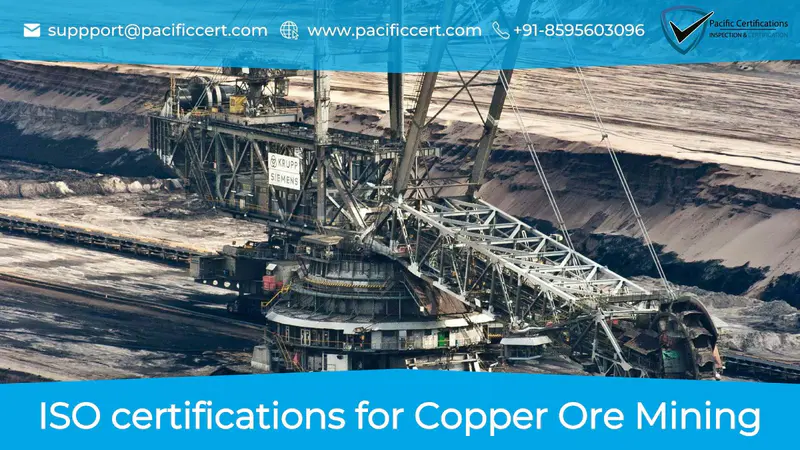
Copper ore mining operations function in technically demanding environments where companies extract copper sulfide and oxide ores through open-pit and underground mining, ore crushing and grinding, flotation and leaching beneficiation, smelting and refining, and concentrate transportation serving electric vehicle manufacturers, renewable energy infrastructure, electronics industries, and construction sectors worldwide. These businesses face critical challenges including protecting workers from underground hazards, heavy equipment accidents, and exposure to sulfuric acid and copper dust, managing significant environmental impacts from tailings facilities, acid mine drainage, and water consumption, maintaining ore quality and copper recovery rates meeting refinery specifications, and operating in remote locations with complex logistics and community engagement requirements.
ISO certifications are essential for copper ore mining because they provide systematic frameworks ensuring worker safety, environmental stewardship, product quality, and operational efficiency—requirements increasingly demanded by EV battery manufacturers, renewable energy developers, regulatory authorities, investors prioritizing ESG performance, and communities in copper-producing regions. Mining operations encompass geological exploration and resource assessment establishing ore body characteristics and mine planning, mine development including infrastructure and waste management facilities, ore extraction through drilling, blasting, and material handling, mineral processing including crushing, grinding, flotation or SX-EW, and environmental management covering water treatment, tailings stability monitoring, and progressive rehabilitation. The industry faces mounting pressures from mine safety regulators enforcing strict health standards, environmental agencies requiring ISO 14001 certification for permits, responsible sourcing initiatives like Copper Mark requiring environmental and social performance verification, and financial institutions demanding ESG compliance for copper project financing supporting energy transition.
In copper ore mining, systematic safety and environmental management determine operational sustainability and market access.
Quick Summary
ISO certifications provide copper ore mining with internationally recognized frameworks to manage service quality through ISO 9001, environmental impact through ISO 14001, occupational safety through ISO 45001, energy efficiency through ISO 50001, water management through ISO 14046, and risk management through ISO 31000.
For more information on how we can assist your copper ore mining business with ISO certifications, contact us at support@pacificcert.com.
Applicable ISO Standards for Copper Ore Mining Businesses
Below are the most relevant ISO standards applicable to copper sulfide mining operations, copper oxide mining contractors, flotation processing facilities, and integrated mining and smelting companies:
ISO 9001:2015 (Quality Management Systems)
ISO 9001 enables copper ore mining operations to standardize extraction processes, beneficiation procedures, quality controls, and product specifications ensuring consistent copper grade typically 20-30% Cu in concentrates meeting smelter requirements and penalty thresholds for impurities. This standard helps organizations demonstrate professional competency required for smelter supply chain qualification, improve operational efficiency, enhance customer satisfaction with consistent concentrate quality, and reduce financial penalties from off-specification shipments.
ISO 14001:2015 (Environmental Management Systems)
ISO 14001 addresses environmental impacts unique to copper mining including tailings facility stability and potential failures, acid mine drainage from sulfide ore oxidation, water consumption in flotation and SX-EW processing, sulfur dioxide emissions from smelting, habitat destruction from open-pit expansion, and long-term site rehabilitation obligations. With environmental agencies requiring ISO 14001 for mining permits and responsible sourcing initiatives like Copper Mark demanding environmental verification, this standard helps mining companies prevent pollution incidents, demonstrate environmental stewardship, and maintain social license in mining communities.
ISO 45001:2018 (Occupational Health and Safety Management Systems)
ISO 45001 is critical for copper ore mining operations addressing severe safety risks including underground ground falls, equipment accidents, acid exposure from SX-EW operations, copper dust inhalation, confined space entry hazards in processing vessels, and blasting operations through systematic hazard identification and control implementation. With proper implementation reducing workplace accidents by 40-90% and preventing mining fatalities, this standard is essential for regulatory compliance with occupational safety authorities, maintaining operational licenses, and protecting workforce health in high-risk extraction and processing environments.
ISO 50001:2018 (Energy Management Systems)
ISO 50001 is essential for copper mining operations managing significant energy consumption from grinding mills, flotation circuits, SX-EW electrowinning, smelting furnaces, and pumping systems through systematic energy monitoring and optimization programs. This standard helps mining companies reduce energy costs representing major operational expenses especially in energy-intensive grinding and smelting, lower carbon emissions supporting EV manufacturer decarbonization commitments, and improve energy performance through equipment efficiency upgrades and renewable energy integration.
ISO 14046:2014 (Water Footprint)
ISO 14046 provides frameworks for assessing and managing water consumption in copper mining and processing operations, particularly critical for flotation and SX-EW processes requiring significant water volumes. This standard helps mining companies optimize water usage, reduce environmental impacts on local water resources, and demonstrate responsible water stewardship to communities and regulators in water-scarce copper-producing regions.
Click here to find out more applicable standards to your industry
What are the Requirements of ISO Certifications for Copper Ore Mining Businesses?
Copper ore mining operators seeking ISO certification must establish and maintain documented policies, procedures, and records aligned with the selected ISO standards. Key requirements include the following:
ISO 45001:2018 – Occupational Health and Safety Management Systems
Establish safety policy with measurable objectives for zero fatalities and injury frequency reduction targets
Conduct hazard identification covering underground ground stability, equipment collisions, acid exposure, copper dust inhalation, and confined spaces
Implement hierarchical controls including ground monitoring, collision avoidance systems, acid containment, dust suppression, and respiratory protection
Define competency requirements for underground mining, equipment operation, acid handling, blasting certification, and emergency response
Maintain health surveillance monitoring copper dust and acid exposure with regular medical examinations and biological monitoring
Conduct incident investigations with root cause analysis, corrective actions, and lessons learned across operations
ISO 14001:2015 – Environmental Management Systems
Conduct impact assessments identifying tailings stability, acid mine drainage, water consumption, smelter emissions, and habitat destruction
Establish environmental objectives for tailings safety, acid drainage neutralization, water recycling rates, emission reduction, and rehabilitation
Implement operational controls including tailings monitoring, acid drainage treatment, water recycling systems, emission controls, and biodiversity protection
Define waste procedures for tailings management, waste rock acid generation testing, flotation reagent handling, and scrap recycling
Maintain monitoring programs for water quality, acid drainage indicators, air quality, noise levels, and biodiversity metrics
Conduct compliance audits ensuring adherence to permits, discharge limits, emission standards, and closure requirements
ISO 9001:2015 – Quality Management Systems
Establish quality policy defining commitment to copper grade consistency, customer satisfaction, and recovery efficiency objectives
Document standardized procedures for drilling, blasting, ore extraction, grinding, flotation, concentrate filtering, and quality checkpoints
Implement quality controls including ore assaying, grade control, flotation recovery monitoring, concentrate analysis, and impurity testing
Define calibration programs for analytical instruments, mining equipment, processing machinery, and assay laboratory equipment
Maintain operational documentation including mine plans, metallurgical balances, certificates of analysis, and customer feedback
Conduct management reviews assessing production metrics, copper recovery rates, concentrate quality, and improvement initiatives
ISO 50001:2018 – Energy Management Systems
Establish energy policy with measurable objectives for electricity and fuel consumption reduction per ton of copper
Conduct baseline assessments identifying diesel consumption, grinding mill energy, flotation power, electrowinning electricity, and smelting energy
Implement performance indicators measuring energy per ton of ore processed, grinding efficiency, and copper production energy intensity
Define operational controls including mill load optimization, flotation circuit efficiency, electrowinning current efficiency, and waste heat recovery
Maintain energy monitoring with metering for major equipment, processing circuits, and energy management data analysis
Conduct energy audits evaluating grinding efficiency, processing optimization, smelter heat recovery, and renewable energy integration
ISO 31000:2018 – Risk Management
Establish risk frameworks identifying underground collapses, tailings failures, acid spills, equipment breakdowns, and copper price volatility
Conduct risk assessments covering operational hazards, geotechnical risks, environmental scenarios, safety incidents, and financial exposures
Implement mitigation strategies including ground monitoring, tailings instrumentation, acid containment, equipment redundancy, and price hedging
Define monitoring processes with real-time ground stability systems, tailings instrumentation, safety tracking, and compliance audits
Maintain risk registers documenting risks, assessments, treatment plans, and ownership assignments across functions
Integrate risk considerations into mine planning, tailings design, acid management, operational decisions, and expansion strategies
Tip:Prioritize your copper mining operation's critical requirements first—worker safety from underground hazards and acid exposure, environmental compliance with tailings and acid drainage management, and copper recovery efficiency for smelter specifications—then implement ISO standards systematically.
For more information on how we can assist your copper ore mining business with ISO certifications, contact us at support@pacificcert.com.
What are the Benefits of ISO Certifications for Copper Ore Mining Businesses?
ISO certifications are suitable for copper sulfide mining operations, copper oxide mining contractors, flotation processing facilities, and integrated mining and smelting companies. Implementing these standards delivers measurable operational, financial, and strategic advantages listed below:
Improved occupational health preventing workplace injuries and fatalities through proactive risk controls and monitoring
Enhanced environmental performance avoiding regulatory violations and demonstrating responsible stewardship to communities
Streamlined operations boosting throughput while reducing non-productive time and processing inefficiencies
Improved quality consistency meeting customer requirements and minimizing off-specification production penalties
Enhanced stakeholder confidence strengthening relationships with authorities, communities, and EV supply chain partners
Lower operational expenses decreasing energy use and improving cost efficiency across mining and processing
Enhanced equipment uptime extending asset lifespans and reducing unplanned downtime in critical circuits
Enhanced compliance assurance maintaining regulatory conformance and avoiding environmental violations
Stronger financial backing attracting responsible investors through verified management systems and ESG performance
Enhanced market access qualifying for premium markets and Copper Mark certification requiring responsible sourcing
The global copper mining market demonstrates robust growth, valued at USD 9.24-9.61 billion in 2024-2025 and projected to reach USD 13.93-14.34 billion in the coming years at 3.8-4.68% CAGR, driven by electric vehicle battery demand requiring significant copper, renewable energy infrastructure expansion, electrification trends, and 5G technology deployment. Regulatory requirements are intensifying globally with mine safety authorities enforcing stricter health standards, environmental agencies requiring ISO 14001 certification, responsible sourcing initiatives like Copper Mark demanding environmental and social verification, and EV manufacturers requiring sustainable copper supply chain credentials.
Copper mining operations implementing ISO-certified management systems report enhanced safety culture reducing accident rates by 40-90%, improved environmental performance preventing acid drainage and tailings incidents, optimized operational efficiency increasing recovery rates, and strengthened supply chain positioning enabling access to premium EV and renewable energy markets. ISO certification is transitioning from baseline to mandatory, with EV procurement requiring responsible sourcing verification, copper demand for electrification growing faster than traditional applications, technology adoption including automation requiring systematic frameworks, and sustainability focus driving ISO 14001 and ISO 50001 adoption as manufacturers demand low-carbon copper supply chains.
How Pacific Certifications Can Help?
Pacific Certifications, accredited by ABIS, acts as an independent certification body for copper ore mining businesses by conducting impartial audits against applicable ISO standards. Our role is to objectively assess whether documented management systems and copper mining operational practices conform to international ISO requirements, based strictly on verifiable evidence and operational records.
We support copper ore mining providers through:
Independent certification audits conducted in accordance with ISO/IEC 17021 standards ensuring objective assessment
Practical assessment of real copper mining operations including extraction sites, processing facilities, tailings dams, and safety protocols
Clear audit reporting reflecting conformity status, specific findings, observations, and certification decisions
Internationally recognized ISO certification upon successful compliance supporting regulatory approvals and customer qualification
Surveillance and recertification audits maintaining certification validity and verifying ongoing conformance with evolving standards
Contact us
If you need support with ISO certification for your copper ore mining business, contact us at support@pacificcert.com or +91-8595603096.
Author: Jas
Read more: Pacific Blogs