Introduction
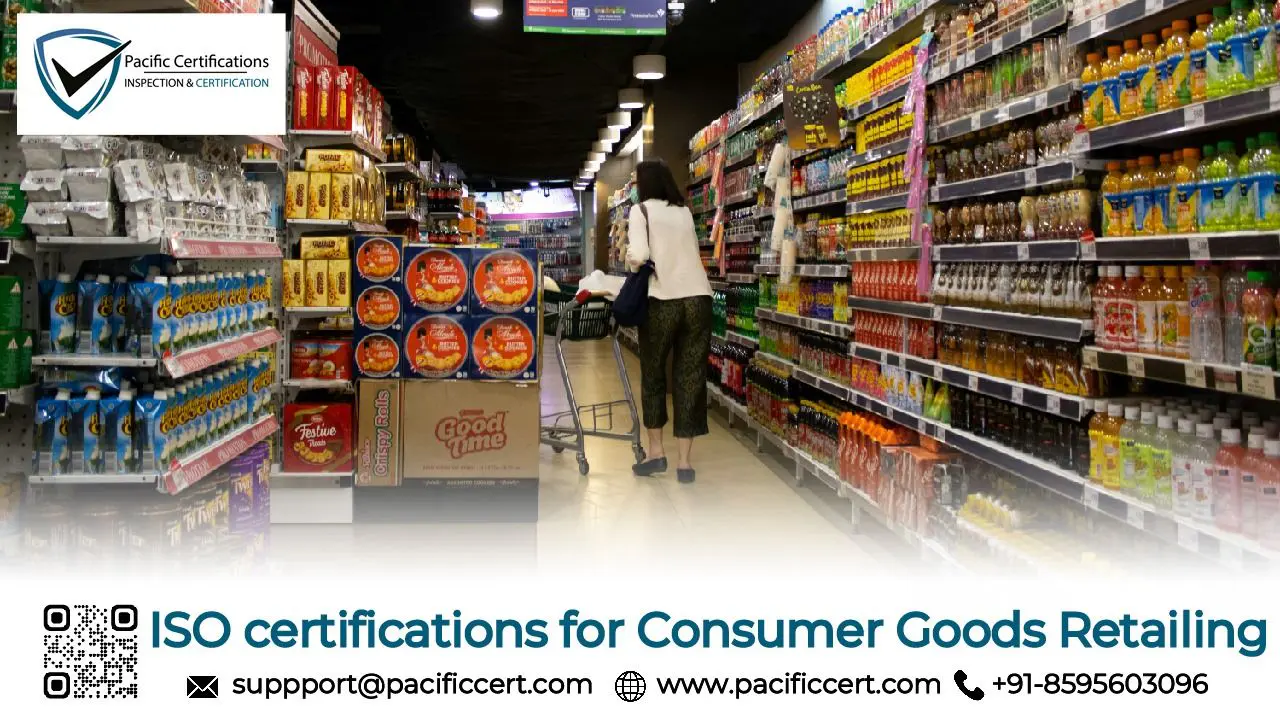
Consumer goods retailing encompasses businesses selling everyday products ranging from food and beverages to personal care items and household essentials through physical stores and e-commerce platforms. Core operations involve product sourcing, inventory management, merchandising, point-of-sale transactions, and customer service delivery. Retailers face persistent challenges including maintaining consistent product quality across global supply chains, verifying ethical sourcing claims, managing food safety for perishable items, securing customer data against cyber threats, and adapting to rapidly changing consumer preferences for sustainability and transparency.
ISO certifications are essential for consumer goods retailers because they provide internationally recognized frameworks to systematically manage quality assurance, environmental stewardship, occupational safety, and information security. Global compliance frameworks increasingly require documented evidence that retail operations control product safety risks, minimize ecological footprints, protect employee wellbeing, and ensure data integrity throughout the value chain. By aligning with ISO standards, retailers demonstrate commitment to verifiable operational excellence, build consumer trust through transparent practices, and establish risk-managed processes that satisfy both regulatory expectations and premium brand requirements in competitive markets.
In consumer goods retailing, confidence is earned every transaction and robust systems are how you guarantee that confidence endures.
Quick Summary
ISO certifications provide consumer goods retailing businesses with internationally recognized frameworks to manage product quality through ISO 9001, food safety through ISO 22000, environmental performance through ISO 14001, and information security through ISO/IEC 27001. Organizations should particularly prioritize supply chain traceability and sustainable sourcing verification as these directly influence consumer purchasing decisions and retailer credibility in international markets.
For more information on how we can assist your consumer goods retailing business with ISO certifications, contact us at support@pacificcert.com.
Applicable ISO Standards for Consumer Goods Retailing Businesses
Below are the most relevant ISO standards applicable to grocery retailers, specialty goods stores, apparel and footwear chains, and multi-category merchandise providers:
ISO 9001: Quality Management Systems
Consistent product quality forms the cornerstone of retailer reputation in competitive consumer markets. ISO 9001:2015 establishes documented controls for verifying supplier conformity, conducting goods receipt inspections against specifications, maintaining accurate inventory records, and standardizing customer service procedures. Implementation reduces customer returns due to defects, minimizes warranty claim expenses, and strengthens positioning during retail audits conducted by major hospitality chains or property developers seeking reliable product partners.
ISO 22000: Food Safety Management Systems
Food safety represents non-negotiable priority for retailers selling perishable goods, and ISO 22000:2018 delivers comprehensive hazard prevention controls. The standard governs critical stages from validating supplier documentation and inspecting incoming perishables to maintaining precise temperature logs during storage, implementing allergen separation protocols, and ensuring end-to-end traceability from source to consumer. Adoption significantly reduces contamination risks, strengthens regulatory inspection readiness, and builds consumer confidence in product safety claims.
ISO 14001: Environmental Management Systems
Consumer goods retailing generates specific environmental impacts through energy-intensive store operations, packaging waste from product distribution, and end-of-life considerations for disposed items. ISO 14001:2015 provides systematic methods to identify these aspects, set measurable targets such as reducing energy use per square meter of retail space or increasing recycling rates for cardboard packaging, and demonstrate continual improvement. Compliance supports adherence to extended producer responsibility regulations and meets sustainability criteria specified by green building certification programs for retail spaces.
ISO 45001: Occupational Health and Safety Management Systems
Retail environments present unique safety challenges including repetitive strain from scanning operations, manual handling risks during pallet movement, slip hazards from floor maintenance, and potential security threats. ISO 45001:2018 requires comprehensive hazard identification across receiving docks, storage areas, sales floors, and checkout zones with implementation of controls like mechanical lift-assist devices, anti-fatigue matting, and scheduled security patrols. Retailers adopting this standard typically experience reduced incident rates, lower insurance premiums, and improved employee retention contributing to consistent customer service.
ISO 27001: Information Security Management Systems
Modern consumer goods retailers collect extensive sensitive data including payment card information, purchase histories, and personal details making information protection critical. ISO/IEC 27001:2022 establishes frameworks for classifying sensitive data, applying strict role-based access controls to point-of-sale systems and customer relationship platforms, and monitoring for unauthorized intrusion attempts. Certification reassures financial partners that payment card data remains secure and that e-commerce platforms maintain compliance with payment card industry standards reducing breach risks and associated reputational damage.
Click here to find out more applicable standards to your industry
What are the Requirements of ISO Certifications for Consumer Goods Retailing Businesses?
Consumer goods retailing businesses seeking ISO certification must establish and maintain documented policies procedures and records aligned with the selected ISO standards. Key requirements include the following:
ISO 9001:2015 – Quality Management Systems
Define quality objectives linked to product inspection pass rates customer satisfaction scores and on-shelf availability across all product categories
Control receiving processes through documented procedures for supplier approval verification quantity validation and damage assessment
Manage nonconforming products including expired goods damaged packaging or incorrect specifications with documented segregation root cause analysis and corrective action records
Implement a supplier qualification and ongoing monitoring program for manufacturers and logistics providers to ensure consistent inbound quality and reliable service performance
Maintain calibrated measurement equipment for thermometers scales and barcode scanners with traceable calibration logs at defined intervals
Conduct scheduled internal audits and management reviews evaluating quality trends customer feedback supplier performance and corrective action effectiveness against quality targets
ISO 22000:2018 – Food Safety Management Systems
Define food safety objectives linked to temperature compliance rates allergen separation effectiveness and traceability drill success times across all storage zones
Control receiving processes through documented procedures for supplier approval verification goods inspection for temperature damage and quarantine of nonconforming items
Manage nonconforming products including temperature abused goods damaged packaging or allergen cross contact risks with documented segregation root cause analysis and corrective action records
Implement prerequisite programs covering facility cleaning schedules pest control monitoring personal hygiene requirements and equipment maintenance across all food handling areas
Maintain documented traceability systems enabling rapid identification of any affected batch from raw material supplier to final customer destination using lot and expiry data
Conduct scheduled internal verification activities including temperature log reviews sanitation efficacy testing and mock recall exercises to confirm the food safety management system operates as intended
ISO 14001:2015 – Environmental Management Systems
Identify and register all significant environmental aspects including refrigerant emissions from cooling systems energy consumption per square meter wastewater from dock cleaning and solid waste from expired or damaged packaging
Establish measurable environmental objectives with defined timelines such as increasing energy efficiency reducing landfill waste volume or improving fuel efficiency in delivery operations
Monitor environmental discharges against applicable international benchmarks with documented measurement records supporting continual improvement review
Implement emergency preparedness and response procedures for refrigerant leaks wastewater discharge incidents and packaging waste overflow events with drill records and follow up actions
Assess and document the environmental performance of logistics providers waste disposal contractors and energy suppliers within the broader environmental management scope
ISO/IEC 27001:2022 – Information Security Management Systems
Conduct a documented information security risk assessment covering point of sale systems customer databases inventory management platforms and supplier contract repositories
Implement access controls ensuring that sensitive data such as payment card information and personal details are accessible only on a least privilege need to know basis with documented authorization and regular access reviews
Establish incident detection response and reporting procedures covering unauthorized access to databases ransomware affecting sales systems and data exfiltration attempts targeting customer or supplier information
Define and enforce information security requirements for IT service providers cloud platform vendors and third party logistics integrators through documented contractual obligations and periodic security assessments
Monitor information security performance through internal audits security event log analysis and management review of incident trends verifying that control effectiveness remains aligned with defined security objectives
Tip: Begin ISO implementation by assembling a cross functional team that includes store managers inventory specialists loss prevention officers and IT staff to map current standard operating procedures work instructions and record keeping systems against applicable ISO clause requirements.
Looking to get ISO certified in Consumer Goods Retailing? Reach out to us at support@pacificcert.com.
What are the Benefits of ISO Certifications for Consumer Goods Retailing Businesses?
ISO certifications provide consumer goods retailing businesses with strong operational and commercial advantages including:
Stronger market access as commercial buyers and retail networks prefer ISO-certified suppliers for approved vendor lists.
Improved product quality consistency through inspection protocols, supplier checks, and handling controls that reduce returns and brand risk.
Enhanced environmental credibility with ISO 14001, supporting energy efficiency, waste control, and sustainable store operations.
Reduced workplace incidents using ISO 45001 controls for manual handling, equipment use, and store safety risks.
Lower energy costs through ISO 50001 by optimizing lighting, HVAC, and refrigeration systems.
Stronger data security with ISO/IEC 27001, protecting payment systems, inventory data, and supplier information.
Higher operational resilience with ISO 22301 planning for outages, supply disruptions, and system failures.
Easier compliance during audits and inspections, with documented systems reducing effort and improving transparency.
The global consumer goods retail market continues steady expansion driven by urbanization rising disposable incomes and increasing demand for both essential and discretionary products across developed and emerging economies. Recent analyses indicate the sector's value exceeds USD 25 trillion annually with projections suggesting continued growth through 2030 supported by changing consumer preferences for convenience personalization and sustainable consumption patterns. Digital transformation is fundamentally reshaping retail approaches with mobile payment integration artificial intelligence driven recommendation engines and seamless omnichannel experiences becoming competitive necessities rather than optional enhancements.
Over the next decade ISO certified consumer goods retailers are likely to experience measurable operational improvements including 20-30 percent reductions in quality and safety related incidents fewer customer initiated corrective action requests and stronger outcomes in supplier qualification assessments conducted by multinational corporations. Future drivers such as blockchain enabled supply chain verification for ethical sourcing real time environmental impact monitoring and escalating cybersecurity expectations for retail transaction data will further elevate the relevance of standards like ISO 14025 ISO IEC 27001 and ISO 26000. Organizations embedding quality environmental safety and information security management into certified frameworks will be better positioned to meet stringent requirements of both mature markets where retailers enforce detailed supplier standards and emerging economies where adherence to international benchmarks determines eligibility for partnerships with global brands and retail conglomerates.
How Pacific Certifications Can Help?
Pacific Certifications accredited by ABIS acts as an independent certification body for consumer goods retailing businesses by conducting impartial audits against applicable ISO standards. Our role is to objectively assess whether documented management systems and consumer goods retailing practices including quality control procedures environmental monitoring safety protocols and information security measures conform to international ISO requirements based strictly on verifiable evidence and operational records.
We support consumer goods retailing providers through:
Independent certification audits conducted in accordance with ISO IEC 17021
Practical assessment of real retail operations including goods receipt inspection inventory management store presentation customer consultation processes and environmental compliance activities
Clear audit reporting reflecting conformity status nonconformance findings and certification decisions
Internationally recognized ISO certification upon successful compliance demonstration
Surveillance and recertification audits to maintain certification validity across your certified standards
Contact us
If you need support with ISO certification for your consumer goods retailing business contact us at support@pacificcert.com or +91-8595603096.
Author: Alina
Read more: Pacific Blogs