Introduction
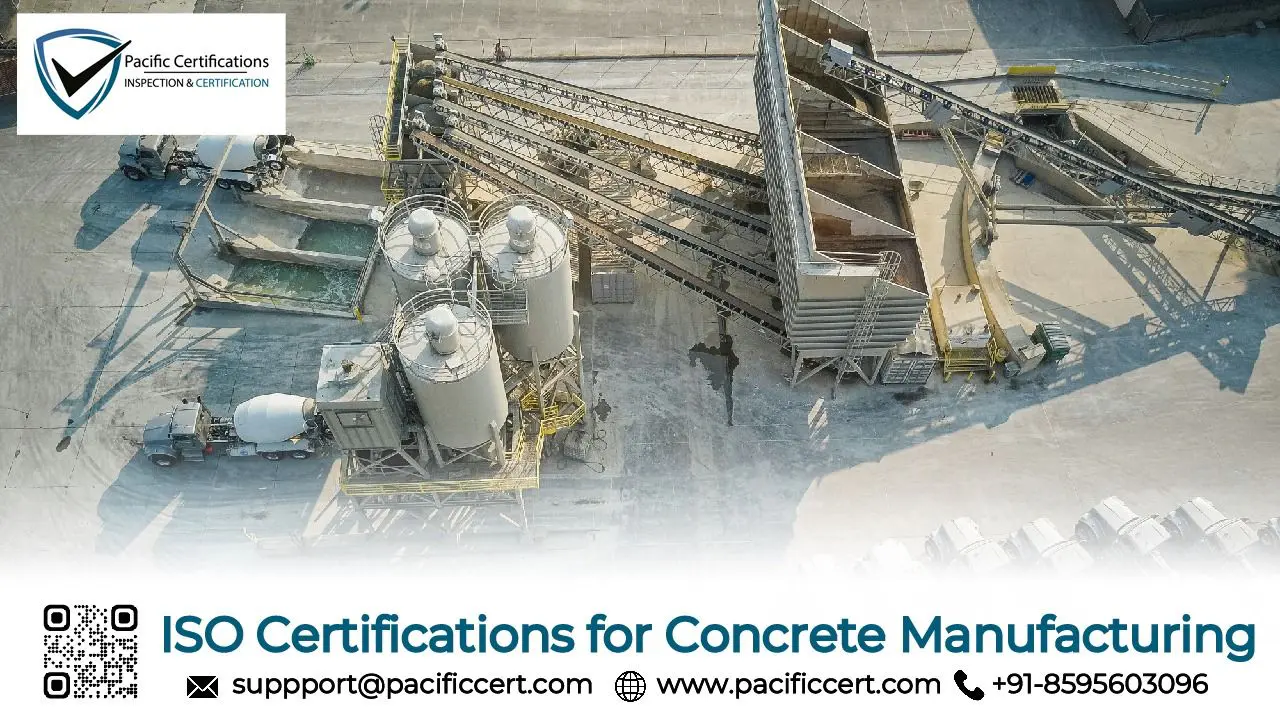
Concrete manufacturing forms the backbone of global construction and infrastructure projects. Producers manage a wide range of operations including raw material batching, mixing, ready-mix production, precast fabrication, and development of specialty concrete for structural and high-performance applications. These products are supplied to commercial construction, civil engineering, housing, and industrial projects where consistency and reliability are essential. The production environment involves heavy equipment, high-volume material handling, dust exposure, and strict mix design tolerances, meaning even small errors can affect structural performance and project safety. Because of this, customers expect every batch to be traceable, tested, and delivered within defined specifications.
As demand for concrete continues to grow, manufacturers face stronger requirements from project owners, contractors, and regulatory bodies to prove that production is controlled and compliant. Large infrastructure and commercial procurement programs increasingly require certified management systems before approving suppliers. ISO certifications for concrete manufacturing provide structured frameworks that help organizations control product quality, manage workplace hazards, reduce environmental impact, and maintain consistent documentation across all production sites. With certified systems in place, manufacturers can demonstrate reliability to clients, improve operational efficiency, and meet the compliance expectations required for participation in major construction and infrastructure projects.
In concrete manufacturing, the structure is only as strong as the system behind every batch.
Quick Summary
ISO certifications provide concrete manufacturing businesses with internationally recognized frameworks to manage production quality through ISO 9001, environmental performance through ISO 14001, worker safety through ISO 45001, energy intensity through ISO 50001, and business resilience through ISO 22301. Organizations in this sector should pay particular attention to mix design traceability, raw material control, and the environmental impact of cement-intensive production processes.
For more information on how we can assist your concrete manufacturing business with ISO certifications, contact us at support@pacificcert.com.
Applicable ISO Standards for Concrete Manufacturing Businesses
Below are the most relevant ISO standards applicable to ready-mix concrete producers, precast concrete manufacturers, specialty concrete formulators, and concrete admixture suppliers:
ISO 9001: Quality Management System
ISO 9001 establishes a process-based quality management system governing raw material inspection, mix design control, in-process testing, and delivery documentation across all production operations. Manufacturers who certify under ISO 9001 build traceable production records and structured corrective action systems. The commercial result is fewer rejected batches, stronger relationships with construction clients, and improved qualification outcomes in competitive tender processes.
ISO 14001: Environmental Management System
ISO 14001 requires manufacturers to identify significant environmental aspects, document compliance obligations, and establish operational controls that reduce impact across the full production and delivery lifecycle. For producers supplying major infrastructure projects, ISO 14001 certification increasingly functions as a baseline procurement qualification rather than a voluntary credential. Beyond regulatory risk reduction, certification demonstrates genuine environmental accountability to construction clients pursuing green building ratings and sustainability reporting obligations.
ISO 45001: Occupational Health and Safety Management System
ISO 45001 provides a structured safety management system requiring organizations to formally identify hazards, assess risk levels, and implement documented controls at every operational layer. Emergency preparedness planning, incident investigation, and systematic worker consultation are core requirements of this standard. Certification under ISO 45001 provides verifiable safety governance evidence that satisfies the due diligence requirements of project owners, insurers, and international procurement bodies.
ISO 50001: Energy Management System
ISO 50001 directs organizations to establish energy baselines, define performance indicators, and implement operational controls targeting measurable consumption reductions at the process level. For manufacturers operating multiple production sites or high-volume dispatch operations, this standard delivers tangible cost savings that directly improve production economics. It also supports the carbon reduction commitments that major construction clients increasingly require from suppliers as part of project-level sustainability governance.
ISO 26000: Guidance on Social Responsibility
ISO 26000 is relevant for manufacturers seeking to align their operations with social responsibility principles, ensuring ethical practices throughout the supply chain.
ISO 22301: Business Continuity Management
ISO 22301 requires manufacturers to identify critical production dependencies, define recovery objectives, and maintain tested continuity plans that activate quickly when disruptions occur. Certification under ISO 22301 signals to project owners and construction managers that the supplier has invested in operational resilience. It directly strengthens competitive positioning in markets where delivery reliability is a primary supplier evaluation criterion.
ISO 27001: Information Security Management Systems (ISMS)
ISO/IEC 27001 provides a risk-based information security framework covering asset classification, access control, and third-party supplier security obligations. For manufacturers supplying projects under confidentiality agreements or working with sensitive infrastructure clients, this certification demonstrates that information assets are managed with internationally recognized security controls
ISO 17025: Testing and Calibration Laboratories
Concrete manufacturers often rely on laboratory testing for quality control. ISO 17025 certification ensures the accuracy and reliability of these laboratory services.
Click here to find out more applicable standards to your industry
What are the Requirements of ISO Certifications for Concrete Manufacturing Businesses?
Concrete manufacturers seeking ISO certification must establish and maintain documented policies, procedures, and records aligned with the selected ISO standards. Key requirements include the following:
ISO 9001:2015 – Quality Management Systems Requirements
Define the quality management system scope to cover raw material receipt, batching, mixing, dispatch, and delivery confirmation across all production sites.
Establish documented mix design procedures with specified material ratios, admixture dosing parameters, and batch testing acceptance criteria for each concrete grade.
Implement structured customer complaint handling processes that capture on-site performance data and feed improvement decisions back into production controls.
Conduct scheduled internal audits against quality objectives with corrective action systems targeting root causes of batch nonconformity.
Maintain traceability records linking each delivered batch to raw material sources, calibration status, and operator competency documentation.
ISO 14001:2015 – Environmental Management Systems Requirements
Identify all significant environmental aspects of concrete production including dust emissions, mixer washout water, aggregate runoff, and returned concrete disposal.
Document compliance obligations from applicable international environmental frameworks and integrate them into procurement and supplier qualification processes.
Establish measurable environmental targets supported by monitoring systems that track performance against documented baseline data from production operations.
Implement operational controls for cement dust suppression, washout water containment, and returned concrete recycling programs aligned with sustainable production principles.
Conduct management reviews evaluating environmental performance trends and the effectiveness of existing controls across all operational sites.
ISO 45001:2018 – Occupational Health and Safety Management Systems Requirements
Conduct formal hazard identification covering silica dust exposure, mixer equipment risks, heavy vehicle movements, and manual handling across all production and dispatch areas.
Define engineering controls and personal protective equipment requirements for each identified hazard category within mixing plant and delivery operations.
Establish emergency preparedness plans addressing chemical exposure incidents, equipment entrapment, and site evacuation procedures with documented testing records.
Maintain training records, competency assessments, and near-miss investigation reports with formal closure tracking at the management review level.
ISO 50001:2018 – Energy Management Systems Requirements
Establish a documented energy policy committing to measurable improvements across mixing plant operations and aggregate processing equipment performance.
Conduct an energy review identifying significant energy uses, consumption baselines, and improvement opportunities across high-consumption production equipment.
Define energy performance indicators and production-volume-adjusted targets supported by management reporting and operational review processes.
Implement controls for batching plant equipment, mixers, and compressed air systems with documented operating parameters and scheduled performance reviews.
ISO/IEC 27001:2022 – Information Security Management Systems Requirements
Classify information assets including mix design formulations, client structural specifications, and connected batching system data by sensitivity and business criticality.
Implement access control policies for proprietary production data and connected plant management platforms with authentication controls for sensitive information environments.
Establish incident response procedures covering detection, containment, and stakeholder notification for breaches involving project specification or client data.
Conduct security assessments for third-party technology providers and cloud platform operators with access to production or customer project data.
Tip: Map each item to the relevant ISO standard clause and assign ownership to stakeholders from production, EHS, procurement, and quality functions. Starting from what already exists reduces implementation time and ensures the management system reflects actual operational reality from day one.
For more information on how we can assist your concrete manufacturing business with ISO certifications, contact us at support@pacificcert.com.
What are the Benefits of ISO Certifications for Concrete Manufacturing Businesses?
ISO certifications provide concrete manufacturing businesses with strong operational and commercial advantages. Listed below are the key benefits for ISO standards applicable to ready-mix concrete producers, precast manufacturers, specialty concrete formulators, and admixture suppliers:
Improved batch consistency and raw material traceability through ISO 9001 process controls, reducing rejection rates and supporting structured project delivery documentation.
Stronger environmental credibility with construction project owners through documented ISO 14001 performance evidence aligned with green building procurement requirements.
Reduced workplace injury rates and less production downtime through systematic hazard controls and emergency preparedness planning under ISO 45001.
Better energy cost management per cubic metre produced through ISO 50001 process-level consumption controls targeting batching and aggregate handling equipment.
Higher success rates in competitive infrastructure tenders where project owners require ISO certification as a baseline supplier qualification criterion.
Greater supply chain resilience for time-critical construction projects backed by ISO 22301 continuity plans addressing plant failures and raw material disruptions.
Enhanced protection of proprietary mix design formulations and client project data through ISO/IEC 27001 information security controls and supplier assessments.
Streamlined qualification processes for major construction and civil engineering programs where certified suppliers bypass extended pre-qualification audit requirements.
Reduced regulatory and insurance exposure through demonstrable risk management practices aligned with ISO 31000 and internationally recognized safety standards.
The global ready-mix concrete market was valued at approximately USD 815 billion in 2024 and is projected to grow at a compound annual growth rate exceeding 8% through to 2034, driven by accelerating urbanization and large-scale infrastructure investment across Asia, the Middle East, and Africa. The adjacent global cement market is on a parallel growth trajectory, projected to rise from USD 425 billion to over USD 661 billion by 2033. Digitalization is reshaping production operations through AI-driven quality control, automated batching systems, and connected plant management platforms that generate new data security and quality governance requirements. International compliance frameworks are simultaneously tightening, with green building procurement standards, infrastructure project requirements, and supply chain due diligence programs demanding documented evidence of quality management, environmental accountability, and safety governance.
As the industry moves toward lower-carbon concrete, carbon capture technologies, and wider use of supplementary cementitious materials, production control is becoming more complex. ISO-certified manufacturers are better prepared for these changes because their management systems include formal change control, performance tracking, and documented verification of product quality and environmental impact. This structured approach makes it easier to introduce new materials, adjust mix designs, and demonstrate compliance to contractors, regulators, and project owners.
How Pacific Certifications Can Help?
Pacific Certifications, accredited by ABIS, acts as an independent certification body for concrete manufacturing businesses by conducting impartial audits against applicable ISO standards. Our role is to objectively assess whether documented management systems and concrete production practices conform to international ISO requirements, based strictly on verifiable evidence and operational records.
We support concrete manufacturing providers through:
Independent certification audits conducted in accordance with ISO/IEC 17021
Practical assessment of real batching operations, safety controls, environmental management, and energy performance practices
Clear audit reporting reflecting conformity status and certification decisions across all applicable ISO standards
Internationally recognized ISO certification upon successful compliance
Surveillance and recertification audits to maintain certification validity across multi-site and multi-standard scopes
Contact Us
If you need support with ISO certification for your concrete manufacturing business, contact us at support@pacificcert.com or +91-8595603096.
Author: Alina
Read More at: Blogs by Pacific Certifications