Introduction
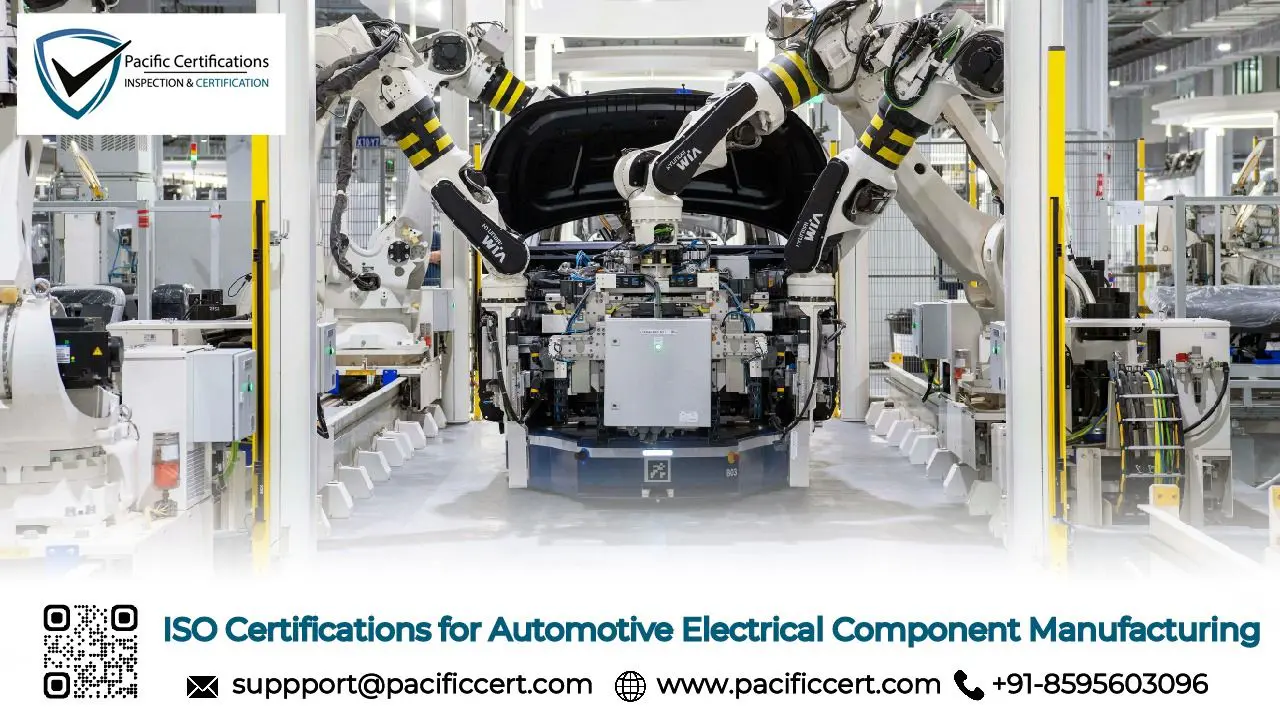
Automotive electrical component manufacturing runs under some of the strictest quality and compliance expectations in the manufacturing world. Companies in this sector produce wiring harnesses, ECUs, connectors, sensors, battery management systems, motor components, and power modules, all of which perform safety-critical functions inside modern vehicles. Production involves precise wire processing, PCB assembly, connector crimping, sealing, automated testing, and validation against automotive temperature, vibration, and electrical performance standards. Because these parts go directly into vehicles, even small defects can lead to recalls, warranty claims, or safety risks, so customers expect consistent zero-defect performance across very high production volumes.
The pressure on manufacturers is increasing as vehicles become more electronic and software-driven. Electric vehicle platforms, ADAS systems, and connected car technology require tighter traceability, stronger testing, and better protection of technical data than before. Automotive OEMs and tier-one suppliers therefore require documented management systems as a condition for supplier approval, not just as a quality improvement tool. Certification to standards such as IATF 16949, ISO 14001, ISO 45001, and ISO/IEC 27001 shows that production, safety, environmental control, and information security are managed through verified processes that can stand up to customer and third-party audits.
With certified systems in place, automotive electrical component manufacturers can qualify for OEM programs more easily, pass supplier audits with fewer findings, and maintain long-term supply relationships in a market where compliance expectations continue to rise. In practice, certification has become part of the basic infrastructure needed to compete in the global automotive supply chain, especially for companies supplying electric vehicle, electronics, and safety-related components.
In automotive electrical manufacturing, a single component failure anywhere in the vehicle is a quality failure everywhere in the supply chain.
Quick Summary
ISO certifications provide automotive electrical component manufacturing businesses with internationally recognized frameworks to manage production quality and OEM compliance through IATF 16949, environmental performance through ISO 14001, worker health and safety through ISO 45001, information security through ISO/IEC 27001, energy consumption through ISO 50001, and business continuity through ISO 22301. These standards collectively address the most critical risk dimensions in automotive electrical manufacturing, zero-defect production, functional safety compliance, hazardous substance management, cybersecurity in connected component development, and supply chain resilience.
For more information on how we can assist your automotive electrical component manufacturing business with ISO certifications, contact us at support@pacificcert.com.
Applicable ISO Standards for Automotive Electrical Component Manufacturing Businesses
Below are the most relevant ISO standards applicable to wiring harness manufacturers, ECU and power electronics producers, connector and terminal assembly fabricators, and automotive battery management system manufacturers:
ISO 9001:2015 – Quality Management System (QMS)
ISO 9001 is the most widely recognized standard for quality management. It ensures that manufacturers establish efficient processes to meet customer expectations and regulatory requirements. In the automotive sector, it promotes consistency and continuous improvement, making it a core requirement for most component suppliers.
IATF 16949 – Automotive Quality Management System
IATF 16949:2016 is developed by the International Automotive Task Force and built upon the structural foundation of ISO 9001:2015, it extends quality management requirements with automotive-specific disciplines: product approval processes, control plans, measurement system analysis, statistical process control, production part approval, and customer-specific requirements integration. For automotive electrical component manufacturers, these requirements translate directly into documented controls over wire gauge consistency, crimp force monitoring, connector seating verification, ECU functional test coverage, and wiring harness continuity testing.
ISO 14001:2015 – Environmental Management System (EMS)
ISO 14001:2015 provides manufacturers with a structured system for identifying environmental aspects, setting measurable reduction targets, and demonstrating continuous improvement across successive certification cycles. Beyond supporting alignment with internationally recognized restricted substance frameworks governing automotive component materials, ISO 14001 certification is routinely required by OEM supply chain qualification programs as evidence that Tier 1 and Tier 2 suppliers manage environmental impact systematically rather than reactively.
ISO 45001:2018 – Occupational Health and Safety Management
ISO 45001:2018 requires comprehensive hazard identification across all production areas, proportionate layered controls, and worker participation structures that drive proactive hazard reporting rather than reactive incident management. For manufacturers operating multi-shift, high-volume production facilities with significant temporary or contract workforce proportions, the standard's requirements for workforce engagement, competency verification, and safety communication are particularly valuable in sustaining consistent safety performance across shift changes and workforce transitions.
ISO 27001: Information Security Management Systems (ISMS)
ISO/IEC 27001:2022 establishes a comprehensive information security management system covering risk assessment, access control architecture, incident response planning, and third-party security requirements. For automotive electrical component manufacturers developing ECUs, battery management systems, or ADAS-related electronics, the protection of firmware and software intellectual property is equally critical. As vehicle cybersecurity frameworks and connected component development processes become more tightly governed by international automotive security standards, ISO/IEC 27001 certification provides manufacturers with a recognized and auditable foundation for demonstrating information security capability to OEM customers.
ISO 50001: Energy Management Systems
ISO 50001:2018 provides a structured approach to establishing energy baselines, identifying significant energy uses, setting improvement targets, and implementing operational controls that reduce energy waste systematically. Manufacturers implementing this standard frequently identify efficiency opportunities in moulding machine heat management, reflow oven profiling, compressed air leak reduction, and test equipment standby management.
Click here to find out more applicable standards to your industry
What are the Requirements of ISO Certifications for Automotive Electrical Component Manufacturing Businesses?
Automotive electrical component manufacturing businesses seeking ISO certification must establish and maintain documented policies, procedures, and records aligned with the selected ISO standards. Key requirements include the following:
IATF 16949:2016 – Automotive Quality Management Systems
Define controlled product realization processes covering design, development, PPAP, control plans, and customer-specific requirements for each component line.
Maintain process controls using PFMEA, control plans, MSA, and SPC for critical parameters such as crimp force, wire size, connector fit, and solder quality.
Perform regular product, process, and layered audits with documented findings and corrective actions.
Control nonconforming product through quarantine, disposition approval, customer notification, and root-cause corrective action.
Monitor and develop suppliers through qualification, incoming inspection, and performance tracking across the supply chain.
Maintain contingency plans for equipment failure, tooling issues, and supply disruptions affecting OEM delivery commitments.
ISO 14001:2015 – Environmental Management Systems
Identify environmental aspects including solvents, PCB chemicals, insulation materials, packaging waste, and scrap wire.
Set measurable environmental targets such as reducing chemical use, improving scrap recovery, and lowering waste volumes.
Monitor emissions, waste, and discharge levels with recorded data reviewed in management meetings.
Control restricted substances through supplier declarations, material compliance checks, and documentation.
Maintain emergency response procedures for spills, hazardous waste incidents, and environmental releases.
ISO 45001:2018 – Occupational Health and Safety
Perform risk assessments for wire processing, connector assembly, soldering, potting, high-voltage testing, and material handling.
Apply engineering and procedural controls for machinery hazards, chemical exposure, and electrical risks.
Maintain tested emergency plans for fires, chemical exposure, electrical accidents, and equipment entrapment.
Track safety performance using incident data, near-miss reports, ergonomic reviews, and exposure monitoring.
Involve workers in safety reviews, hazard reporting, and improvement actions.
ISO/IEC 27001:2022 – Information Security Management
Identify risks to design files, OEM data, firmware, ERP/PLM systems, and supplier portals.
Apply role-based access control with authorization records and periodic reviews.
Maintain incident response procedures for cyberattacks, data loss, or unauthorized access.
Define security requirements for subcontractors, vendors, and service providers.
Review security performance through audits, log analysis, testing, and management review.
ISO 50001:2018 – Energy Management Systems
Establish energy baselines for major equipment such as moulding machines, soldering lines, ovens, test systems, and compressors.
Define energy indicators and set improvement targets for each major process.
Control high-consumption equipment through optimized scheduling, maintenance, and monitoring.
Include energy efficiency in decisions for new machinery, upgrades, and facility expansion.
Review energy performance regularly and document improvement actions in management reviews.
Tip:Before beginning formal ISO and IATF implementation, assemble a cross-functional working group that brings together quality engineering, process engineering, environmental, health and safety, IT security, and production management personnel to map your current control plans, work instructions, and records against the applicable standard requirements. ness while reducing preparation rework across departments.
For more information on how we can assist your automotive electrical component manufacturing business with ISO certifications, contact us at support@pacificcert.com.
What are the Benefits of ISO Certifications for Automotive Electrical Component Manufacturing Businesses?
ISO certifications provide automotive electrical component manufacturing businesses with strong operational and commercial advantages; listed below are the key benefits for the ISO standards applicable to manufacturers:
Lower defect escape rates with automotive-grade controls for crimp force, connector fit, ECU testing, and wiring harness continuity.
Improved OEM supplier qualification through IATF 16949, which is required for supplying most global vehicle manufacturers.
Stronger credibility with Tier-1 and OEM buyers who use certification status as a key supplier selection factor.
Better environmental compliance with ISO 14001 controls covering restricted substances, chemical use, and production waste.
Fewer workplace incidents using ISO 45001 safety systems for assembly lines, potting operations, and high-voltage testing areas.
Stronger data protection with ISO/IEC 27001, securing OEM designs, firmware, and confidential component specifications.
Reduced energy costs through ISO 50001 improvements in moulding, soldering, wire processing, and curing equipment.
Higher delivery reliability with ISO 22301 continuity planning, helping avoid OEM line-down risks in just-in-time supply chains.
The global automotive electrical components market is projected to reach approximately USD 227.4 billion by 2033, growing at a CAGR of 6.2% over the forecast period. The broader automotive electrical products segment, which includes power distribution, charging, and energy management hardware, was valued at USD 312 billion in 2024 and is forecast to reach USD 621.67 billion by 2034, advancing at a CAGR of 9%. This growth is driven primarily by the accelerating transition to battery electric vehicles, which carry substantially higher electrical component content per vehicle than internal combustion platform equivalents, and by the rapid proliferation of ADAS systems, digital cockpit electronics, and vehicle-to-everything connectivity features that demand increasingly sophisticated electrical architectures.
Asia-Pacific holds the largest market share is expected to grow at a CAGR of 7.1% through 2033, fueled by the concentration of global EV production and the scale of OEM supplier networks in the region. At the same time, supply chain resilience has become a strategic priority for automotive manufacturers following the component disruptions of recent years, with OEMs embedding business continuity and risk management requirements into supplier qualification frameworks at a depth that directly rewards ISO 22301-certified suppliers.
New requirements are also emerging beyond traditional quality control. Cybersecurity is becoming a major focus as vehicles rely more on connected electronics and software-driven systems, pushing suppliers toward ISO/IEC 27001 to protect design data, firmware, and production networks. At the same time, global automakers are tightening sustainability expectations, with Scope 3 emission reporting now reaching down to component suppliers. ISO 14001 and ISO 50001 help manufacturers track environmental impact and energy use in a way that fits these new requirements.
How Pacific Certifications Can Help?
Pacific Certifications, accredited by ABIS, acts as an independent certification body for automotive electrical component manufacturing businesses by conducting impartial audits against applicable ISO standards. Our role is to objectively assess whether documented management systems and automotive manufacturing practices, including production quality controls, environmental management programs, occupational safety systems, information security frameworks, and energy management activities — conform to international ISO requirements, based strictly on verifiable evidence and operational records.
We support automotive electrical component manufacturing providers through:
Independent certification audits conducted in accordance with ISO/IEC 17021
Practical assessment of real production operations including wire processing controls, connector assembly processes, ECU functional testing, wiring harness quality verification, and environmental compliance activities
Evaluation of occupational safety and energy management controls against ISO 45001 and ISO 50001 requirements specific to automotive electrical component manufacturing environments
Clear audit reporting reflecting conformity status, nonconformance findings, and certification decisions
Internationally recognized ISO certification upon successful compliance demonstration
Surveillance and recertification audits to maintain certification validity
Contact us
If you need support with ISO certification for your automotive electrical component manufacturing business, contact us at support@pacificcert.com or +91-8595603096.
Author: Ashish
Read more: Pacific Blogs