Introduction
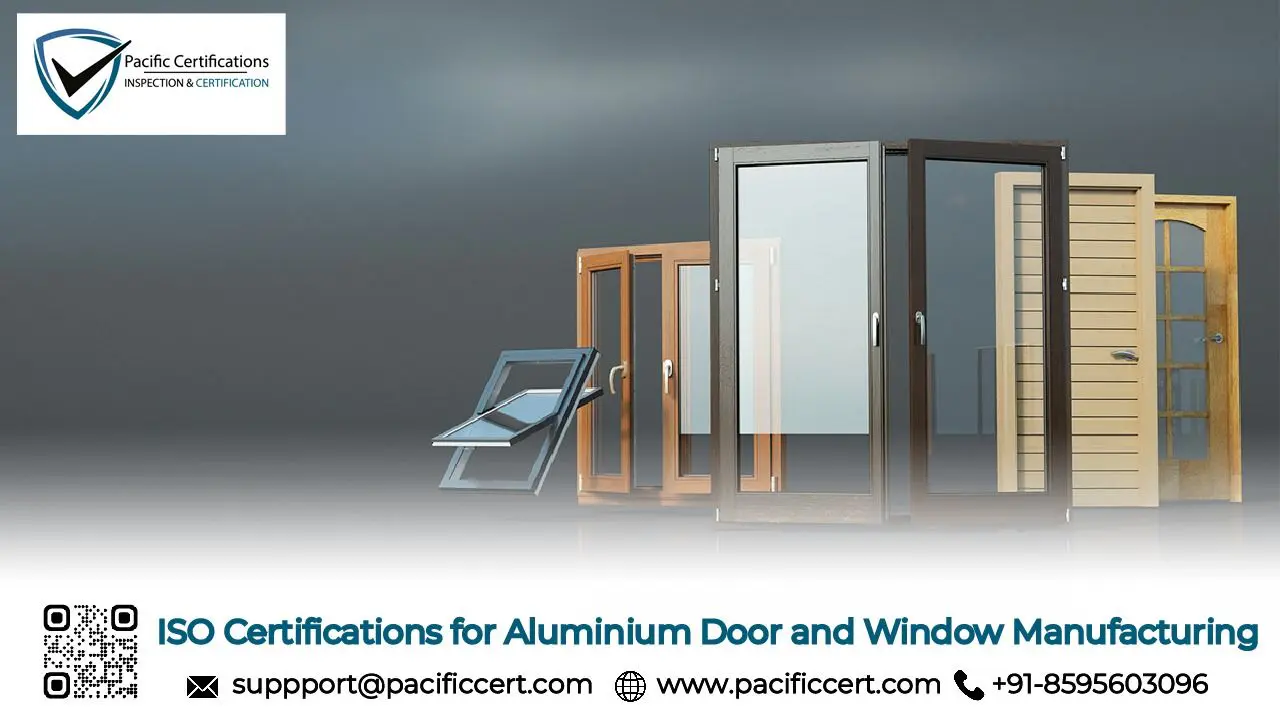
Aluminum door and window manufacturing combines precise engineering, material control, and large-scale fabrication. Companies in this industry produce many types of products such as sliding windows, casement windows, curtain wall systems, bi-fold doors, shopfronts, louvres, and thermally broken facade systems used in residential, commercial, and infrastructure projects. The work involves aluminum profile cutting and machining, thermal break installation, glass and hardware assembly, powder coating or anodizing, and performance testing for air leakage, water resistance, and wind load strength. Products are often made for specific projects, so accuracy, durability, and on-time delivery are very important. At the same time, building codes and green building programs now require proof of energy efficiency, material quality, and long-term performance, which means manufacturers must keep clear technical records and controlled production processes.
Because of these requirements, ISO certification has become very important for aluminum door and window manufacturers that want to compete in modern construction markets. Project owners, consultants, contractors, and certification programs often expect suppliers to have verified management systems before approving them for projects. Standards related to quality, environmental control, worker safety, and energy use are now part of many construction contracts, especially in international and large commercial projects. ISO standards give manufacturers a structured system to control production quality, manage environmental impact, protect workers, and improve efficiency. With certification in place, companies can show buyers and project teams that their operations are well managed, audited, and able to meet the technical and regulatory expectations of today’s construction industry.
In aluminium fenestration, performance is promised on the specification sheet and ISO-aligned systems are how you keep that promise every time.
Quick Summary
ISO certifications provide aluminum door and window manufacturing businesses with internationally recognized frameworks to manage production quality through ISO 9001, environmental performance through ISO 14001, worker health and safety through ISO 45001, energy efficiency through ISO 50001, customer satisfaction through ISO 10002, and operational continuity through ISO 22301. These standards address the critical risk dimensions of fenestration manufacturing — dimensional accuracy, surface finish consistency, chemical and waste management in anodizing and powder coating operations, thermal and acoustic performance verification, and supply chain resilience.
For more information on how we can assist your aluminum door and window manufacturing business with ISO certifications, contact us at support@pacificcert.com.
Applicable ISO Standards for Aluminum Door and Window Manufacturing Businesses
Below are the most relevant ISO standards applicable to aluminum window and door fabricators, curtain wall and facade system manufacturers, commercial shopfront and entrance system producers, and aluminum profile extrusion and surface finishing businesses:
ISO 9001 – Quality Management System (QMS)
ISO 9001:2015 establishes documented process controls over every quality-critical stage, incoming profile and glass acceptance inspection, CNC cutting and machining tolerances, thermal break insertion, hardware fitting, glazing bead seating, and finished unit testing against defined acceptance criteria. It requires systematic customer feedback capture and root cause-driven corrective action processes that address recurring defect patterns — such as surface finish inconsistencies, dimensional drift in cutting, or sealant application failures with structural rather than symptomatic responses. Aluminum fabricators certified to ISO 9001 consistently demonstrate lower rework and rejection rates, stronger performance in project quality audits
ISO 14001 – Environmental Management System (EMS)
Aluminum door and window manufacturing generates a specific environmental footprint that requires active management. Powder coating operations consume significant energy and produce chemical waste including pre-treatment chemicals and booth overspray residues. ISO 14001:2015 provides manufacturers with a structured system for identifying these environmental aspects, setting measurable reduction targets, and demonstrating continuous improvement across successive certification cycles.
ISO 45001 – Occupational Health and Safety (OH&S)
Aluminum fabrication environments combine high-speed cutting and machining equipment, chemical treatment operations, glass handling activities, high-temperature powder coating ovens, compressed air systems, and physically demanding manual assembly tasks, creating an occupational hazard profile that demands systematic management. ISO 45001 requires comprehensive hazard identification across all of these areas, proportionate layered controls, and tested emergency response plans covering chemical incidents, fire scenarios, and machinery accidents.
ISO 50001 – Energy Management System
ISO 50001:2018 provides a structured approach to establishing energy consumption baselines, identifying significant energy uses, setting measurable improvement targets, and implementing operational controls that reduce waste systematically in high-consumption processes. Manufacturers implementing this standard frequently identify efficiency opportunities in oven cycle scheduling, compressed air leak reduction, bath temperature optimization in anodizing, and CNC machine standby management.
ISO 10002 – Customer Satisfaction and Complaints Management
ISO 10002:2018 provides manufacturers with a structured framework for receiving, acknowledging, investigating, and resolving customer complaints within defined timeframes, with documented root cause analysis and process improvement outputs that prevent recurrence. For fenestration manufacturers serving high-value commercial, hospitality, or residential development projects where defect rectification costs are amplified by access and installation complexity, a certified complaint management system demonstrates the customer service discipline that project developers and main contractors value in long-term supply relationships.
ISO 22301:2019 – Business Continuity Management Systems
ISO 22301:2019 requires manufacturers to identify their most critical production and supply dependencies, define recovery time objectives aligned with project delivery exposure, and build and test continuity plans covering equipment failures, material supply disruptions, utility outages, and key supplier unavailability scenarios. For manufacturers holding multi-project portfolios on concurrent construction programs, demonstrated continuity capability directly strengthens contractor confidence and reduces the delivery risk premium that procurement teams build into sourcing decisions for fenestration packages.
Click here to find out more applicable standards to your industry
What are the Requirements of ISO Certifications for Aluminum Door and Window Manufacturing Businesses?
Aluminum door and window manufacturers seeking ISO certification must maintain documented procedures and records to control production quality, environmental impact, worker safety, and energy use. These requirements apply to profile cutting, machining, glazing, surface finishing, assembly, and installation preparation activities. Key requirements include the following.
ISO 9001:2015 – Quality Management Systems Requirements
Define quality objectives for cutting accuracy, surface finish quality, hardware fitting, glazing seal performance, and final unit testing
Control production through work instructions for cutting, machining, thermal break fitting, glazing, sealant application, and final inspection
Manage nonconforming products such as incorrect dimensions, coating defects, failed performance tests, or hardware misalignment
Approve and monitor suppliers of aluminum profiles, glass, hardware, sealants, and finishing services
Maintain inspection procedures for dimensional checks, finish quality, fitting accuracy, and performance testing
Keep calibration records for measuring tools and testing equipment
Perform internal audits at planned intervals
Conduct management reviews on quality performance, complaints, and corrective actions
ISO 14001:2015 – Environmental Management Systems Requirements
Identify environmental aspects such as chemical use, coating waste, aluminum scrap, wastewater, and energy consumption
Maintain environmental aspect register for all production and finishing activities
Set targets for scrap recycling, chemical reduction, and energy saving
Monitor wastewater, solid waste, emissions, and chemical disposal
Maintain emergency procedures for chemical spills, wastewater release, and coating fire incidents
Evaluate environmental performance of finishing subcontractors and waste contractors
Keep records of environmental monitoring and improvement actions
Review environmental performance in management meetings
ISO 45001:2018 – Occupational Health and Safety Management Systems Requirements
Identify hazards in cutting, CNC machining, anodizing, powder coating, glazing, assembly, and handling operations
Assess risks from machinery, chemicals, glass handling, compressed air, and lifting activities
Apply safety controls such as machine guards, ventilation systems, safe handling rules, and protective equipment
Maintain procedures for chemical handling, hot work, and equipment operation
Provide required personal protective equipment for all tasks
Establish emergency plans for fire, chemical burns, glass injuries, and machine accidents
Record incidents, near misses, and safety observations
Monitor noise, chemical exposure, and injury rates
Involve workers in safety meetings and hazard reporting
ISO 50001:2018 – Energy Management Systems Requirements
Establish energy baseline for coating ovens, anodizing systems, CNC machines, compressors, and HVAC
Identify major energy users in fabrication and finishing operations
Define energy performance indicators and improvement targets
Control energy use through efficient oven scheduling, leak detection, and machine standby control
Review energy efficiency when purchasing new machines or upgrading production lines
Monitor energy consumption and maintain records
Review energy performance during management meetings
Record actions taken to improve energy efficiency
Tip: Before beginning ISO implementation, assemble a cross-functional working group including production management, quality control, surface finishing supervisors, environmental compliance, health and safety, and customer service personnel to map your existing work instructions, inspection records, and process controls against the applicable ISO clause requirements.
For more information on how we can assist your aluminum door and window manufacturing business with ISO certifications, contact us at support@pacificcert.com.
What are the Benefits of ISO Certifications for Aluminum Door and Window Manufacturing Businesses?
ISO certifications give aluminum door and window manufacturers strong operational and commercial advantages. These standards help improve product quality, meet construction project requirements, control environmental impact, and maintain safe and efficient production. The benefits below apply to window and door fabricators, curtain wall manufacturers, facade system suppliers, shopfront producers, and aluminum finishing businesses.
Improved product quality consistency through controlled processes for cutting, machining, surface finishing, glazing, and final performance testing, helping reduce rework and post-installation defects
Stronger eligibility for tenders and construction projects, as contractors, consultants, and project owners often require ISO certified suppliers before approving fenestration products
Higher environmental credibility with green building programs and sustainability-focused developers who check supplier performance for chemical use, coating waste, and aluminum recycling, areas covered under ISO 14001
Fewer workplace accidents through ISO 45001 safety management covering machining risks, chemical treatment, glass handling, lifting operations, and powder coating processes
Lower energy costs through ISO 50001 improvements in coating ovens, anodizing systems, compressors, and plant utilities, helping reduce operating cost and support sustainability goals
Better customer satisfaction through structured complaint handling systems, helping resolve installation or performance issues quickly and maintain long-term contractor relationships
Stronger business continuity through ISO 22301 planning, helping manufacturers handle material delays, finishing problems, or transport issues without missing project deadlines
Easier compliance with project audits, building certification programs, and regulatory checks because ISO systems maintain proper records and procedures
Reduced administrative work when dealing with multiple contractors and project inspections, since documentation follows internationally accepted formats
How Pacific Certifications Can Help?
Pacific Certifications, accredited by ABIS, acts as an independent certification body for aluminum door and window manufacturing businesses by conducting impartial audits against applicable ISO standards. Our role is to objectively assess whether documented management systems and fenestration manufacturing practices — including production quality controls, surface finishing process management, environmental compliance activities, occupational safety programs, and energy management frameworks — conform to international ISO requirements, based strictly on verifiable evidence and operational records.
We support aluminum door and window manufacturing providers through:
Independent certification audits conducted in accordance with ISO/IEC 17021
Practical assessment of real production operations including profile cutting and machining controls, thermal break insertion, glazing and hardware assembly quality, surface finishing process management, and environmental compliance activities
Evaluation of occupational safety and energy management controls against ISO 45001 and ISO 50001 requirements specific to aluminum fabrication and surface treatment environments
Clear audit reporting reflecting conformity status, nonconformance findings, and certification decisions
Internationally recognized ISO certification upon successful compliance demonstration
Surveillance and recertification audits to maintain certification validity
Contact Us
If you need support with ISO certification for your aluminum door and window manufacturing business, contact us at support@pacificcert.com or +91-8595603096.
Author: Ashish
Read more: Pacific Blogs