Introduction
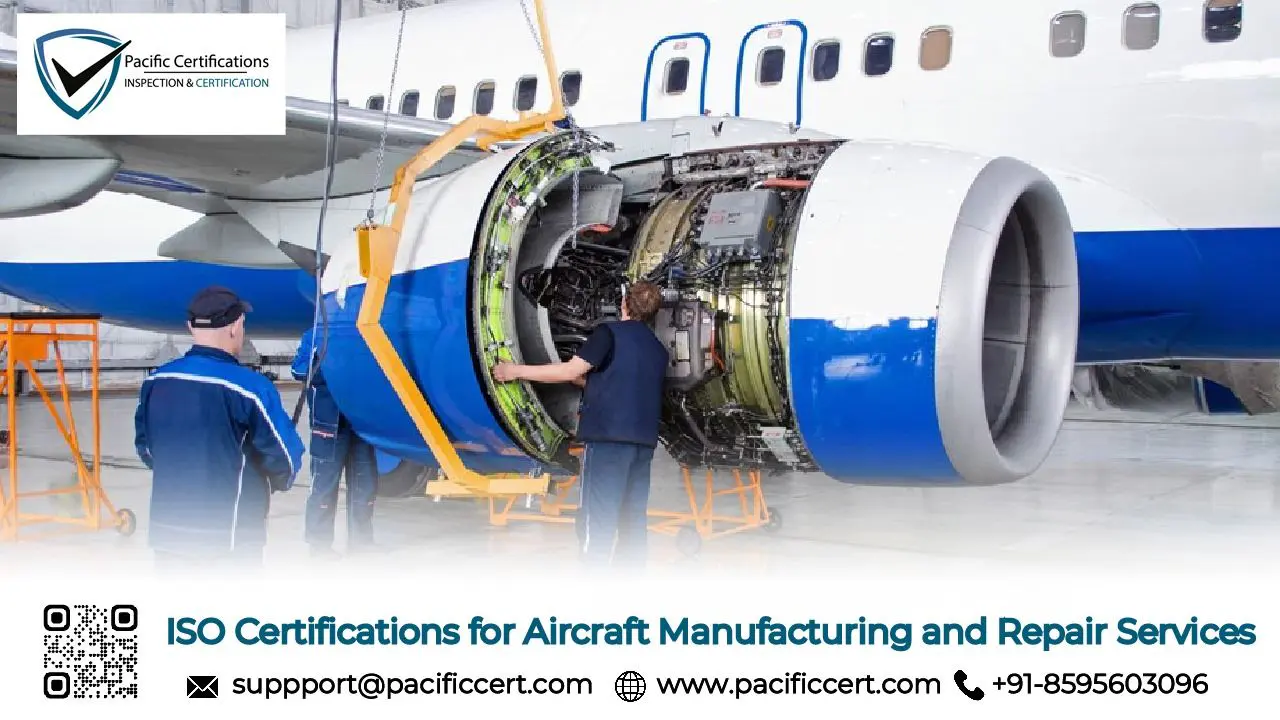
Aircraft manufacturing and repair services operate under some of the strictest quality and safety requirements in the world. Companies in this industry design and produce commercial aircraft, business jets, helicopters, military platforms, and unmanned systems, while maintenance and repair organizations inspect, service, and return these aircraft to safe operating condition. The work includes precision machining, composite and metal fabrication, avionics installation, engine assembly, system testing, surface treatment, and detailed technical documentation required by aviation authorities before any aircraft or component can be used. Maintenance and repair work adds another level of control, because every part must be traceable, every task must follow approved instructions, and every record must prove that the aircraft is safe to fly. In this industry, even a small mistake can have serious safety consequences.
Because of these strict requirements, ISO certifications and aerospace-specific standards are not optional for aircraft manufacturers and repair organizations. They are required to prove that the company can work in a controlled, reliable, and fully documented way. Aviation regulators, airlines, defense organizations, and major aircraft manufacturers expect suppliers to have certified management systems before they can participate in the aerospace supply chain. ISO standards, together with aerospace sector standards, provide the structure needed to control design, production, inspection, safety, environmental impact, and information security. With these systems in place, manufacturers and MRO providers can meet the expectations of regulators, customers, and audit bodies at the same time, which is essential for working in the global aviation industry.
In aerospace, there is no acceptable defect rate — because every component that fails in service was built or repaired by someone who thought it was good enough.
Quick Summary
ISO certifications provide aircraft manufacturing and repair businesses with internationally recognized frameworks to manage aerospace quality and safety through AS9100 and AS9110, production quality foundations through ISO 9001, environmental performance through ISO 14001, worker health and safety through ISO 45001, information security through ISO/IEC 27001, energy efficiency through ISO 50001, and operational continuity through ISO 22301. These standards address the most critical risk dimensions in aerospace operations, product safety and traceability, counterfeit parts prevention, configuration management, airworthiness documentation integrity, and supply chain control.
For more information on how we can assist your aircraft manufacturing and repair services with ISO certifications, contact us at support@pacificcert.com.
Applicable ISO Standards for Aircraft Manufacturing and Repair Services
Below are the most relevant ISO standards applicable to commercial and military aircraft manufacturers, aerospace component and subassembly producers, aircraft maintenance, repair and overhaul organizations, and aerospace systems integration and modification businesses:
AS9100:2016 (Rev D) – Aerospace Quality Management Systems – Manufacturing
AS9100 Rev D is the defining quality management standard for the aerospace manufacturing supply chain, and for organizations producing aircraft, engines, systems, or components, it is effectively the non-negotiable entry requirement for prime contractor qualification. Built upon the foundation of ISO 9001:2015 and developed by the International Aerospace Quality Group, AS9100 extends quality management requirements with over 100 aerospace-specific disciplines: product safety planning, Failure Mode and Effects Analysis, configuration management, first article inspection, production part approval, counterfeit parts detection and prevention, and the management of key and critical characteristics.
ISO 14001: Environmental Management Systems (EMS)
Aerospace manufacturing and MRO operations generate a well-defined and significant environmental footprint. Composite manufacturing produces resin waste, cutting dust containing carbon and glass fibre, and solvent waste from tooling and mould preparation. ISO 14001:2015 gives aerospace businesses a structured system for identifying these environmental impacts, setting measurable reduction targets, and demonstrating continuous improvement over successive certification cycles.
ISO 45001: Occupational Health and Safety (OH&S) Management Systems
Aircraft manufacturing and MRO environments present occupational hazards that span the full spectrum of industrial risk. Composite manufacturing exposes workers to resin systems, carbon fibre dust, and autoclave operations. Structural fabrication involves high-speed machining, riveting, and chemical surface treatment. ISO 45001:2018 requires comprehensive hazard identification across all of these activities, proportionate layered controls, and tested emergency response plans. For aerospace organizations operating under the dual oversight of internal quality systems and external airworthiness authority surveillance, the structured safety management framework of ISO 45001 complements regulatory compliance with evidence of systematic, proactive safety governance.
ISO 27001: Information Security Management Systems (ISMS)
ISO/IEC 27001:2022 establishes a comprehensive information security management system covering risk assessment, access controls, network security architecture, incident response planning, and supply chain information security requirements. For aerospace manufacturers and MRO providers operating within defense supply chains or handling export-controlled technical data, this standard provides the recognized international framework for demonstrating information security capability to government customers and prime contractors whose own security obligations flow down through their supply chains. Increasingly, cybersecurity in aerospace supply chains is treated as a safety-adjacent concern, where the compromise of design data or maintenance records could have airworthiness consequences.
ISO 22301:2019 – Business Continuity Management Systems
ISO 22301:2019 requires aerospace organizations to identify their most critical production, maintenance, and supply dependencies, define recovery time objectives aligned with contracted delivery and availability commitments, and build and test continuity plans covering equipment failures, supply disruptions, regulatory authority suspensions, and facility incident scenarios. For aerospace manufacturers and MRO providers holding long-term supply agreements with airlines or defense operators, demonstrated continuity capability directly reduces the operational risk premium that customers associate with supply chain concentration and informs their vendor qualification decisions.
ISO 37001: Anti-Bribery Management Systems
The aerospace sector involves complex business transactions that must comply with strict ethical standards. ISO 37001 focuses on preventing bribery and corruption in supply chain dealings and procurement processes.
Click here to find out more applicable standards to your industry
What are the Requirements of ISO Certifications for Aircraft Manufacturing and Repair Businesses?
Aircraft manufacturing and maintenance organizations must maintain strict documented systems to control quality, safety, traceability, environmental impact, and information security. ISO and aerospace standards require clear procedures, records, and verification at every stage of production and maintenance. Key requirements include the following.
AS9100:2016 – Aerospace Quality Management Systems (Manufacturing)
Maintain a documented quality system covering design, production, inspection, testing, and delivery
Define process responsibilities and control interaction between departments
Identify safety-critical characteristics and apply special controls during production
Maintain configuration management to control drawings, revisions, and engineering changes
Prevent use of counterfeit parts through supplier control and incoming inspection
Perform risk assessment using methods such as FMEA and maintain risk control records
Conduct first article inspection for new parts or production changes
Keep full traceability for materials, processes, and finished products
ISO 14001:2015 – Environmental Management Systems
Identify environmental impacts such as chemical waste, fuel handling, solvents, and emissions
Maintain environmental register for manufacturing and MRO activities
Set targets for waste reduction, chemical control, and emission improvement
Monitor discharge, waste, and emissions with documented records
Maintain emergency procedures for spills, fuel leaks, and chemical incidents
Evaluate environmental performance of suppliers and subcontractors
Keep records of monitoring and improvement actions
Review environmental performance in management meetings
ISO 45001:2018 – Occupational Health and Safety Management Systems
Identify hazards in fabrication, composite work, surface treatment, engine testing, and maintenance areas
Assess risks from chemicals, high voltage, fuel systems, heavy lifting, and confined space work
Apply safety controls such as ventilation, guarding, permits, and protective equipment
Maintain procedures for confined space, hot work, and high-risk operations
Establish emergency plans for fire, fuel incidents, electrical accidents, and test failures
Record incidents, near misses, and safety observations
Monitor exposure to noise, chemicals, and dust
Involve workers in safety reviews and hazard reporting
ISO/IEC 27001:2022 – Information Security Management Systems
Identify risks to design data, aircraft records, ERP systems, and customer information
Control access to technical documents and restricted data
Maintain authorization and password management procedures
Establish response plans for cyberattack or data breach
Define security requirements for suppliers and service providers
Monitor system logs and security events
Perform internal security audits
Review information security performance regularly
ISO 50001:2018 – Energy Management Systems
Establish energy baseline for autoclaves, test cells, HVAC, compressors, and production equipment
Identify major energy users in manufacturing and maintenance operations
Define energy performance indicators and improvement targets
Control energy use through equipment optimization and monitoring
Review energy efficiency when purchasing new machines or expanding facilities
Monitor consumption and maintain energy records
Review energy performance in management meetings
Record actions taken to improve efficiency
Tip: Before beginning AS9100 or AS9110 implementation, assemble a cross-functional team including quality engineering, design, production, materials management, information security, environmental, and health and safety personnel to map your existing quality plans, inspection records, and process documentation against the applicable standard clause requirements.
For more information on how we can assist your aircraft manufacturing and repair business with ISO certifications, contact us at support@pacificcert.com.
What are the Benefits of ISO Certifications for Aircraft Manufacturing and Repair Businesses?
ISO and aerospace certifications give aircraft manufacturers and maintenance organizations strong operational and commercial advantages. These standards help control quality, improve safety, meet regulatory requirements, and maintain approval in global aerospace supply chains. The benefits below apply to aircraft manufacturers:
Improved qualification for aerospace contracts through AS9100 or AS9110 certification, which is required by most OEMs, airlines, and defense customers before a company can join the aerospace supply chain
Stronger product safety and full traceability through controlled configuration management, first article inspection, and counterfeit parts prevention, reducing the risk of critical defects reaching aircraft in service
Better acceptance by aviation regulators, as certified management systems show that production and maintenance activities follow structured and approved procedures
Higher information security protection through ISO/IEC 27001 controls for design data, aircraft records, defense programs, and customer documentation
Fewer workplace accidents through ISO 45001 safety management covering composite work, confined space tasks, fuel systems, chemical treatment, and engine testing environments
Lower energy cost in energy-intensive facilities through ISO 50001 improvements in autoclaves, test cells, HVAC systems, and surface treatment operations
Stronger business continuity through ISO 22301 planning, helping organizations manage supply delays, equipment failure, or regulatory interruptions without missing delivery or return-to-service deadlines
Greater trust from OEMs, airlines, and defense customers because ISO and aerospace certifications show that the company follows internationally accepted management systems
Easier approval in global aerospace procurement programs, where certified organizations are preferred due to their proven control, documentation, and audit readiness
The global aircraft manufacturing market was valued at approximately USD 420.30 billion in 2024 and is projected to reach USD 674.19 billion by 2034, growing at a CAGR of 4.9% over the forecast period. The commercial aircraft manufacturing segment specifically was valued at USD 328.32 billion in 2024 and is forecast to reach USD 565.89 billion by 2034 at a CAGR of 6%, driven by accelerating demand for air travel across Asia-Pacific, the Middle East, and Latin America, combined with strong aircraft replacement demand from aging global fleets. A parallel analysis by Polaris Market Research values the sector at USD 423.03 billion in 2024 with a projected CAGR of 5.0% through 2034, with North America maintaining dominant market position at over 38% share.
Aerospace manufacturers and repair organizations with ISO and AS certification are usually in a stronger position during contract bidding, regulatory approval, and supplier selection. Certified systems show that the company operates in a controlled and reliable manner, which gives confidence to regulators, prime contractors, and customers when choosing suppliers for safety-critical aerospace work.
How Pacific Certifications Can Help?
Pacific Certifications, accredited by ABIS, works as an independent certification body for aircraft manufacturing and repair service providers by carrying out impartial audits against applicable ISO and aerospace standards. The audit process verifies whether documented management systems and actual manufacturing or maintenance activities follow the requirements of the selected standards. This includes evaluation of quality management systems, environmental controls, occupational health and safety practices, information security measures, and energy management programs based strictly on objective evidence, approved procedures, and operational records.
We support aircraft manufacturing and repair services providers through:
Independent certification audits conducted in accordance with ISO/IEC 17021
Practical assessment of real aerospace operations including production quality controls, configuration management systems, special process qualification records, MRO documentation management, and environmental compliance activities
Evaluation of occupational safety and energy management controls against ISO 45001 and ISO 50001 requirements specific to aerospace manufacturing and MRO environments
Clear audit reporting reflecting conformity status, nonconformance findings, and certification decisions
Internationally recognized ISO certification upon successful compliance demonstration
Surveillance and recertification audits to maintain certification validity
Contact us
If you need support with ISO certification for your aircraft manufacturing and repair business, contact us at support@pacificcert.com or +91-8595603096.
Author: Ashish
Read more: Pacific Blogs