Introduction
Buyers in domestic and international markets demand verifiable assurance that jewelry products meet declared purity standards, that sourcing practices are responsible and traceable, and that manufacturing processes consistently deliver the quality and conformity that premium products command.
ISO certification provides jewelry businesses with internationally recognized management system and technical frameworks that govern quality, safety, traceability and environmental responsibility building buyer confidence, enabling export market access and strengthening competitive positioning in a market where trust is the ultimate differentiator.
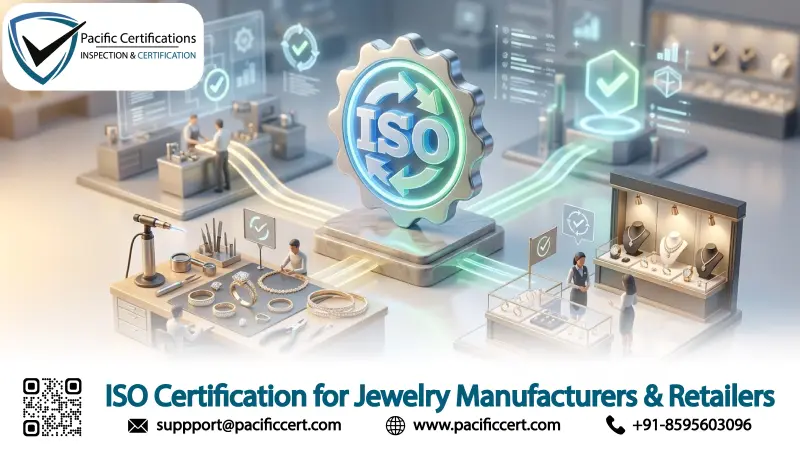
ISO certification helps jewelry manufacturers and retailers prove product quality, purity control, traceability and buyer confidence in a trust-driven market - Pacific Certifications
ISO Standards for Jewelry
The most relevant standards for jewelry manufacturers and retailers are:
ISO 9001 - Quality Management System
The foundational management system standard for jewelry manufacturers and retailers. ISO 9001 provides the framework for controlling design, production, quality inspection, supplier management and customer satisfaction processes ensuring that products consistently meet specification and customer requirements.
Read more: ISO 9001
ISO 14001 - Environmental Management System
Jewelry manufacturing involves chemicals, metal finishing processes, waste streams and energy consumption that carry environmental impact. ISO 14001 provides the framework for identifying and controlling environmental aspects, achieving regulatory compliance and demonstrating environmental responsibility to brands, retailers and institutional buyers.
Read more: ISO 14001
ISO 45001 - Occupational Health & Safety Management System
Jewelry manufacturing environments with exposure to chemicals, fine particulates, heat and powered equipment - carry occupational health and safety risks. ISO 45001 provides the framework for identifying hazards, controlling risks and maintaining a safe working environment for production staff.
Read more: ISO 45001
ISO 50001 - Energy Management System
For larger jewelry manufacturers and precious metal refiners with significant energy consumption, ISO 50001 provides the framework for systematic energy management reducing energy costs, improving efficiency and supporting sustainability reporting requirements.
Read more: ISO 50001
ISO 37001 - Anti-Bribery Management System
Jewelry supply chains particularly in precious metal and gemstone sourcing from high-risk jurisdictions carry inherent bribery and corruption risks. ISO 37001 provides the framework for implementing due diligence, anti-bribery controls and an ethical compliance culture throughout the supply chain.
Read more: ISO 37001
ISO 27001 - Information Security Management System
Jewelry retailers and e-commerce platforms handling customer financial data, transaction records and proprietary design files require robust information security governance. ISO 27001 provides the framework for protecting sensitive digital assets and demonstrating data security compliance to customers and payment partners.
Read more: ISO 27001
Practical Tip: Select ISO standards based on whether your main risk is product quality, environmental control, worker safety, energy use, anti-bribery, or information security.
Quality and Product Conformity
Within the jewelry manufacturing context, ISO 9001 addresses the full production lifecycle, from raw material intake through design, manufacturing, quality inspection and finished goods release.
Design and Development Control
ISO 9001 requires that design and development processes are planned and controlled ensuring that new jewelry designs are reviewed for producibility, material specification compliance and customer requirement alignment before production commences.
Design outputs, including technical drawings, material specifications and finishing standards are documented and approved.
Incoming Material Inspection
ISO 9001 requires that incoming precious metals, gemstones and components are inspected against defined acceptance criteria before use in production preventing non-conforming materials from entering the manufacturing process and protecting the integrity of finished products.
In-Process and Final Quality Control
ISO 9001 requires that in-process inspection and final product inspection are conducted against defined quality criteria covering dimensional accuracy, surface finish, stone setting security, weight tolerance and hallmark compliance.
Non-conforming products are identified, segregated and dispositioned through a controlled process.
Traceability
ISO 9001 requires that products are traceable throughout the production process - enabling the organization to identify the origin of materials, the production history of individual pieces and the inspection records associated with finished goods.
This is particularly important for precious metal products where material provenance and purity documentation are required for regulatory and export purposes.
Jewelry quality control should cover design approval, material inspection, in-process checks, final inspection, traceability and non-conforming product handling.
Hallmarking and Traceability
ISO management systems support hallmarking compliance by providing the documented process controls, inspection records and material traceability that hallmarking authorities require.
Material Traceability Systems
An ISO 9001-compliant management system requires that the source of all precious metals used in production is documented and traceable - from supplier delivery notes through the production process to the finished product.
This traceability chain is the foundation for hallmarking compliance and for responding to regulatory enquiries about material origin.
Responsible Sourcing
ISO/CD 21261 - currently in development under ISO/TC 174 specifies requirements for responsible precious metals sourcing, processing and traceability based on the OECD Five-Step Due Diligence Guideline.
Organizations implementing this standard alongside ISO 9001 can demonstrate that their precious metals supply chain meets internationally recognized responsible sourcing requirements increasingly demanded by global brands, institutional buyers and ESG-focused investors.
Batch and Lot Control
ISO 9001 requires that jewelry products are managed in identified lots or batches enabling specific production runs to be traced to their material inputs, production records and inspection results.
In the event of a quality issue or regulatory enquiry, batch traceability allows rapid identification of affected products and targeted corrective action.
Writer’s view: Hallmarking becomes easier to support when precious metals, batches, supplier records and finished jewelry pieces remain traceable throughout production.
Testing Standards for Precious Metals
Fineness Determination
ISO 11426 specifies the cupellation method for determining the gold content of gold alloys, the primary assay technique used in hallmarking laboratories worldwide. ISO 15093 specifies the ICP-OES difference method for determining the purity of high-fineness gold, platinum and palladium
Sampling Methods
ISO standards specify the methodology for collecting representative samples of precious metal alloys for analysis ensuring that analytical results accurately reflect the composition of the bulk material rather than surface contamination or localized variation.
Diamond and Gemstone Standards
ISO 6893 specifies the terminology, classification and test methods for inspection of batches of small diamonds providing a standardized framework for quality assessment of melee diamonds used in jewelry production.
Jewelry manufacturers operating accredited testing laboratories or working with accredited third-party laboratories apply these ISO analytical standards to generate the certified test results that support hallmarking applications, export documentation and product conformity declarations.
Practical Tip: Precious metal testing should rely on recognized assay methods, representative sampling and documented laboratory evidence to support product conformity.
Export Compliance
Buyer and Retailer Pre-Qualification
International jewelry brands, department store buyers and luxury retail groups routinely require ISO 9001 certification as a pre-qualification condition for supplier registration.
ISO certification demonstrates that the manufacturer operates a structured, audited quality management system - reducing the buyer's supply chain risk and simplifying vendor qualification.
Customs and Regulatory Documentation
ISO-certified quality management systems generate the inspection records, material certifications and conformity documentation that customs authorities and import regulators in key export markets including the European Union, United States and Gulf Cooperation Council countries require for jewelry imports.
Anti-Money Laundering and Responsible Sourcing Compliance
Export compliance in the precious metals and jewelry sector increasingly requires evidence of responsible sourcing and supply chain due diligence.
ISO 37001 and responsible sourcing standards aligned with OECD guidelines support compliance with the anti-money laundering and conflict minerals requirements that apply to precious metal exports in regulated markets.
Environmental and Social Compliance
ISO 14001 and ISO 45001 certification supports compliance with the environmental and social requirements of major export markets including the EU's due diligence regulations for supply chains and the environmental standards required by sustainability-focused international buyers.
Final Remark: Export-ready jewelry businesses need strong records for material origin, quality inspection, hallmarking, responsible sourcing and regulatory documentation.
Implementation Process
Step 1 - Gap Analysis
Assess current processes design control, production, quality inspection, supplier management, traceability against the requirements of ISO 9001 and any additional standards being pursued, identifying gaps in documentation and process control.
Step 2 - Scope and Context Definition
Define the scope of the management system which products, processes and facilities are included and document the organizational context, including the regulatory, market and supply chain environment in which the business operates.
Step 3 - Process Documentation
Document core processes: incoming material inspection, production control, in-process and final inspection, non-conforming product management, traceability, complaint handling and supplier evaluation. Process maps, inspection procedures and work instructions are developed to the level of detail needed to ensure consistent execution.
Step 4 - Staff Training and Competence
Train production, quality and management staff on the requirements of the management system, their roles and responsibilities, and the importance of adherence to documented procedures and quality standards.
Step 5 - Internal Audit
Conduct the management system's first internal audit assessing conformity to ISO requirements across all functions within scope and identifying nonconformities for corrective action before the external certification audit.
Step 6 - Management Review
Conduct the first formal management review evaluating management system performance, reviewing internal audit results and customer feedback, and making decisions about improvement actions and resource allocation.
Step 7 - Stage 1 and Stage 2 Certification Audit
Submit to Stage 1 (document review) and Stage 2 (on-site audit) conducted by Pacific Certifications to assess conformity with the applicable standard and issue the certification decision.
Practical Tip: A smooth implementation starts with gap analysis, clear scope, process documentation, staff training, internal audit and management review before certification.
Certification Benefits
Documented, controlled production and inspection processes reduce defects, rework and customer returns improving product consistency and protecting brand reputation
ISO 9001 certification signals to international buyers, luxury brands and retail partners that your manufacturing processes are structured, controlled and independently audited strengthening supplier relationships and enabling access to premium market segments
ISO certification supports pre-qualification for export buyers, compliance with import regulatory requirements and alignment with the responsible sourcing standards demanded by international brands
ISO 9001's traceability and inspection requirements directly support hallmarking compliance creating the documented material and inspection records that hallmarking authorities require
ISO 14001 and ISO 45001 provide structured frameworks for environmental and occupational safety compliance reducing regulatory exposure and demonstrating due diligence to inspectors and auditors
Systematic process documentation and continual improvement reduce production waste, rework and quality failures improving margins in a margin-sensitive manufacturing environment
ISO 14001 and responsible sourcing standard alignment supports ESG reporting requirements increasingly important for manufacturers supplying sustainability-focused global brands and institutional buyers
ISO certification helps jewelry businesses reduce defects, strengthen buyer trust, support export approvals and improve supplier qualification.
Certification Cost
A small to mid-sized jewelry manufacturer pursuing ISO 9001 as a standalone certification will incur a fixed-fee investment covering Stage 1 audit, Stage 2 audit and certificate issuance. Manufacturers pursuing an integrated program covering ISO 9001, ISO 14001 and ISO 45001 benefit from combined audit visits that reduce the total audit investment compared to pursuing each standard independently.
Internal implementation costs - for gap analysis, process documentation, staff training and management system development - vary based on the manufacturer's size and existing quality management maturity. Manufacturers with existing production control procedures, inspection records and supplier evaluation practices in place typically require less implementation effort than those starting without any formal management system. For calculating the cost of your certifications for free, click here.
Cost planning should consider business size, certification scope, number of sites, selected standards, existing process maturity and integrated audit requirements.
Certification Timeline
Manufacturers with existing quality procedures, inspection records and supplier management processes in place move through implementation faster than those building management systems from scratch.
For an integrated ISO 9001, ISO 14001 and ISO 45001 program, the combined implementation timeline is typically 4 to 6 months, with the three standards developed within a single unified management system to minimize duplication. Where ISO 37001 or ISO 50001 are added for responsible sourcing compliance or energy management, the program timeline may extend by 2 to 3 depending on the complexity of supply chain due diligence requirements or energy management infrastructure.
The most effective approach is to align the implementation program with a production planning cycle using the gap analysis to identify quick wins in process documentation that deliver immediate quality and traceability improvements while the broader management system is built toward certification readiness.
A Practical Tip from Pacific Certifications: Jewelry businesses can avoid delays by preparing inspection records, traceability evidence, supplier controls and documented processes early.
How Pacific Certifications Can Help?
Accredited by ABIS, Pacific Certifications conducts impartial, evidence-based audits against applicable ISO standards in full conformance with ISO/IEC 17021. Our services for jewelry businesses include:
Independent certification audits for ISO 9001, ISO 14001, ISO 45001, ISO 50001, ISO 27001 and ISO 37001
Integrated management system audits covering multiple standards in coordinated, efficient audit visits
Stage 1 and Stage 2 audit execution across jewelry manufacturing, precious metal processing, gemstone trading and retail operations
Clear, transparent audit reports with conformity findings and certification decisions
Issuance of internationally recognized ISO certificates upon successful audit completion
Annual surveillance and triennial recertification audits to maintain certificate validity
Contact Us
To get started with your ISO certification program or to initiate your audit, contact us at support@pacificcert.com or +91-8595603096.
For training programs related to ISO standards applicable to the jewelry and precious metals sector, contact us at trainings@pacificcert.com.
Also Read: ISO certification for global trade and export compliance