Introduction
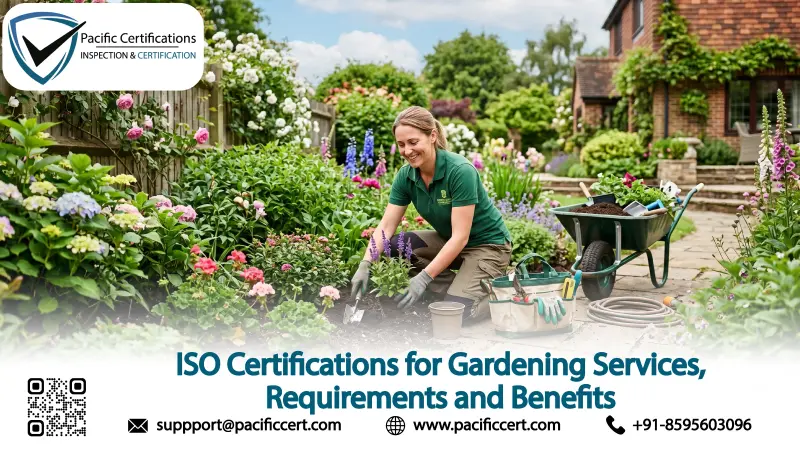
Gardening services operate in a service-quality, safety-conscious, and environmentally sensitive environment where workmanship consistency, worker safety, environmental responsibility, and customer satisfaction directly influence reputation and repeat business. This sector includes landscaping companies, lawn maintenance providers, horticulture services, tree care and pruning contractors, irrigation maintenance firms, and garden design services supporting residential, commercial, institutional, and public spaces.
With increasing focus on sustainable landscaping, stricter environmental regulations, higher client expectations for service reliability, and greater awareness of workplace safety, gardening service providers are under pressure to demonstrate structured operational control. Poor maintenance practices, unsafe equipment handling, chemical misuse, or inconsistent service delivery can result in injuries, environmental harm, client complaints, and regulatory issues. ISO certifications provide internationally recognized management system frameworks that help gardening service businesses standardize operations, manage risks, ensure safety, and build professional credibility.
In gardening services, trust is built on reliability, safety, and responsible environmental care.
Quick Summary
ISO certifications provide gardening service providers with internationally recognized frameworks to manage service quality through ISO 9001, ensure occupational health and safety through ISO 45001, manage environmental responsibilities through ISO 14001, support continuity of essential services through ISO 22301, improve energy and resource efficiency where applicable through ISO 50001, and establish structured risk governance through ISO 31000. These standards support consistent service delivery, safer worksites, and sustainable landscaping operations.
For guidance on selecting the most relevant ISO standards for your gardening services business, contact support@pacificcert.com.
Applicable ISO Standards for Gardening Services
ISO 9001: Quality Management Systems
ISO 9001 helps gardening service providers standardize service planning, scheduling, landscaping execution, maintenance routines, customer communication, complaint handling, and performance monitoring. It supports consistent service outcomes across sites and seasons, reducing rework and improving customer satisfaction.
ISO 14001: Environmental Management Systems
Gardening services directly interact with the natural environment. ISO 14001 supports responsible management of environmental aspects such as pesticide and fertilizer use, water consumption, waste disposal, noise, soil protection, and biodiversity preservation. It helps organizations comply with environmental regulations and sustainability expectations.
ISO 45001: Occupational Health and Safety Management Systems
Gardening activities involve hazards such as powered tools, sharp equipment, chemicals, lifting, working outdoors, and exposure to weather conditions. ISO 45001 provides a structured framework to identify hazards, assess risks, implement controls, train workers, and prevent injuries and accidents.
ISO 22301:2019 – Business Continuity Management Systems
Certain gardening services, such as grounds maintenance for hospitals, public facilities, and commercial properties, are critical to safety and operations. ISO 22301 ensures preparedness and recovery planning so essential services can continue or resume quickly during disruptions such as equipment failure, staff shortages, or extreme weather events.
ISO 50001:2018 – Energy Management Systems
For gardening companies operating fleets of vehicles, irrigation systems, and powered equipment, ISO 50001 supports monitoring and improving energy and fuel efficiency, contributing to cost savings and reduced environmental impact.
ISO 31000:2018 – Risk Management
ISO 31000 enables gardening service providers to systematically identify and manage risks related to worker safety, environmental damage, equipment failure, seasonal variability, regulatory non-compliance, and reputational exposure, strengthening governance and decision-making.
Click here to find out more applicable standards to your industry
What are the Requirements of ISO Certifications for Gardening Services?
Gardening service providers seeking ISO certification must establish documented management systems and demonstrate consistent implementation across operational, safety, and environmental functions.
ISO 9001:2015 – Quality Management
Document gardening service workflows, schedules, and maintenance procedures
Define quality objectives aligned with client expectations and service reliability
Control service records, checklists, and customer communications
Monitor customer feedback, complaints, and service performance
Implement corrective actions and continual improvement
Conduct internal audits and management reviews
ISO 45001:2018 – Occupational Health & Safety
Identify hazards related to tools, equipment, chemicals, and outdoor work
Assess OH&S risks and implement preventive controls
Ensure compliance with workplace safety regulations
Provide training, PPE, and emergency preparedness
Monitor incidents, near-misses, and safety performance
ISO 14001:2015 – Environmental Management
Identify environmental aspects of gardening and landscaping activities
Control use of fertilizers, pesticides, and water
Manage green waste, soil protection, and biodiversity impacts
Ensure compliance with environmental laws and guidelines
Monitor environmental performance and improvements
ISO 22301:2019 – Business Continuity
Identify critical gardening services and dependencies
Conduct business impact analysis (BIA)
Develop continuity and recovery plans
Plan for weather-related disruptions and equipment failures
Test and review continuity arrangements
Tip:Map one complete gardening service cycle—from site assessment and planning to execution, maintenance, waste disposal, and client feedback—against ISO requirements to identify quality, safety, and environmental gaps early.
For assistance in evaluating your gardening services against ISO requirements, contact support@pacificcert.com.
What are the Benefits of ISO Certifications for Gardening Services?
ISO certifications provide gardening service businesses with strong operational and commercial advantages, including:
More consistent and reliable service delivery
Safer working environments and reduced accidents
Responsible environmental practices and regulatory compliance
Improved customer satisfaction and retention
Better control over seasonal operations and resources
Reduced waste, water, and chemical misuse
Increased credibility with commercial and public-sector clients
Improved readiness for audits, tenders, and inspections
Stronger risk awareness and operational control
Long-term business sustainability and growth
Demand for professional gardening and landscaping services continues to grow as urbanization increases, commercial developments expand, and property owners place greater emphasis on aesthetics, sustainability, and outdoor wellbeing. The global landscaping and gardening services market is expected to exceed USD 450 billion in the coming years, driven by green infrastructure projects, smart irrigation, and environmentally responsible landscaping practices.
At the same time, regulators and clients are placing greater emphasis on safety, environmental protection, and service documentation. Public-sector contracts and large commercial clients increasingly expect service providers to demonstrate ISO-aligned management systems. Looking forward, ISO certifications such as ISO 9001, ISO 45001, and ISO 14001 are expected to be baseline expectations for professionally managed gardening and landscaping service providers.
How Pacific Certifications Can Help?
Pacific Certifications, accredited by ABIS, acts as an independent certification body for gardening service providers by conducting impartial audits against applicable ISO standards. Our role is to objectively assess whether documented management systems and gardening operations conform to international ISO requirements, based strictly on verifiable evidence and records.
We support gardening service businesses through:
Independent certification audits conducted in accordance with ISO/IEC 17021
Objective assessment of quality, safety, environmental, and risk controls
Clear audit reporting reflecting conformity status and certification decisions
Internationally recognized ISO certification upon successful compliance
Surveillance and recertification audits to maintain certification validity
Contact us
For ISO certification for gardening services, contact support@pacificcert.com or call +91-8595603096.
Author: Ashish
Read more: Pacific Blogs

