# What to Expect During an ISO Audit: Internal vs. External Audits Explained
Author: Pacific Certifications
Author URL: https://blog.pacificcert.com/author/pacific-certifications/
Published: 2025-08-18
Meta Title: ISO Audit Guide 2026 | Internal vs. External Audits Explained
Meta Description: Master the 2026 ISO audit process. Learn the differences between internal and external audits, the 3-stage audit cycle, and new climate risk requirements.
Tags: ISO Certification audit, ISO audits, Internal and external audit, External audit, ISO Audit
Tag URLs: ISO Certification audit (https://blog.pacificcert.com/tag/iso-certification-audit/), ISO audits (https://blog.pacificcert.com/tag/iso-audits/), Internal and external audit (https://blog.pacificcert.com/tag/internal-and-external-audit/), External audit (https://blog.pacificcert.com/tag/external-audit/), ISO Audit (https://blog.pacificcert.com/tag/iso-audit/)
URL: https://blog.pacificcert.com/iso-audit-internal-vs-external-explained/
## **Introduction**
ISO audits are formal assessments that **determine** whether your organization is complying with the requirements of the ISO standard it has implemented. Audits can help identify gaps in your processes, verify opportunities for improvement, and provide confidence to interested stakeholders that your organization maintains globally recognized processes. Some audits are conducted internally by members of the organization, while others are conducted externally by an accredited certification body. Understanding what to expect from each type of audit aids in preparing for and executing the audit as well as achieving positive results. They also **boost** credibility, improve decision-making, enhance employee awareness, support global market access, and strengthen long-term sustainability.
ISO audits are important checkpoints for organizations wishing to achieve or maintain [ISO certification](https://www.iso.org/home.html). They will determine whether your systems, processes and practices are in accordance with the relevant ISO standards, assisting organizations to continuously improve on their consistency, quality and compliance. It is critical to understand the differences between internal audits and external audits in order to **prepare** effectively and leverage the results to improve the effectiveness of your organization.
## **Quick Summary**
In this guide, ISO audits are explained in plain terms with a clear split between internal and external audits. Internal audits are run by your team to check processes, spot gaps early and get ready for certification. External audits are carried out by an accredited certification body in two stages—Stage 1 document review and Stage 2 on-site assessment—with any nonconformities to be closed to achieve or maintain certification. The article also highlights benefits such as improved readiness, fewer surprises, and better assurance for clients, while providing a simple preparation checklist covering documentation, training, and review of corrective actions to strengthen compliance and long-term business performance.
[Assess how external audit requirements influence your planning and records](https://pacificcert.com/contact-us/): Look at how certification, recertification, or customer audits shape what evidence you collect and how consistently you maintain it.
## **Internal Audits**
Internal audits are conducted by employees or designated auditors within the organization to assess compliance to ISO standards. They are a proactive way to take stock of processes, review documents, and check that the organization is ready for external audits.
In general, there are three **main** purposes for the internal audits and that are: to verify compliance to ISO standards and internal procedures, to find non-conformities or gaps in systems before an external audit and to help with continuous improvement by highlighting areas that need improvement
The internal audits are usually a planned activity using a documented process, where the process documents and employees are reviewed. They are not for certification purposes; they are a prepared step so that the organization will be ready. Many **organizations** will use this time to improve their processes, revise documentation and fix any pending NCRs (Non-Conformance Assessments) prior to external audits.
## **External Audits**
External audits and certifications are conducted by independent certifying organizations and are **importance** if you want to receive or maintain ISO certification. External audits tend to be more formal and extensive than internal audits and represent a third-party assessment of how your organization is performing compared to ISO standards.
The external audit process **typically** includes Stage 1 Audit (Document Review): The stage where the auditor reviews your documented system, policies, procedures, and other material to confirm that documents meet the requirements of ISO (standard) and Stage 2 Audit (Onsite assessment): The stage where the auditor asses your actual processes, interviews staff, directly observes operations and evaluates your "completeness" against the requirements of the standard.
External audits typically conclude with formal findings. The findings can include a non-conformity report (NCR) that must be addressed in a prescribed time period. Successful completion of the audit indicates that your organization has satisfied the standard and subsequently allows the certifying agency to issue or maintain your ISO certification.
For more information, contact us at [support@pacificcert.com](mailto:support@pacificcert.com).
## **What are the Key Differences Between Internal and External Audits?**
**Aspect**
**Internal Audits**
**External Audits**
**Purpose**
Assess compliance within the organization and identify areas for improvement
Verify compliance for certification purposes and provide independent validation
**Conducted By**
Organization’s employees or designated internal auditors
Accredited third-party certification body
**Scope**
Can focus on specific processes, departments, or high-risk areas
overreaching evaluation of the entire management system against ISO requirements
**Consequences**
Findings are used for internal improvement; no direct certification impact
Findings may result in Non-Conformance Reports (NCRs) that must be addressed to achieve or maintain certification
**Frequency**
Usually planned periodically or based on internal risk assessment
Scheduled by the certification body, typically annually or per the certification cycle
**Focus**
Identifies gaps, process inefficiencies, and readiness for external audits
Confirms adherence to ISO standards and validates the organization’s compliance objectively
## **What are** Benefits **of Internal and External Audits?**
Implementing internal and external audits within your ISO management system brings tangible advantages to organizations. These audits not only help identify gaps and areas for improvement but also strengthen the credibility of your management system, building trust with clients, regulators and stakeholders. Below are some of the key benefits:
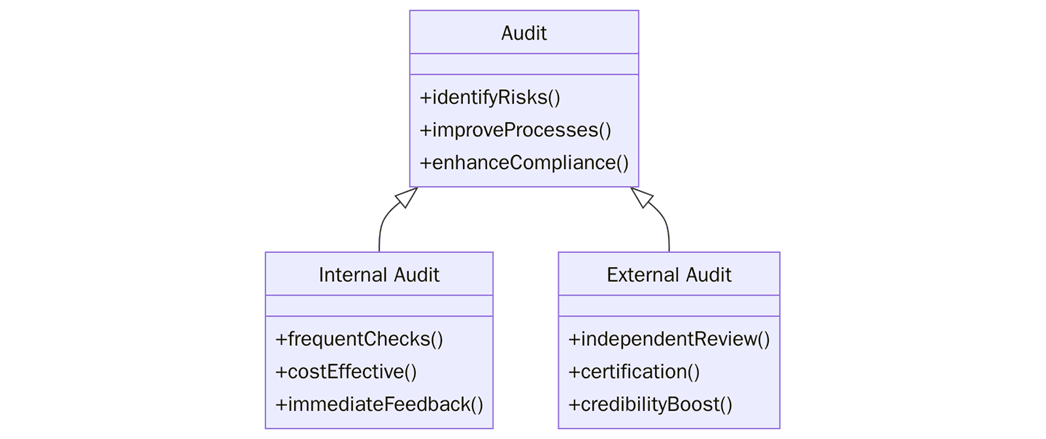
- They **assist** in guaranteeing your organization is consistently compliant with the ISO standards.
- **Audits** reveal inefficiencies and gaps so organizations can make targeted improvements.
- **Conducting** audits regularly increases employee knowledge of the relevant process and their responsibilities.
- **Internal** audits will make external audits easier, with less chance of NCR.
- **External** audits provide an independent assurance that your organization is complying with the standards, increasing customer and stakeholder trust.
## **How to Prepare for an ISO Audit?**
Proper preparation ensures audits are smooth and effective. Key steps include:
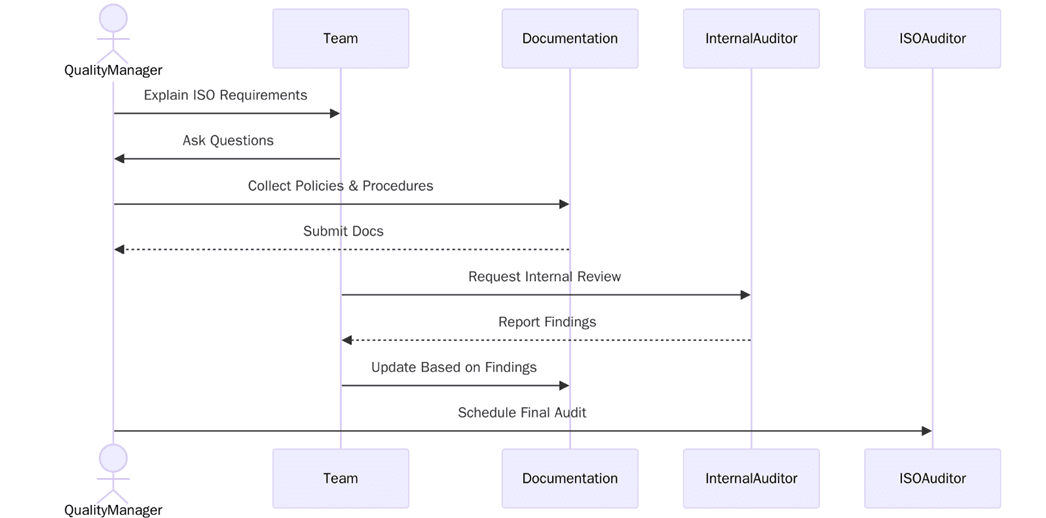
1. **Reviewing** policies, procedures and other documentation relevant to the ISO standard
2. **Carrying** out internal audits to find gaps prior to external audits
3. **Training** employees on knowing their roles and responsibilities
4. **Keeping** records of process, compliance checks and corrective actions up to date
5. **Following** up on past NCRs to show evidence of improvement
Preparation not only reduces audit stress but also positions the organization for successful certification and ongoing compliance. ISO audits improve compliance, strengthen processes, reduce risks, build trust, increase efficiency, support growth, and maintain certification readiness.
### Contact Us
Pacific Certifications assists organizations in preparing for both internal and external ISO audits. Our team can help you develop audit schedules, conduct readiness assessments, and ensure your processes meet ISO standards.
Contact us at [**support@pacificcert.com**](mailto:support@pacificcert.com) or visit [**www.pacificcert.com**](https://pacificcert.com/) to learn more about audit preparation and ISO certification services.
Read more: [Pacific Blogs](https://blog.pacificcert.com/)
ISO Audit Guide – Internal vs External Audits
## FAQs
Q: What is the main purpose of an internal audit?
A:
Internal audits evaluate compliance with ISO standards within the organization and identify areas for improvement before external certification audits.
Q: How is an external audit different from an internal audit?
A:
External audits are conducted by third-party certification bodies for certification purposes, while internal audits are conducted by organization staff to ensure readiness and process improvement.
Q: What are Non-Conformance Reports (NCRs)?
A:
NCRs are formal reports identifying areas where processes do not comply with ISO requirements, requiring corrective actions to maintain or achieve certification.
Q: Can internal audits help reduce the number of NCRs during external audits?
A: Yes, internal audits help identify gaps early, allowing organizations to address issues before external audits, reducing the likelihood of NCRs.
Q: Do all ISO standards require internal audits?
A: Yes, internal audits are a key requirement for ISO standards such as ISO 9001, ISO 14001, and ISO 45001 to ensure continuous compliance and improvement.
Q: Who should conduct internal audits?
A:
Internal audits should be conducted by trained personnel within the organization who are independent of the processes being audited.
Q: How often should internal audits be conducted?
A: Internal audits are typically conducted annually, but organizations often schedule them more frequently based on risk assessments or critical processes.
Q: What happens if NCRs are found during an external audit?
A: Organizations must address NCRs within the specified timeframe, implementing corrective actions to retain or achieve ISO certification.
Q: What is the benefit of external audits for stakeholders?
A: External audits provide independent verification of compliance, building confidence among customers, regulators, and partners.
Q: How can Pacific Certifications help with ISO audits?
A:
Pacific Certifications provides guidance for audit readiness, internal assessments, and preparation for external certification audits, ensuring your organization maintains compliance smoothly.
---
This blog is powered by Superblog. Visit https://superblog.ai to know more.
---