ISO Certifications for Plastic Bag and Film Manufacturing, Requirements and Benefits
Introduction
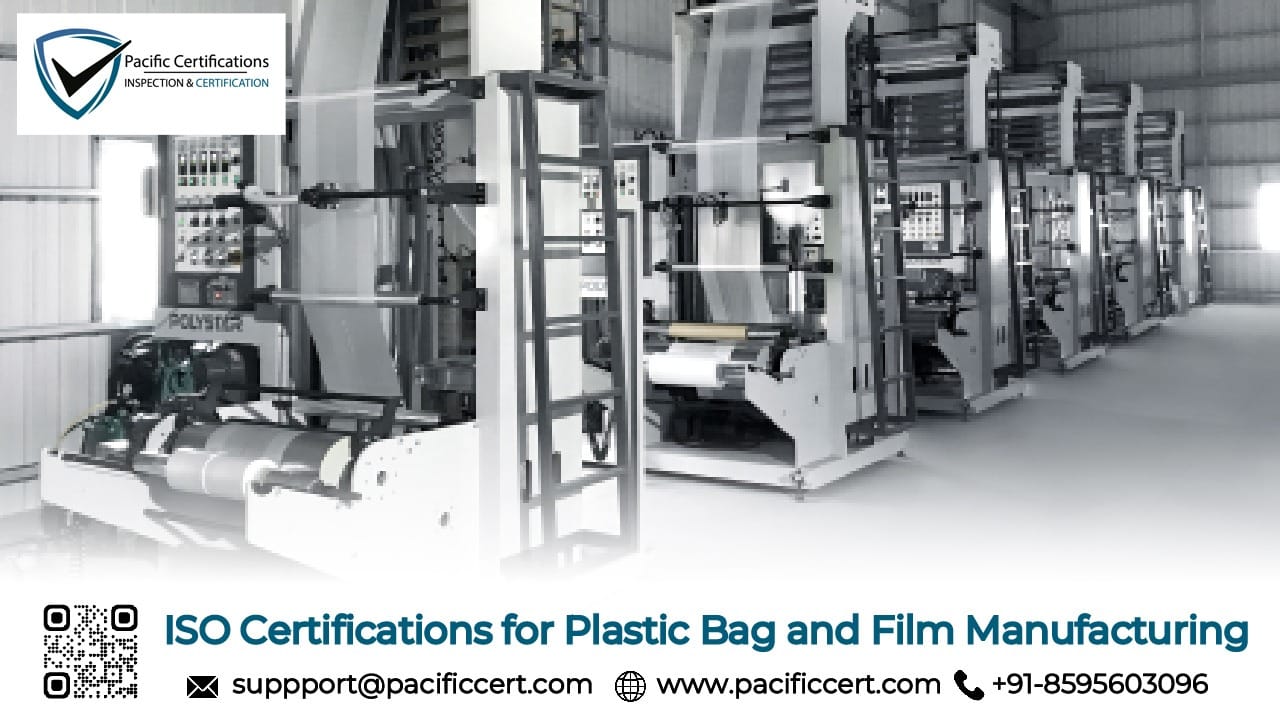
Plastic bag and filmmanufacturing is a high-volume industrial process where production speed must be balanced with strict control over material quality and safety. Facilities operate continuous extrusion lines that convert polymer granules into blown or cast film, followed by cutting, sealing, printing, and packaging into finished bags, pouches, liners, and wraps. Many plants supply multiple sectors such as food packaging, agriculture, pharmaceuticals, and industrial applications, each with different technical and regulatory requirements. Small process variations in temperature, die settings, or material handling can lead to film thickness defects, sealing failures, or contamination of food-contact products. In addition, heated polymers, additives, and inks introduce health, safety, and environmental risks that must be managed consistently across all shifts.
Because of these challenges, plastic bag and film manufacturing ISO certifications provide structured management frameworks that help manufacturers control production quality, worker safety, and environmental impact in a documented and verifiable way. International buyers, regulators, and large packaging customers increasingly require certified management systems before approving suppliers, especially for food-contact and export products. ISO standards support consistent process control, proper handling of raw materials and chemicals, safe operation of extrusion and converting equipment, and traceability of finished goods. With certified systems in place, manufacturers can demonstrate compliance during audits, reduce operational risk, and strengthen their credibility in global packaging supply chains where verified performance is expected rather than assumed.
As the world moves toward sustainable packaging, ISO certifications help plastic manufacturers prove they can produce responsibly, safely, and with consistent quality - Pacific Certifications
Quick Summary
ISO certifications help plastic bag and film manufacturers produce high-quality, safe, and environmentally responsible products. Key standards include ISO 9001 (quality), ISO 14001 (environment), and ISO 45001 (safety), with ISO 15270 guiding recycling and sustainability efforts. Certification improves efficiency, reduces waste, and helps companies meet market and regulatory expectations in a fast-changing industry.
For more information on how we can assist your plastic bag and film manufacturing business with ISO certifications, contact us at [email protected].
Applicable ISO Standards for Plastic Bag and Film Manufacturing Businesses
Below are the most relevant ISO standards applicable to blown film extruders, cast film producers, flexible packaging converters, and food-grade plastic bag manufacturers:
ISO 9001: Quality ManagementSystem (QMS)
ISO 9001 embeds quality discipline into every production stage through documented procedures for process parameters, in-process testing protocols, calibrated measurement equipment, and structured corrective actions for identified nonconformities. The standard formalizes how customer specifications are received, translated into production settings, and verified at shipment, creating a clear chain of accountability from order receipt to delivery. For manufacturers competing across international markets, ISO 9001 certification serves as the foundational credential that procurement teams use to assess operational credibility.
ISO 14001: Environmental Management Systems
Plastic film manufacturing generates a distinctive environmental profile that includes polymer scrap from die changes, VOC emissions during blown film processing, additive chemical storage risks, and waste from trim recovery operations. ISO 14001 structures how facilities identify their significant environmental aspects, establish measurable reduction objectives, and monitor performance through scheduled management reviews.
ISO 45001: Occupational Health and Safety Management Systems
ISO 45001 requires organizations to conduct formal hazard identifications, implement engineering controls, establish lockout procedures for maintenance tasks, and investigate incidents to prevent recurrence. The standard also drives meaningful participation from production floor workers, surfacing practical risk insights that management-only reviews frequently miss.
ISO 22000: Food Safety Management System (FSMS)
ISO 22000 requires manufacturers to apply hazard analysis at every production stage, define critical control points, and maintain prerequisite programs covering hygiene, pest management, and allergen prevention across all food-grade zones. Certified manufacturers supply food processors and consumer goods brands with documented assurance that materials meet internationally recognized food safety requirements.
ISO 50001: Energy Management Systems
ISO 50001 requires manufacturers to establish consumption baselines, define performance indicators for major process areas, and drive systematic improvements through regular energy reviews. Organizations implementing this standard document measurable reductions in energy intensity that translate into lower operating costs and improved carbon performance. This is particularly relevant as global packaging brands increasingly assess supplier carbon footprints during formal supply chain qualification programs.
ISO 13485: Medical Devices Quality Management
For manufacturers creating plastic films or bags for medical applications, ISO 13485 ensures adherence to quality and safety standards specific to healthcare requirements.
ISO 11469: Plastics Identification and Marking
This specific standard provides guidelines for the labeling and identification of plastic products, essential for promoting recycling and sustainable disposal.
Click here to find out more applicable standards to your industry
What are the Requirements of ISO Certifications for Plastic Bag and Film Manufacturing Businesses?
Plastic bag and film manufacturing businesses seeking ISO certification must establish and maintain documented policies, procedures, and records aligned with the selected ISO standards. Key requirements include the following:
ISO 9001:2015 – Quality Management Systems Requirements
Define measurable quality objectives for film gauge tolerance, seal strength, and optical clarity and monitor them at each extrusion and converting stage.
Control incoming raw polymer and additive inputs by establishing documented acceptance criteria before materials enter the extrusion process.
Document nonconformance records for out-of-specification film batches and link root cause findings to specific process or equipment variables.
Conduct planned internal audits of blown film lines and bag converting operations to verify adherence to documented production procedures.
Maintain calibration records for thickness gauges, seal testers, and tensile measurement instruments to ensure traceability of all product test results.
ISO 14001:2015 – Environmental Management Systems Requirements
Identify significant environmental aspects including polymer trim scrap, VOC emissions from extrusion, and additive chemical storage and establish measurable reduction targets.
Monitor waste generation volumes from die changes and scrap recovery operations and track performance against defined environmental reduction objectives.
Implement documented chemical storage and spill containment procedures for plasticizers, slip agents, and masterbatches across all production areas.
Conduct scheduled environmental management reviews that assess performance data and authorize corrective actions where improvement targets are not being met.
ISO 45001:2018 – Occupational Health and Safety Management Systems Requirements
Assess thermal burn hazards from molten polymer at extrusion dies and document controls including guarding specifications and mandatory PPE requirements for all operators.
Establish a fume and chemical exposure monitoring program for blown film lines where additives and plasticizers are processed at elevated temperatures.
Conduct documented risk assessments for nip roller entanglement hazards on winding and slitting equipment and implement lockout procedures for all maintenance activities.
Investigate all incidents and near-misses across converting and extrusion areas and verify corrective actions are completed within defined accountability timeframes.
ISO 50001:2018 – Energy Management Systems Requirements
Establish a documented energy consumption baseline for extrusion motors, heating zones, cooling systems, and compressed air networks using at least twelve months of metered data.
Define energy performance indicators for major consuming equipment and review them monthly against consumption reduction objectives across all production areas.
Assess the energy implications of planned changes to production line configuration or equipment before implementation is approved.
Document energy improvement action plans that prioritize opportunities by estimated savings and required investment across all production and utility systems.
ISO 22000:2018 – Food Safety Management Systems Requirements
Conduct a documented hazard analysis covering chemical migration from polymer additives and printing inks at each stage of food-contact film production.
Implement prerequisite programs for personnel hygiene, pest management, and equipment sanitation across all zones that produce food-contact plastic films and bags.
Establish a traceability system linking finished film rolls and bag batches to specific raw polymer lots and recorded production parameters from each run.
Define a product withdrawal and recall procedure and validate it through a documented simulation exercise conducted at scheduled intervals.
Tip: Begin certification preparation by forming a cross-functional working group that includes production supervisors, quality engineers, the environmental coordinator, and health and safety officers. Use this team to walk through each major process such as blown film extrusion, printing, and bag converting and map actual operational steps against each ISO standard's requirements.
For more information on how we can assist your plastic bag and film manufacturing business with ISO certifications, contact us at [email protected].
What are the Benefits of ISO Certifications for Plastic Bag and Film Manufacturing Businesses?
ISO certifications equip plastic bag and film manufacturing businesses with measurable operational advantages and stronger commercial positioning across global flexible packaging supply chains. Listed below are the key benefits for blown film extruders and food-grade plastic bag manufacturers:
Improved product consistency under ISO 9001 reduces film gauge deviations and seal failures, strengthening customer retention and lowering production rework costs.
Stronger environmental accountability through ISO 14001 separates certified manufacturers from competitors in markets where buyers assess supplier sustainability credentials during procurement.
Enhanced worker protection with ISO 45001 reduces injury rates at extrusion and converting lines, lowering incident costs and maintaining output continuity on critical shifts.
Greater energy savings under ISO 50001 cut costs across continuous extrusion operations, with documented reductions supporting both financial performance and carbon commitment targets.
Better food-contact compliance through ISO 22000 opens access to food and pharmaceutical packaging supply chains where contamination management is a contractual prerequisite.
Reduced business continuity risk via ISO 22301 prepares facilities to sustain output during equipment failures and polymer supply disruptions.
Higher qualification scores in global buyer supplier audits as ISO certification satisfies the minimum requirements embedded in formal procurement programs.
Streamlined regulatory readiness because documented management systems provide auditors with clear conformity evidence and reduce inspection preparation time.
Greater circular economy credibility through ISO 15270 demonstrates structured plastic waste recovery practices as client ESG reporting requirements intensify.
The global flexible plastic packaging market reached USD 187.23 billion in 2025 and is projected to grow to USD 316.8 billion by 2036, reflecting a compound annual growth rate of 4.9%. The plastic film segment specifically is expanding at approximately 9.8% annually from 2026 to 2033, driven by advances in multilayer film technologies, high-performance polyolefin blends, and growing adoption of smart packaging solutions across food service and consumer goods sectors. Rising global restrictions on single-use plastics are simultaneously driving demand for recyclable and biodegradable alternatives, creating compliance pressure and product development opportunity in equal measure. Multinational brands in food, retail, and agriculture are integrating supplier environmental and quality certification status directly into sourcing criteria, shifting competitive advantage toward certified manufacturers across developed markets and high-growth emerging economies.
Looking ahead, tightening food-contact material regulations, growing demand for sustainability-verified supply chains, and increasing investor scrutiny of ESG practices will make ISO certifications an operational necessity. Certified plastic bag and film manufacturers are positioned to secure premium contracts, attract sustainability-linked financing, and navigate international compliance frameworks with greater confidence than uncertified competitors across both developed and emerging packaging markets.
How Pacific Certifications Can Help?
Pacific Certifications, accredited by ABIS, acts as an independent certification body for plastic bag and film manufacturing businesses by conducting impartial audits against applicable ISO standards. Our role is to objectively assess whether documented management systems and plastic film production practices conform to international ISO requirements, based strictly on verifiable evidence and operational records.
We support plastic bag and film manufacturing providers through:
Independent certification audits conducted in accordance with ISO/IEC 17021 across quality, environmental, safety, energy, and food safety management systems.
Practical assessment of real extrusion and converting operations, chemical handling controls, energy records, and food-contact hygiene practices.
Clear audit reporting that reflects conformity status and certification decisions without ambiguity.
Internationally recognized ISO certification upon successful demonstration of compliance.
Surveillance and recertification audits to maintain certification validity throughout the full certification cycle.
Contact Us
If you need support with ISO certification for your plastic bag and film manufacturing business, contact us at [email protected] or +91-8595603096.
Author: Pooja
Read More at: Blogs by Pacific Certifications